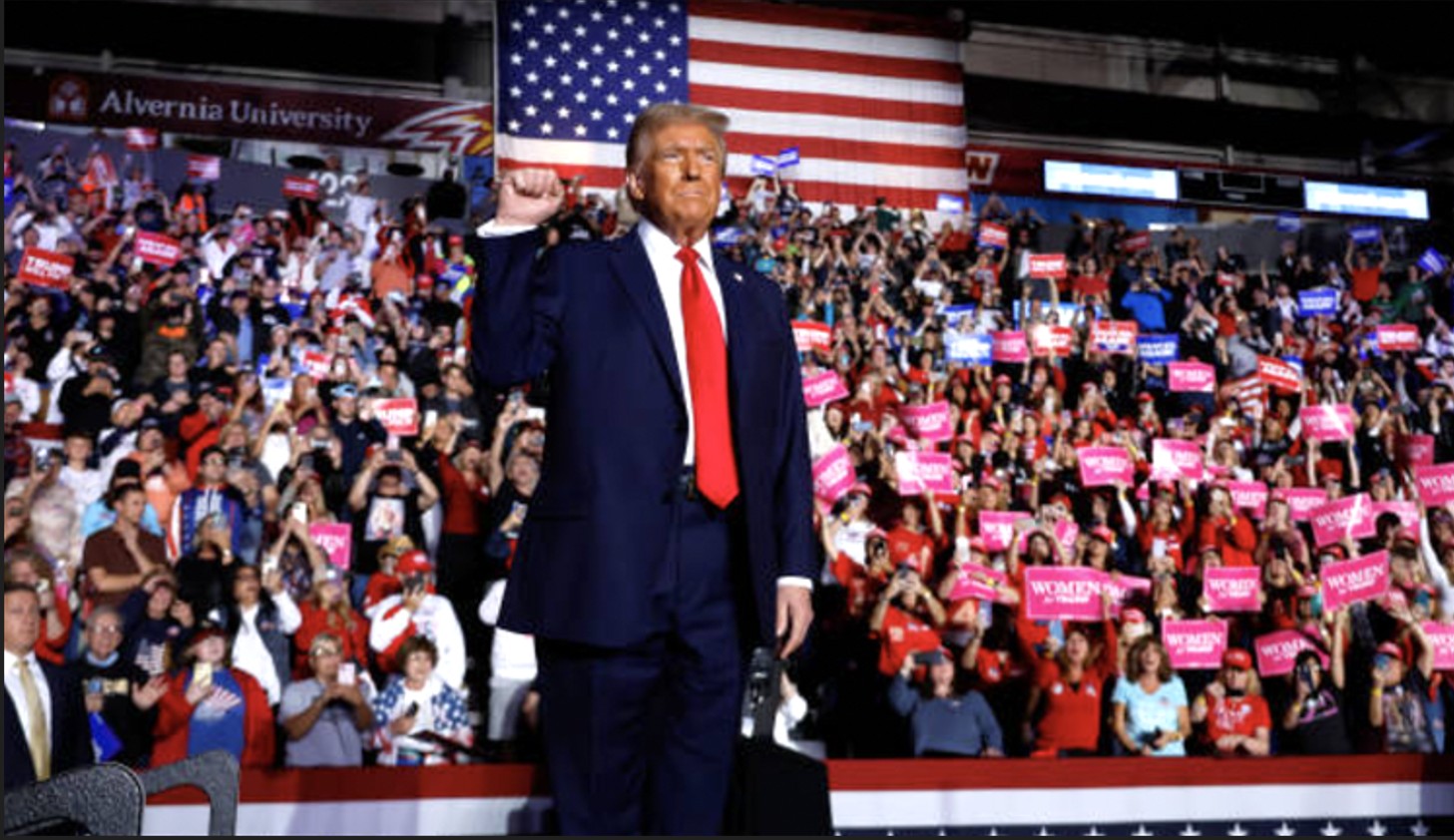
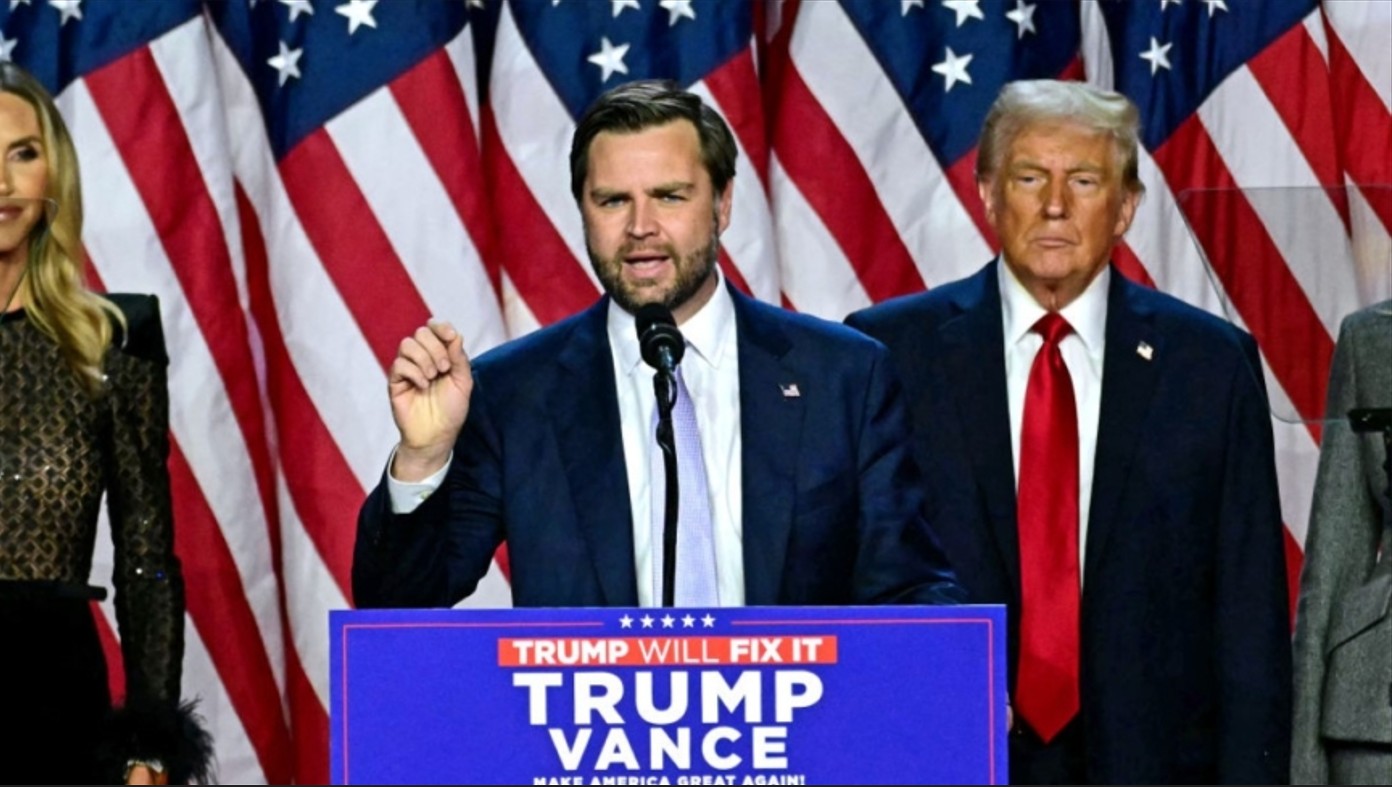
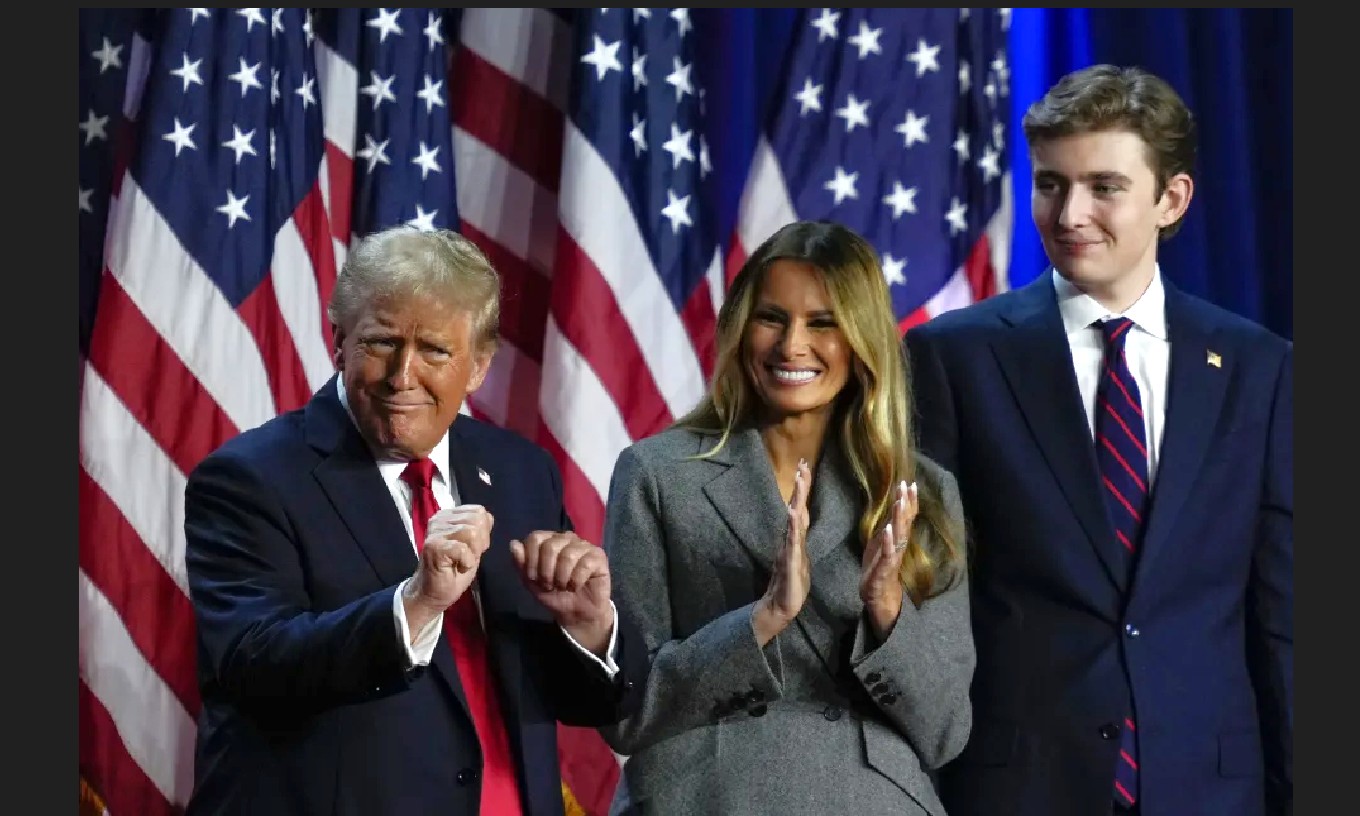
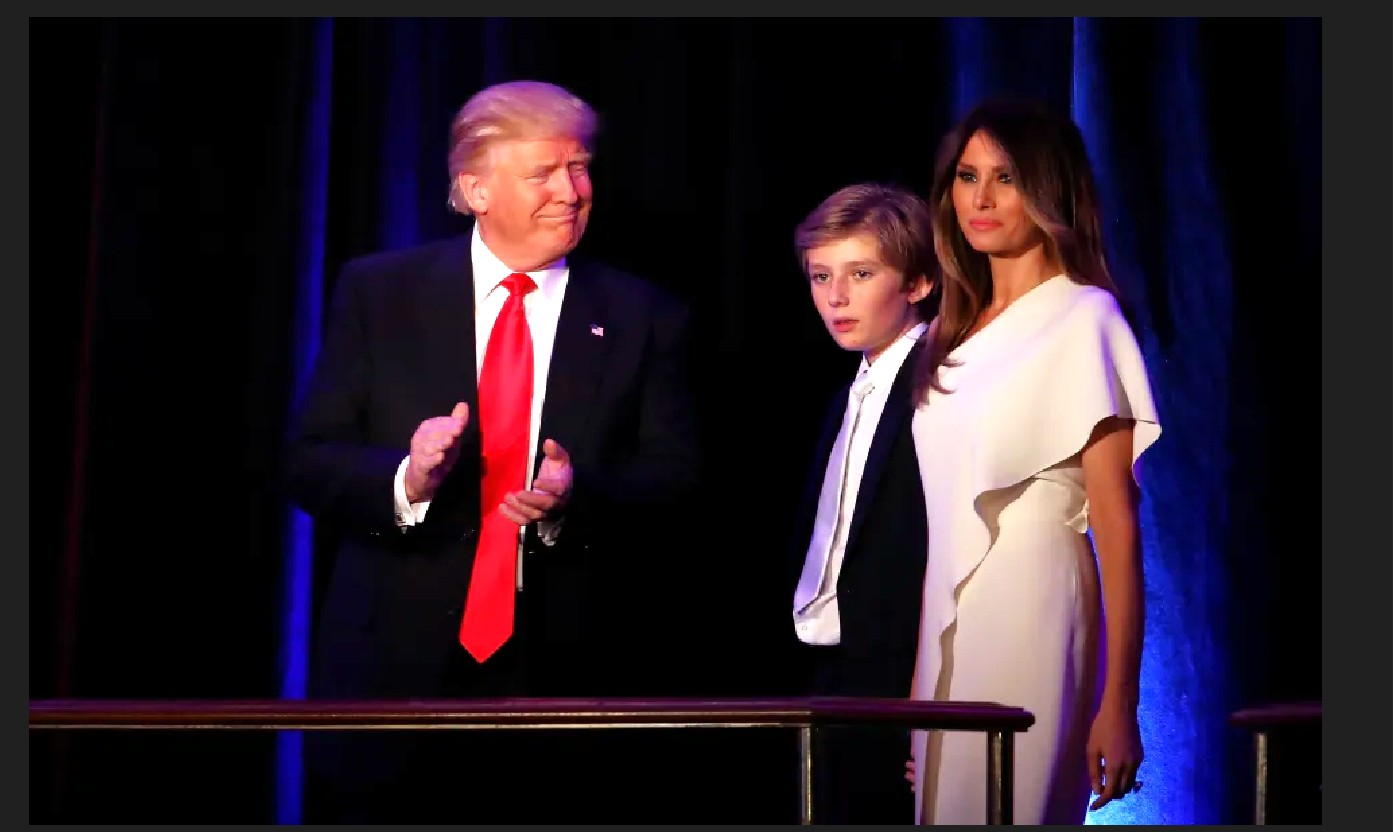
Celebrity Media Commentator: In today’s complex and ever-changing global landscape, Donald Trump’s re-election as the President of the United States has shocked and intrigued many. For some devout Americans, this is not merely a political event but a divine arrangement, a call from God to faith and a blessing of peace. In these challenging times, many view Trump’s re-election as a special guidance from God for the United States and the world, seeing it as a blessing brought by the power of faith.
On the day of his election, Trump stated, “People tell me, ‘God spared my life for a reason.’ That reason is to save our country and make America great again. Now, we will complete this mission together.” For those with faith in their hearts, Trump’s election is nothing short of a miracle, a belief rooted in deep trust in God’s sovereignty and plan. In the Bible, miracles are not only supernatural events but also direct interventions of God in human history, manifesting His will. For instance, the Book of Daniel states, “He changes times and seasons; he deposes kings and raises up others. He gives wisdom to the wise” (Daniel 2:21). This shows that the rise and fall of nations and leaders are all under God’s control.
Those who trust in God believe that Trump’s election marks a turning point in the nation’s destiny because his victory defied many polls and political norms. Just like the parting of the Red Sea in Exodus, it is a wonder that seemed impossible to achieve but was accomplished through divine intervention. Especially during Trump’s campaign, he faced numerous challenges and assassination attempts but ultimately triumphed. Many view this as God’s response to America’s spiritual and moral crisis, granting a leader capable of restoring traditional values.
This belief reflects the prayers and hopes of faithful believers for the nation. In their eyes, Trump’s victory is not merely a political event but God’s way of manifesting His will through human history, a response to the long-standing prayers of American Christians. As 2 Chronicles 7:14 says, “If my people, who are called by my name, will humble themselves and pray and seek my face and turn from their wicked ways, then I will hear from heaven, and I will forgive their sin and will heal their land.”
God’s decisions are not confined to human understanding but contain profound wisdom. In recent years, America has faced numerous challenges, including racial divisions, economic pressures, and intensified social conflicts, making the nation seem on the brink of peril. Against this backdrop, Trump’s election shines like a beacon of faith, reminding people to return to fundamental values. Trump has always emphasized “Making America Great Again,” and this greatness is not just about material prosperity but also about spiritual revival and steadfast faith. His victory seems to highlight the profound impact of faith on America’s future.
Faith is not only a sense of belonging for the soul but also a force that helps people find direction amid turbulence. God’s choice to let Trump lead may not only aim at the nation’s stability and prosperity but also guide people back to trusting in God. In this sense, Trump’s election carries a sacred mission: to encourage all sectors of society to repair divisions, seek consensus, and pursue peace based on faith. Trump’s re-election is a test and a blessing of faith from God, urging people to view their nation and lives from a higher perspective.
Peace is an inner state of being, supported by faith. God’s decision to let Trump lead America again might aim to inspire people to find inner peace through faith, thereby achieving national harmony. Faced with complex international relations, economic pressures, and social problems, America needs a leader who can uphold faith and guide the nation through challenges. Trump’s election reminds us that true peace does not come from external stability but from belonging to faith and trusting in God.
God’s decisions are not confined to human understanding but contain profound wisdom. In recent years, America has faced numerous challenges, including racial divisions, economic pressures, and intensified social conflicts, worsening over time.
May the power of this faith continue to protect America, guiding it toward peace and prosperity, and becoming a model for global peace. All of this stems from the choice of the Prince of Peace, as we witness in this era the miracles brought by the power of faith and how they illuminate the history of a nation.
The UN’s humanitarian coordinator and refugee chief are in Ukraine this week where they will unveil the latest plans to assist millions impacted by the full-scale Russian invasion.
More than 12.7 million people inside Ukraine require aid, as do the more than 6.8 million Ukrainian refugees worldwide.
On Tuesday, Under-Secretary-General for Humanitarian Affairs Tom Fletcher visited the Kharkiv region, located in the east.
Support in frontline areas
He travelled to the village of Shevchenko, some 30 kilometres from the front lines, and another city, Kupiansk, which is on the front lines.
The UN is working with local partners in these areas to provide transport to people living close to the front lines so that they can access basic services. Many are older and have limited mobility.
Tweet URL
Mr. Fletcher was later joined by the UN High Commissioner for Refugees, Filippo Grandi, at a press conference with the governor of Kharkiv region.
Stay and deliver
He underscored the UN’s sustained commitment to stay and deliver for people as the war rages on.
Mr. Grandi wrote on social media that it had been valuable to meet the governor face to face.
“We assured him that the UN will continue supporting the authorities’ efforts to keep their people warm, strong and safe as a third consecutive winter increases hardship in Ukraine’s war-devastated frontline areas,” he said in a post on X.
Aid plans
The top UN officials will be in the capital, Kyiv, on Thursday to launch the 2025 humanitarian and refugee response plans alongside the Government.
The plans aim to ensure the continuation of critical assistance to people affected by the crisis.
The Security Council met on Wednesday to discuss political and humanitarian developments exactly a month on from the collapse of the Assad regime. The transitional authorities also outlined their vision for the country’s future for the first time in a major international forum.
In his briefing, UN Special Envoy for Syria Geir Pedersen underscored the delicate nature of the transitional phase, describing it as a moment of “great opportunities and real dangers.”
He urged careful navigation to ensure that decisions taken now lead to long-term stability.
The humanitarian situation remains critical, with nearly 15 million Syrians requiring health services,13 million facing acute food insecurity, and over 620,000 displaced amid winter conditions.
“We must seize the opportunity of this moment,” stressed UN Emergency Relief Coordinator Tom Fletcher, as he outlined urgent priorities for rebuilding Syria.
Mounting humanitarian needs
Mr. Fletcher highlighted three main priorities for humanitarian teams on the ground.
First, restoring the country's services, shattered by 14 years of conflict, is essential amid widespread food insecurity, crippled health services and as the Tishreen Dam’s damage has restricted water and electricity for over 400,000 people.
Second, he outlined the importance of protecting displaced people as thousands are unable to return to their homes due to lack of infrastructure, services and the threat of unexploded ordnance.
Finally, Mr. Fletcher highlighted the resilience of Syrian women and girls, sharing stories of hope and determination and calling for their inclusion in rebuilding efforts.
Despite progress, the UN relief chief warned that much more is needed, including a comprehensive needs assessment and increased funding for humanitarian operations.
Persistent security challenges
Although law and order have improved in some regions, violence remains a significant concern. Mr. Pedersen reported incidents of unrest in the coastal regions, Homs and Hama.
Armed groups, including the ISIL terrorist network – and over 60 groups with conflicting agendas – also pose ongoing threats to Syria’s territorial integrity.
Key areas outside caretaker control, such as those held by the Syrian Democratic Forces (SDF) and People’s Protection Units (YPG), remain volatile.
Despite a US-brokered ceasefire near Manbij, clashes with Syrian National Army forces persist and Turkey has signalled potential military escalation.
Additionally, Israeli airstrikes and violations of the 1974 Disengagement Agreement over the Golan have further raised concerns about sovereignty.
Sanctions and economic recovery
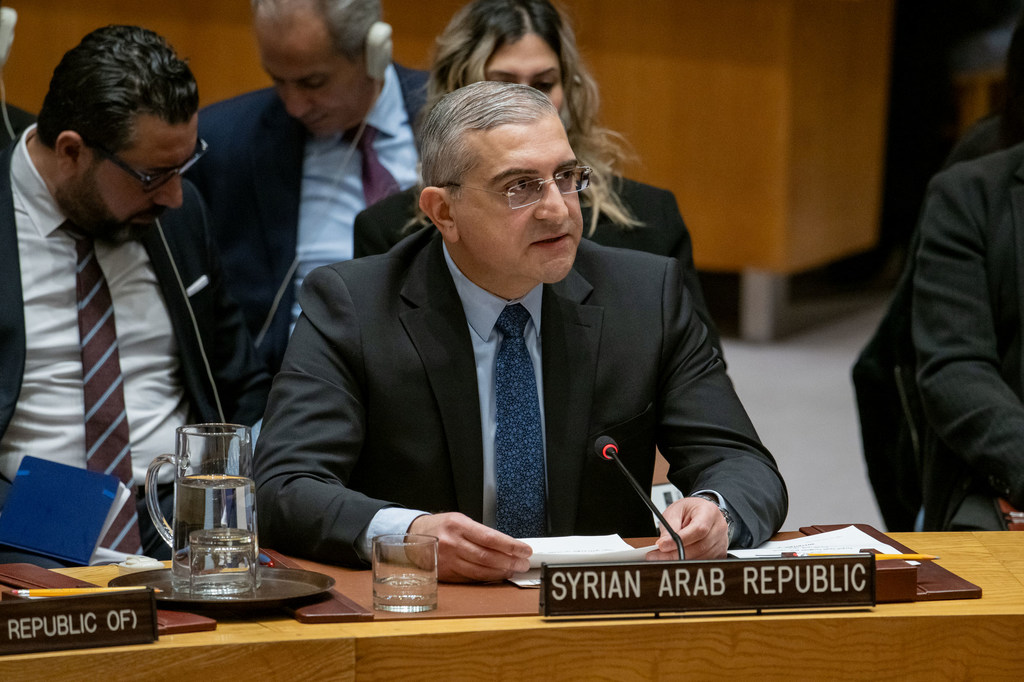
Laying out the transitional authorities’ case for the first time in New York, Syrian Ambassador Koussay Aldahhak called for the immediate lifting of sanctions put against the past regime, arguing that they obstruct humanitarian and reconstruction efforts.
UN Photo/Manuel Elías
Ambassador Koussay Aldahhak of Syria addresses the Security Council meeting on the situation in the country.
He urged the UN and Council Members to “respect the will of the Syrian people and its national choices.”
Mr. Pedersen acknowledged the need for economic support, stating that “a smooth end to sanctions, appropriate action on designations too, and major funding” are required for feasible reconstruction.
US Ambassador Dorothy Shea countered that sanctions would not hinder humanitarian assistance and reiterated her country’s support for a “Syrian-led and Syrian-owned political
process.”
A path forward
Mr. Pedersen outlined priorities for a credible and inclusive transition, emphasising the need for broad representation in national dialogue, constitutional reforms, and free and fair elections.
Mr. Fletcher concluded by stressing the importance of a peaceful political transition to reduce humanitarian needs.
Stable peace will aid relief efforts
“We need the peaceful political transition that will help us to reduce humanitarian needs,” he said, urging coordinated global efforts to support Syria during this critical phase.
Mr. Aldahhak explained that the country is currently preparing for a national dialogue conference to establish a transitional government to oversee national processes including the drafting of the constitution and the holding of elections.
He also outlined the de facto authorities’ vision for Syria’s future, as a “positive contributor to the promotion of international peace and security” and expressed their will “to build friendly relations based on mutual respect.”
As Syria rebuilds, the United Nations remains committed to facilitating dialogue, delivering humanitarian aid, and ensuring that the country’s future is guided by its people and supported by a united global effort.
Celebrity Media Editor's Note: The Celebrity Media United Nations Video Channel offers simultaneous interpretation services in six official languages based on the language settings of your iPhone. If your iPhone's default system setting is one of the six UN official languages, you will receive the simultaneous interpretation service.
Celebrity Media's six-language online platforms include: the Celebrity Media International Media Network Platform and the Celebrity Media International Alliance Network Platform. The homepage of the Celebrity Media six-language platform presents content in one of the UN's six official languages, alphabetically, from Monday to Saturday. The specific schedule is as follows: Monday: Arabic; Tuesday: Chinese; Wednesday: English; Thursday: French; Friday: Russian; Saturday: Spanish.
The network platform of the Celebrity Media Foundation, referred to as Celebrity Media, collaborates with media organizations using the six UN official languages through the UN News Center to establish the Celebrity Media International Alliance. It is dedicated to collecting, editing, and publishing global news, primarily United Nations news.
The Celebrity Media online platform is created and maintained by the AI Network Technology Department of the Celebrity Media Foundation. In addition to broadcasting news in the six official UN languages, some platforms offer special features, such as redisplaying reports and programs from years ago on the homepage. The Celebrity Media network platform is non-governmental media organization, the first to broadcast news in the six official UN languagesthe first to broadcast news in the six official UN languages. "501(c)(3) NGO"
iPhone devices using the six official UN languages can automatically select the audio channel of UN videos according to the device's language settings, achieving simultaneous interpretation. This feature is only available for Arabic, Chinese, English, French, Russian, and Spanish settings. Other languages, such as Japanese or Korean, cannot utilize this simultaneous interpretation feature.
This is an intelligent feature relying on Apple devices and United Nations technology. Videos released by the United Nations use real-time translation technology (such as voice recognition and language models) built into Apple devices for language processing. Specifically, when users watch UN videos, the device automatically selects the translation language based on the system language settings, providing simultaneous interpretation or subtitles. The implementation of this technology depends on the combination of device localization settings and cloud translation services, enhancing the efficiency of multilingual communication.
رسالة العام الجديد العالمية لعام 2025 للأمين العام للأمم المتحدة أنطونيو غوتيريش بست لغات
播放器加载中....
联合国秘书长安东尼奥·古特雷斯在周一发布的新年贺词中呼吁将2025年定为“新的开始”。
播放器加载中....
UN Secretary-General António Guterres called for making 2025 “a new beginning” in his message for the New Year, issued on Monday.
Chargement du lecteur....
Le Secrétaire général des Nations Unies, António Guterres, a appelé à faire de 2025 « un nouveau départ » dans son message pour la Nouvelle Année, publié lundi.
Загрузка плеера...
Генеральный секретарь ООН Антониу Гутерриш призвал сделать 2025 годом «нового начала» в своем новогоднем обращении, опубликованном в понедельник.
Cargando el reproductor...
El Secretario General de la ONU, António Guterres, llamó a hacer de 2025 "un nuevo comienzo" en su mensaje de Año Nuevo emitido el lunes.





 © UNOCHA/Yurii Veres People who have been displaced by the war in Ukraine stay in a transit centre in Dnipro.
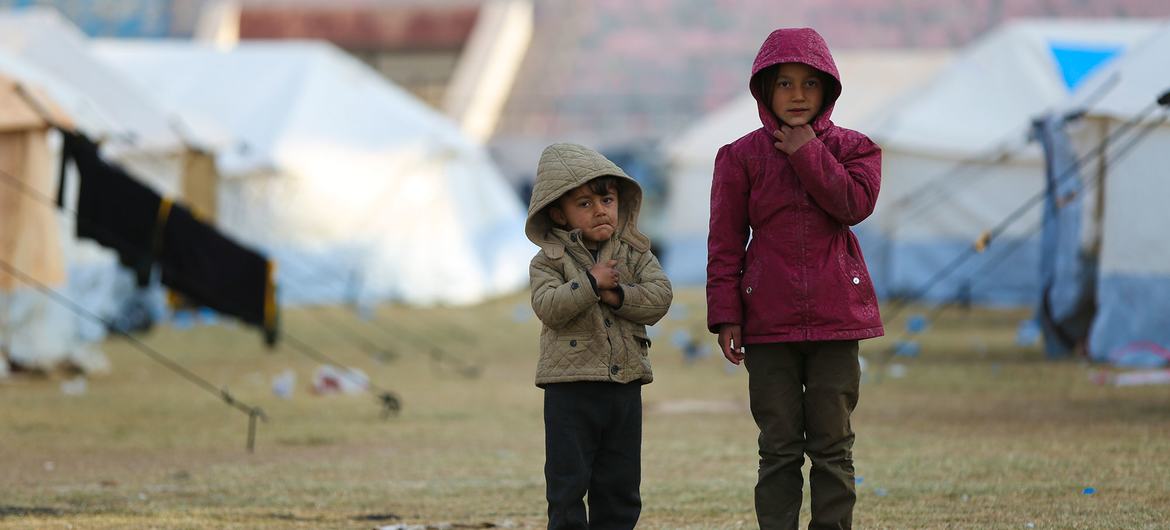 © UNICEF/Muhannad Aldhaher Children stand at a reception centre for newly arrived displaced families in Raqqa city, Syria