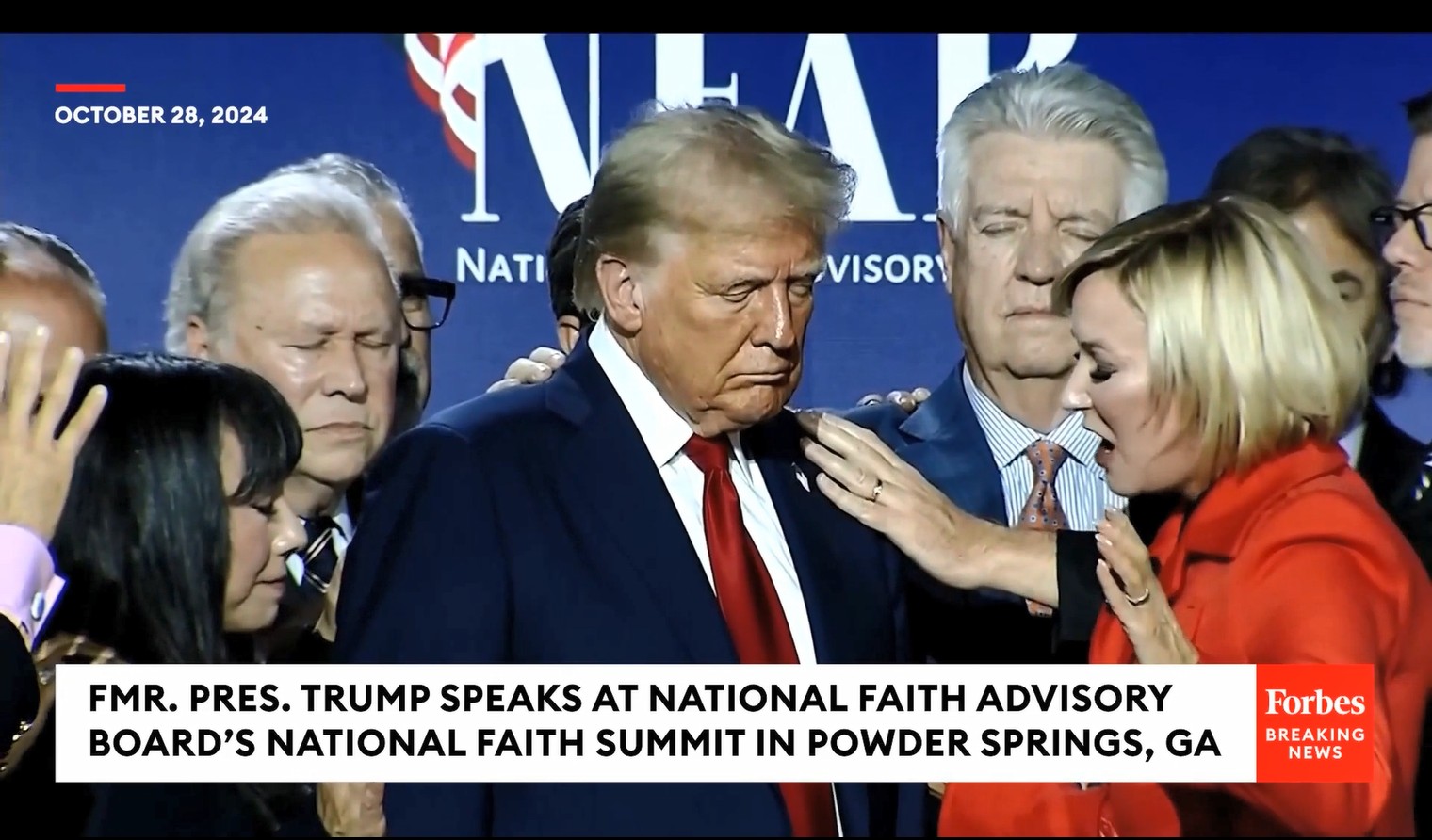
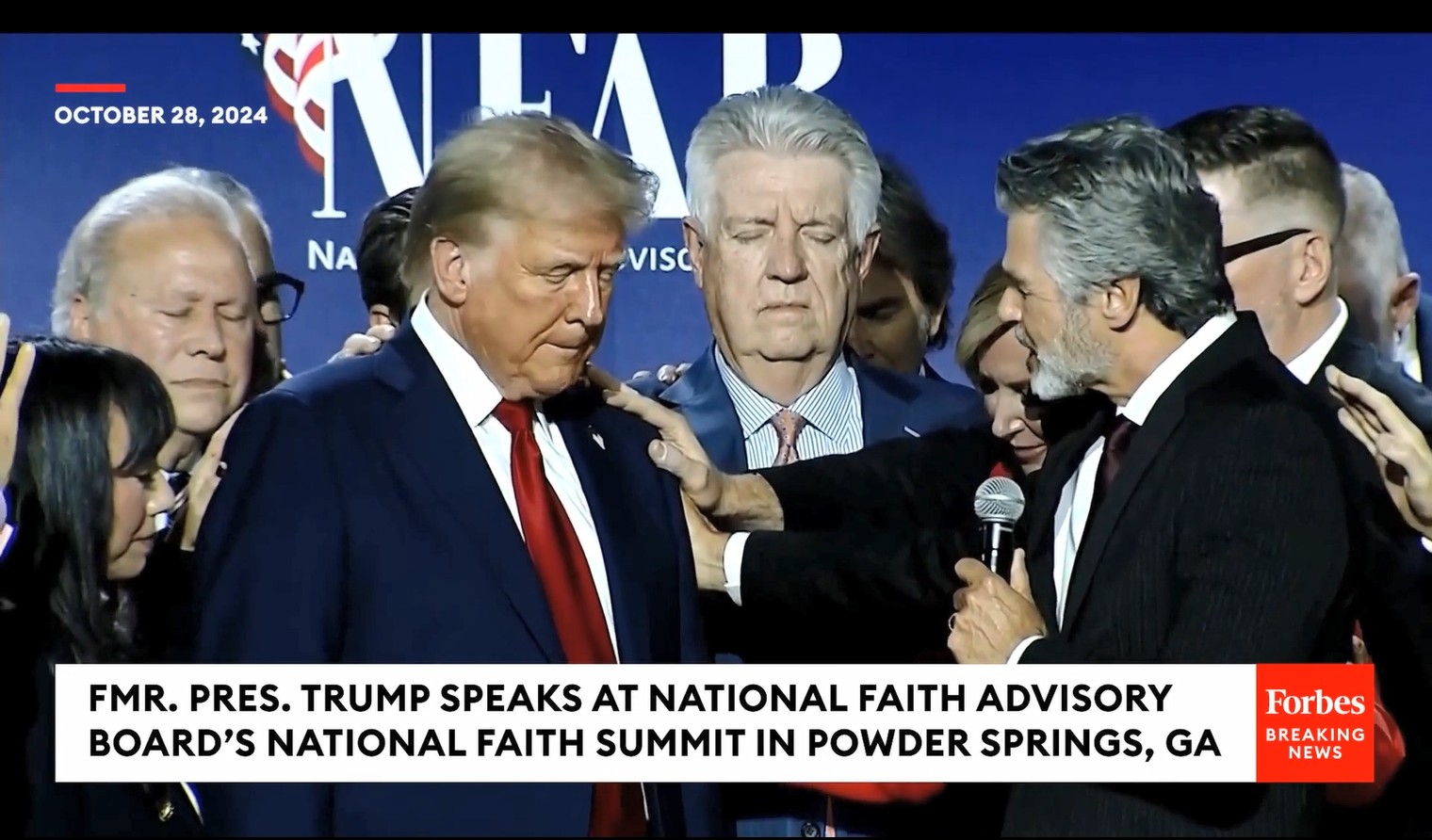
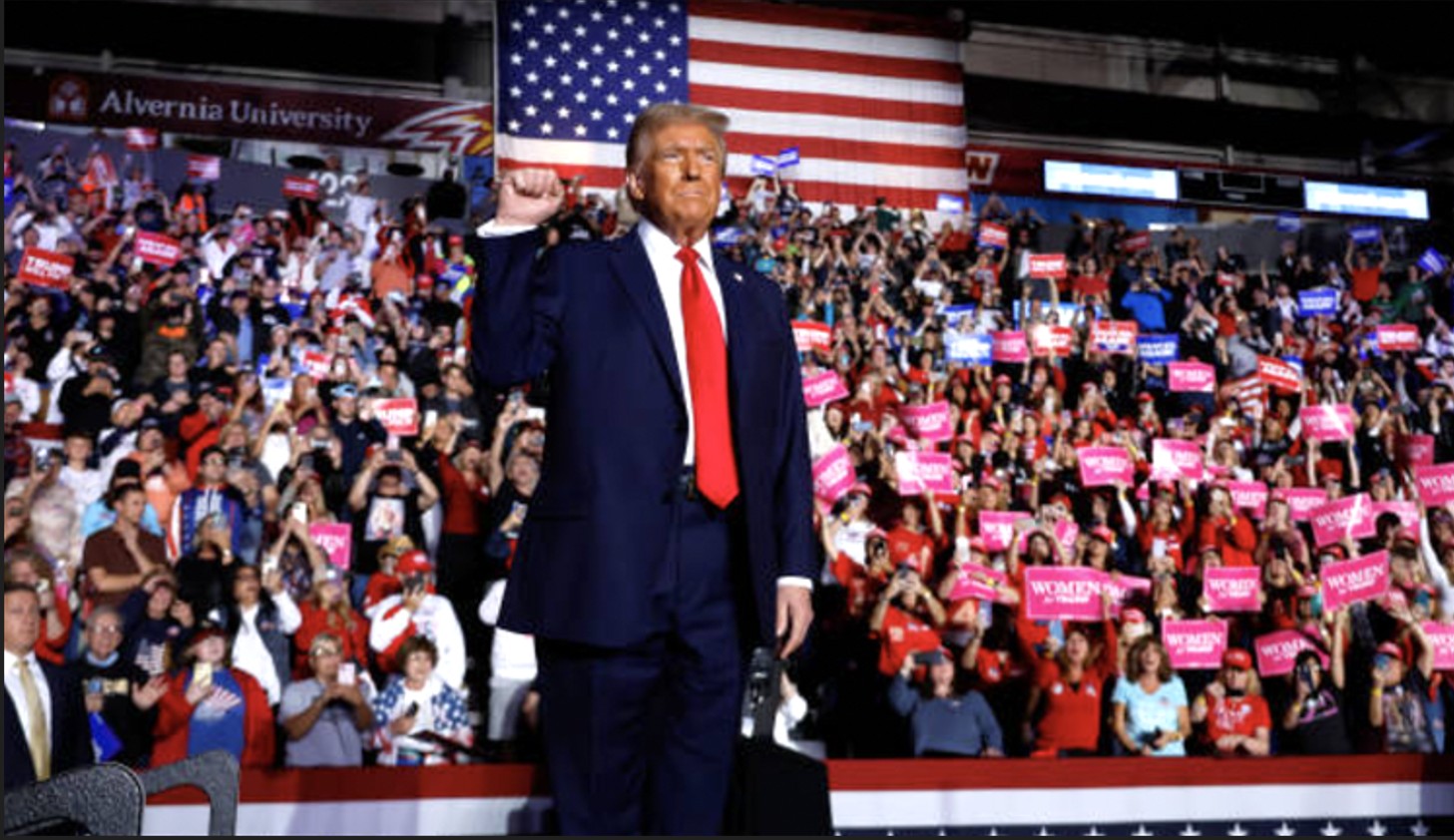
Celebrity Media Commentator: The 2024 U.S. presidential election concluded with Donald Trump's re-election, a result that has drawn significant attention among people of faith worldwide. For many, this was not just a political victory but also a demonstration of faith and public opinion. Trump's vote count indicates that he gained widespread public support and revealed to many the boundless power of God's will.
Player loading...
Trump won significant voter support in the election, a convergence of faith and public opinion, especially in the U.S. Bible Belt regions, where voters of faith demonstrated their strength at the ballot box. They believe that Trump's firm stance on protecting religious freedom, opposing abortion, and defending traditional family values is an important step in returning America to its Christian roots.
Data shows that Trump's vote share among voters of faith was overwhelmingly high, particularly among Evangelicals, Catholics, and other conservative faith communities. Their voting behavior was not just support for Trump's policies but a response to God's will. For many, Trump's victory is seen as an act of God manifested through public opinion.
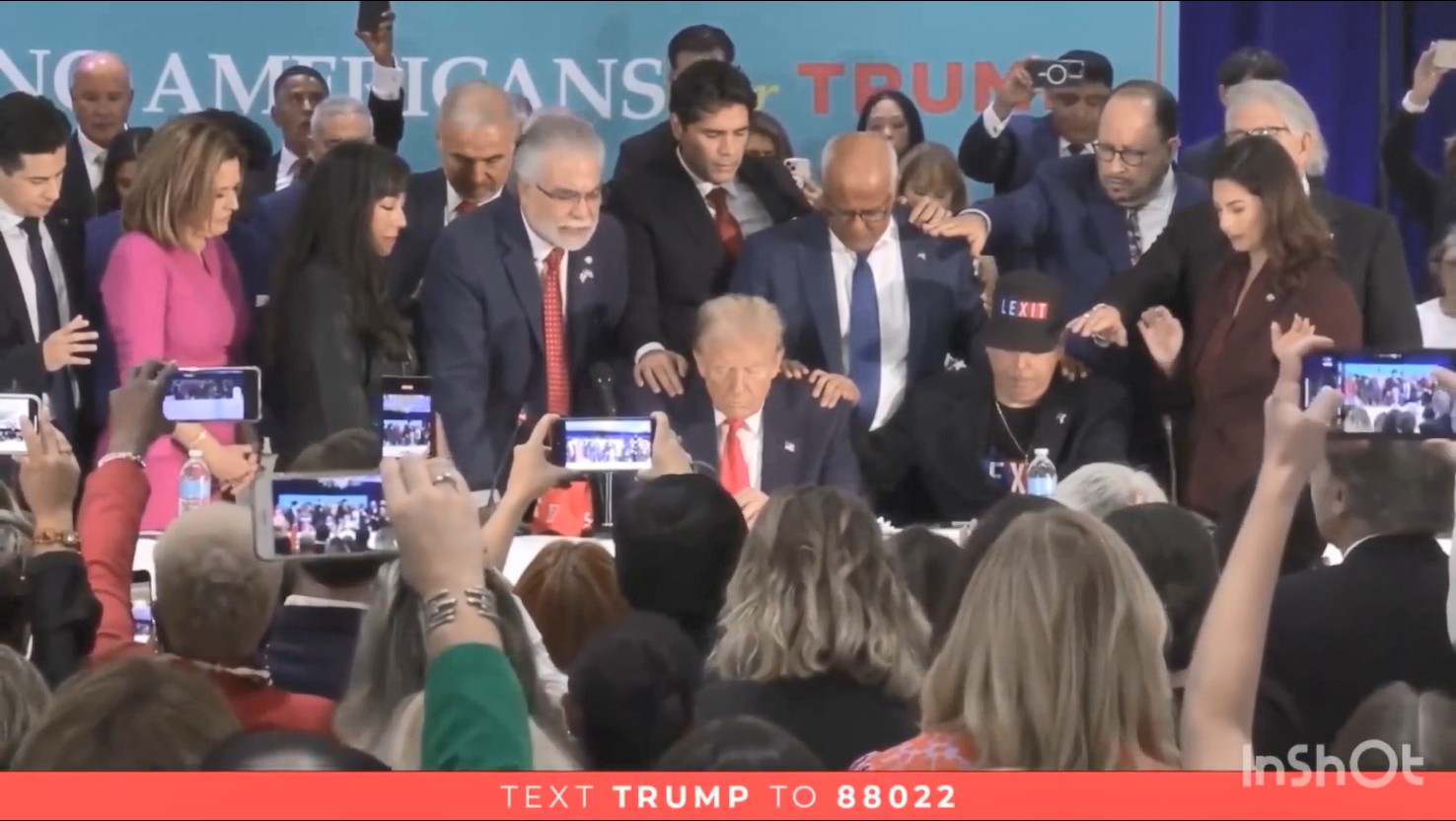
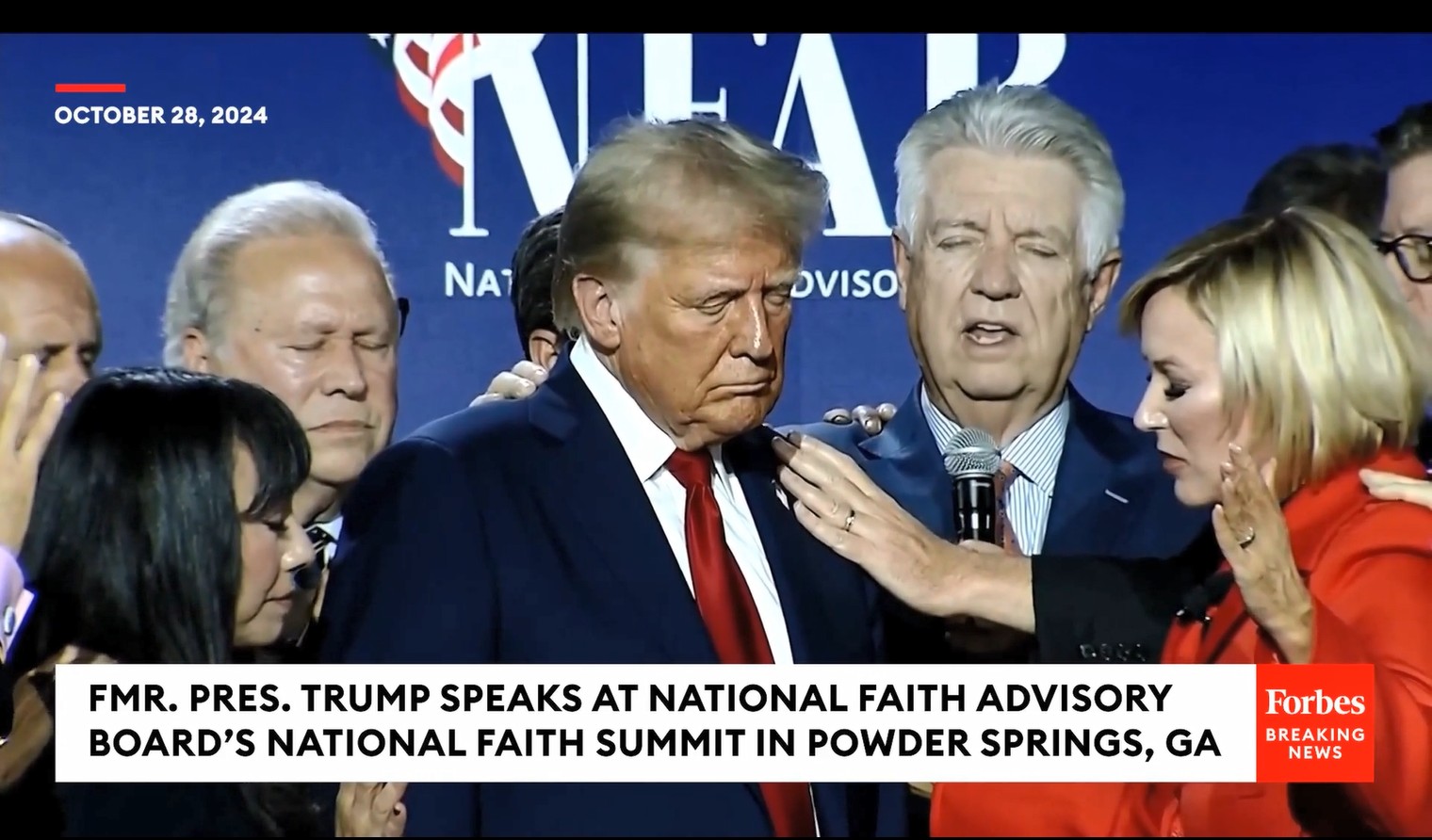
Donald Trump's re-election as president highlights the spiritual power of prayer. Before and after this election, churches worldwide launched an unprecedented prayer movement. Pastors led congregations in praying for God to provide a wise leader and for the future of the nation. Some pastors even prophesied that God would raise Trump to lead America again and bring the country into an era of revival.
Trump's victory convinces many that prayer is the bridge connecting public opinion and God's will. As Proverbs 21:1 says, "The king's heart is in the hand of the Lord; he directs it like a watercourse wherever he pleases." Trump's success demonstrates how God advances His plan through public opinion.
From the vote results, Trump's victory not only reflects public recognition of his policies but also signals that faith remains a vital force in shaping a nation's direction in modern society. For many voters of faith, their voting behavior is not merely a political choice but a response to God's calling. Through their ballots, they expressed a commitment to defending core Christian values and hoped that America would find revival through faith.
Trump's re-election is not just a respect for public opinion but also a testimony to the power of faith, inspiring greater expectations for the future of faith. During his upcoming administration, voters of faith hope he will continue to implement policies protecting religious freedom, defending the sanctity of life, and promoting social justice. This also raises higher expectations for faith communities: not only to continue praying and supporting but also to contribute through practical actions to the nation’s revival and harmony.
Trump's re-election reflects the powerful intersection of public opinion and faith. For many people of faith, this is evidence of God answering their prayers and a new beginning for America to seek its faith foundations. Regardless of future political changes, people of faith should continue to bear witness to God's work with greater confidence and love and influence the world through practical actions. As Romans 8:28 says, "And we know that in all things God works for the good of those who love him, who have been called according to his purpose."
UNIFIL/Pasqual Gorriz UN Secretary-General António Guterres (right) meets UN peacekeepers from Sri Lanka in Naqoura in southern Lebanon.
Continuing his high profile visit to Lebanon, UN Secretary-General António Guterres on Friday underscored the challenges faced by UN peacekeepers and reiterated the organization’s commitment to supporting the Lebanese Armed Forces.
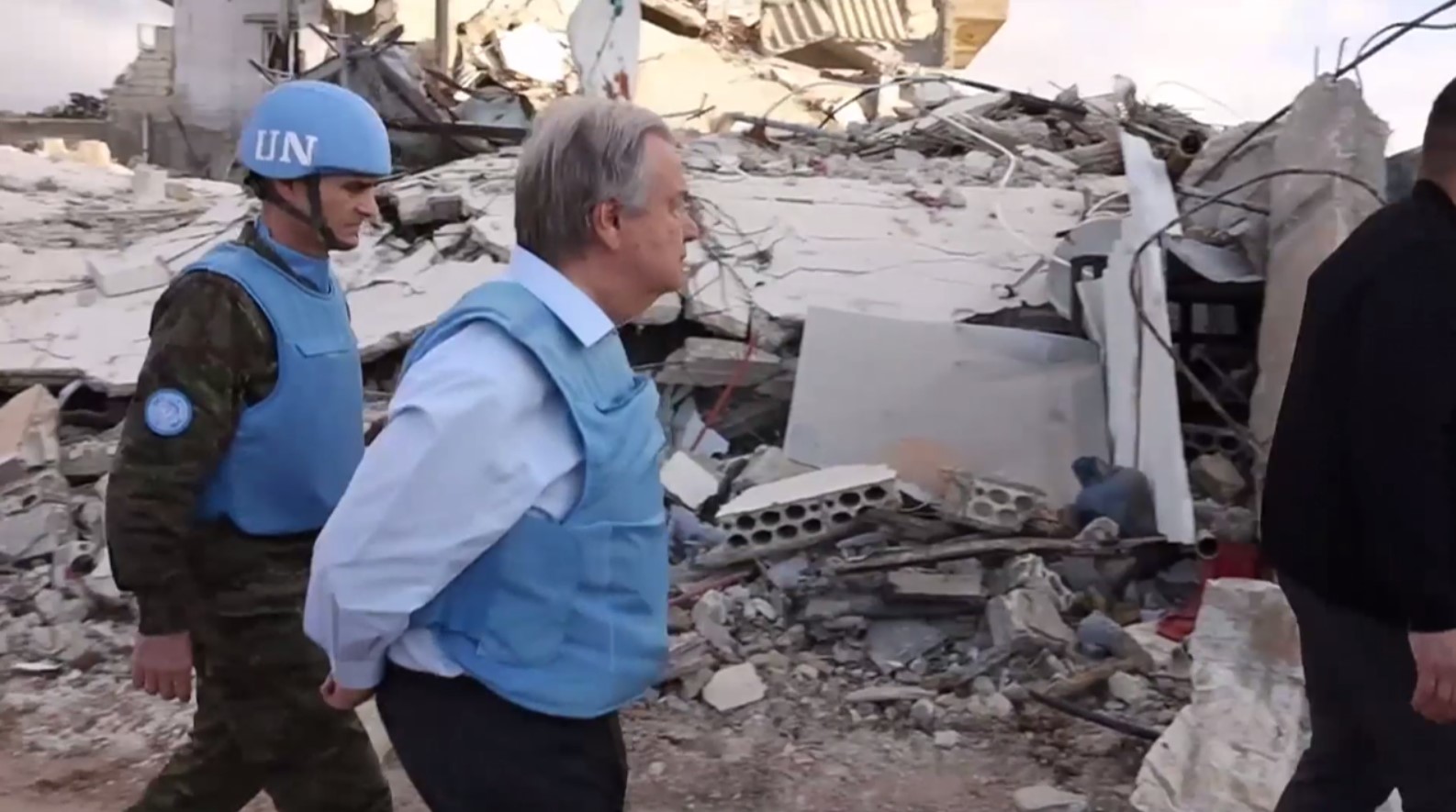
His itinerary included a trip to Naqoura in the south – where the UN Interim Force in Lebanon (UNIFIL) is headquartered – and he expressed his gratitude for the courage and determination of peacekeepers operating in one of the most challenging environments, where a fragile ceasefire between Hezbollah militants and Israeli forces across the Blue Line of separation is largely holding.
Frontline of peace
Mr. Guterres’ visit to Naqoura was marked by a tour of UNIFIL positions that had been targeted by Israeli forces last year. Go here to read our explainer recapping the mission's long history and role in keeping the peace.
Addressing the assembled leadership of the UN mission, he emphasized the critical role of peacekeepers, stating: “You are not just on the Blue Line of Lebanon but on the frontline of peace. The UNIFIL mission is the most challenging environment for peacekeepers anywhere.”
The Secretary-General highlighted ongoing violations of UN Security Council Resolution 1701
by the Israel Defense Forces (IDF), which continue to occupy areas within UNIFIL's operational zone and conduct military operations in Lebanese territory.
These actions, he noted, pose significant risks to the safety and security of the peacekeepers. The UN chief also pointed out that since 27 November, UNIFIL's ‘blue helmets’ had uncovered over 100 weapons caches belonging to Hezbollah and other armed groups.
Support for the national army
During his visit, Guterres met with the general leading the Lebanese Armed Forces in southern Lebanon.
He reiterated that the UN presence is temporary and emphasized the importance of supporting the Lebanese military. “UNIFIL is here to do everything possible to support the Lebanese Armed Forces,” he said, underscoring the collaborative efforts to maintain peace and stability in the region.
Diplomacy in Beirut
After returning to the capital Beirut in the afternoon, the Secretary-General had discussions with French President Emmanuel Macron, who was also visiting the Lebanese capital.
They covered a wide range of regional developments, reflecting the international community’s ongoing interest in Lebanon's stability and security.
In the evening, Mr. Guterres, along with UN Special Coordinator in Lebanon Jeanine Hennis-Plasschaert and UNIFIL Force Commander General Aroldo Lázaro, attended a working dinner hosted by Lebanon’s caretaker Prime Minister Najib Mikati.
This provided an opportunity for further dialogue on the challenges facing Lebanon and the role of the international community in addressing them.
UNIFIL/Pasqual Gorriz UN Secretary-General António Guterres (right) is welcomed by Lebanese Foreign Minister Abdallah Bou Habib at Beirut airport.
Looking ahead
The Secretary-General's visit will continue on Saturday, with a full day of meetings in Beirut.
He is scheduled to meet President Joseph Aoun, Prime Minister-designate Nawaf Salam, and Speaker of the Parliament Nabih Berri.
These meetings are expected to focus on Lebanon's political and economic situation, as well as the ongoing efforts to support the country’s recovery and stability.
The UN chief’s visit to Lebanon comes at a critical time, as the country grapples with political instability, economic challenges, and security threats.
His presence underscores the United Nations’ commitment to supporting Lebanon and its people, as well as the vital role of UN peacekeepers in maintaining peace and security in the region.
In his traditional new year address to the General Assembly setting out his key priorities for the global organization, the UN chief acknowledged the “turmoil of our world” and conceded that “it is understandable to get overwhelmed”.
咩咩咩咩咩咩咩咩咩咩
Nonetheless, Mr. Guterres urged delegates to “never lose sight of progress and potential”, highlighting the ceasefire in Lebanon which is “largely holding” and the country’s recent election of a President, after a two-year stalemate.
Away from the world’s battlefields, the UN chief underscored positive developments on climate action that reflect the commitment of the United Nations to combating global warming, as “the world now invests almost twice as much in clean energy as it does in fossil fuels…almost everywhere, solar and wind are now the cheapest sources of new electricity - and the fastest growing in history,” he said.
And as a measure of how much socio-economic progress has been made in line with UN values, Mr. Guterres noted that “in much of the world, girls have achieved parity in education. On health matters, moreover, “more children are surviving today than ever before,” he insisted, before adding that HIV infections “continue to dramatically decline, along with malaria mortality rates”.
He described the UN as “a force of construction” that is always strengthening how it works and delivers, proving the maxim that global problems need global solutions.
Pandora’s Box
But there can be no illusions that action or inaction has “unleashed a modern-day Pandora’s Box of ills,” he continued, highlighting protracted wars, inequality, the climate crisis and “out of control technology.”
Conflicts are multiplying with the full spectrum of human rights under increasing attack.
Mr. Guterres called for negotiators who are reportedly close to a deal on a Gaza ceasefire to finalise the deal. Throughout the whole Middle East “we must deny extremists a veto over a peaceful future,” he said.
He announced he would be travelling to Lebanon later in the day, emboldened by the positive developments there in recent weeks that could see Israelis and Lebanese forge a new and lasting era of peace and security.
He highlighted conflict in Ukraine, Sudan, the Sahel and Haiti.
Tackling inequality
“Inequalities can be beaten,” he said boldy, starting with accelerating progress on the Sustainable Development Goals (SDGs) through multilateral reform on all fronts.
He said the scourge of discrimination and hate speech was also fuelling inequality, demonstrating the need to strengthen “communities of belonging”: “This is even more crucial as guardrails around social media platforms are being dismantled, allowing disinformation and hate speech to run rampant.”
Climate crisis
Referencing the infernos engulfing the canyons of Los Angeles, the UN chief said everyday people worldwide are suffering the deadly effects of a warming planet and extreme weather.
But here too, there is a huge opportunity to reverse the damage and build on climate action such as renewable energy growth, a commitment to net zero and national plans to cut emissions.
The UN is assisting nearly 100 developing countries with their climate action plans ahead of the pivotal COP30 in Brazil later this year and he promised a special stocktaking event to keep the 1.5℃ target within reach.
Technology race
The Secretary-General said the technology revolution in 2025 also offers “unprecedented opportunities” but needs careful stewardship and a commitment to equal access for all.
Rapid and decisive action must be taken across the UN to ensure a level playing field including the setting up of an Independent International Scientific Panel on AI – without delay.
Secondly, governance of Artificial Intelligence must protect human rights while also promoting innovation. Third, developing countries must be supported so AI can be leveraged for sustainable development, he said.
“Humanity’s hand must be firmly in control” of the tech revolution, he added, with every nation helping to shape AI to advance human progress, equality and dignity.
Hope remains
In closing, he noted that the Pandora myth includes one often overlooked detail. After the box was opened unleashing its horrors, there was one thing left inside – hope.
“We must never lose sight of hope,” Mr. Guterres said. “And we will work to lift the lid on that hope through action. To make it real, to help it spread – sticking to principles, speaking the truth, never giving up.”
I now give the floor to the Secretary-General of the United Nations, His Excellency Antonio Guterres, to brief the assembly on his priorities for 2025.
Excellencies, ladies and gentlemen, let me begin by wishing you and your families a very happy and healthy 2025.
Excellencies, let's start with the good news. It is understandable to get overwhelmed by the turmoil of our world, but as we look to the year ahead, we must never lose sight of progress and potential. There are signs of hope. Negotiators are in the final stages of a ceasefire and hostage release deal in Gaza. Meanwhile, the ceasefire in Lebanon is largely holding, and the country was finally able to elect a president after over two years of stalemates.
On the climate front, the world now invests almost twice as much in clean energy as it does in fossil fuels. Almost everywhere, solar and wind are now the cheapest sources of new electricity and the fastest growing in history. In much of the world, girls have achieved parity in education, and more children are surviving today than ever before. HIV infections continue to dramatically decline, along with malaria mortality rates. We have seen meaningful new steps to reduce child marriage, protect our oceans, and expand internet access.
We begin 2025 lifted by the commitments of The Pact for the Future, the Global Digital Compact, and the Declaration on Future Generations. These measures are an affirmation of the power and purpose of our United Nations in our 80th anniversary year. Through thick and thin, the world has come together through the United Nations to tackle some of the most intractable problems—easing tensions, forging and keeping peace, setting bold goals to fight poverty, hunger, inequality, and climate change, seeking accountability for violations of international law, and delivering life-saving aid in the most desperate places on Earth.
From day one, the United Nations has represented the global conscience. In a world seemingly hellbent on destruction, our organization has been a force of construction. Every day, we continue to strengthen our work and deliver—from bolstering the UN development system on the ground to achieving gender parity at the highest levels. We remain restless for reform, striving to be more effective and cost-effective, simplifying procedures, decentralizing decisions, enhancing transparency and accountability, and shifting resources to invest in data, digital innovation, strategic foresight, and behavioral science through our UN 2.0 initiative.
The United Nations reflects a key truth: Global problems demand global solutions. The more we do together to address big challenges around the world, the less the burden on individual countries to do it alone.
Excellencies, this spirit of hope rooted in action must propel us forward. Yes, there is progress in our tumultuous world, but let’s have no illusions—this is very much a world in turmoil and grave uncertainty. Our actions or inactions have unleashed a modern-day Pandora’s box of ills. Four of those ills stand out because they represent at best threats that could disrupt every aspect of our agenda and, at worst, upend our very existence: runaway conflicts, rampant inequalities, the raging climate crisis, and out-of-control technology.
The good news is that we have the plans to tackle these challenges. We don’t need to reinvent the wheel; we need to get the wheel moving through acceleration and transformation. Oriented around The Pact for the Future, the implementation of which will be a central priority in 2025.
Excellencies, let’s start with peace. Conflicts are multiplying, becoming messier and deadlier. Deepening geopolitical divisions and mistrust are adding fuel to the fire. The nuclear threat is at its highest in decades. The spectrum of human rights is under constant attack, and impunity is endemic with serial violations of international law, international humanitarian law, and the UN Charter, along with systematic assaults on our very institutions.
In Gaza, we have been relentlessly calling for an immediate ceasefire, the unconditional release of hostages, and immediate action to protect civilians and ensure the delivery of life-saving aid. I want to once again salute the backbone of the humanitarian response—our colleagues in UNRWA. Of course, nothing can justify the terror attacks by Hamas on October 7th, and nothing can justify the dramatic levels of death and destruction inflicted on the Palestinian people. For months, there has been no ceiling to the suffering and no bottom to the horrors. I strongly appeal to all parties to finalize a ceasefire and hostage release deal sooner rather than later.
Across the region, we are seeing a reshaping of the Middle East. What is far less clear is what will emerge in Israel and Palestine. Will we see irreversible action toward the two-state solution in line with UN resolutions, international law, and previous agreements, as we have constantly advocated? Or will we instead see steady annexation by Israel and the denial of the Palestinian people's rights and dignity, destroying any chance of sustainable peace?
In Syria, after years of bloodshed, will we see a country that can finally be a beacon of different faiths, traditions, and communities shaping an inclusive, free, and peaceful future, as we continue to do everything to support? Or will we see fragmentation along with the trampling of the rights of minorities, women, and girls?
In Iran, will we see concrete actions to ensure the clear renunciation of any nuclear weapons program and contributions to a new regional security framework where the sovereignty of every state is respected, allowing for the full integration of Iran into the global economy? That is what we hope will become possible. Or will we see escalations with unpredictable consequences throughout the region?
We must not allow extremists a veto over a peaceful future. Tonight, I am leaving for Lebanon on a visit of solidarity with the Lebanese people and our peacekeeping forces. A window has opened for a new era of institutional stability, with a state fully able to protect its citizens and a system that will allow the tremendous potential of the Lebanese people to flourish. We will do everything to help keep that window open wide—a window that will allow both Lebanese and Israelis to live in security.
Excellencies, there is a world of pain beyond the Middle East...
I will continue from where the speech left off:
In Ukraine, the war is on the verge of its fourth year, and we must spare no effort for a just, lasting, and comprehensive peace in line with the UN Charter, international law, and General Assembly resolutions.
In Sudan, the warring parties have triggered widespread bloodshed, the world's largest displacement crisis, and famine. We are engaging all parties to protect civilians, de-escalate the conflict, and find a path to peace.
In the Sahel, we are working with partners for renewed dialogue to strengthen regional cooperation and address common threats, especially terrorism and violent extremism.
In Haiti, armed criminal gangs continue to run rampant. At the very least, we must ensure that the multinational security support mission receives sustainable and predictable funding, just as we must for the African Union support and stabilization mission in Somalia.
From Myanmar to the Democratic Republic of the Congo to Yemen and far beyond, we must keep working for peace. This is the raison d’être of the United Nations. That includes advancing The Pact for the Future’s commitments—prioritizing conflict prevention, mediation, conflict resolution, and peacebuilding; continuing to strengthen peacekeeping; ensuring the meaningful inclusion of women in political and peace processes; and working on disarmament initiatives.
This includes the first multilateral agreement on nuclear disarmament in more than a decade, new strategies to end the use of chemical and biological weapons, vital efforts to prevent an arms race in outer space, and advancing discussions on the use of lethal autonomous weapons while updating understandings of today’s arms race impact on sustainable development.
Excellencies, inequalities are also spreading from this modern-day Pandora’s box. Vast inequalities are an unmistakable signal that something is deeply wrong with our socio-economic, political, and financial systems. But inequalities can be beaten if we commit to policies that promote equality and equity rather than clinging to the same failed approaches.
We must accelerate action to achieve the Sustainable Development Goals (SDGs). With just five years to 2030, less than one-fifth of the targets are on course, aggravated by a $4 trillion annual financing gap. Acceleration means focusing on high-impact areas like poverty eradication, food security, quality education for all, social protection, universal health coverage, energy access, digitalization, and reducing climate impacts. Particular attention must be given to Africa.
Finance is essential. The Pact for the Future includes clear support for an SDG stimulus to help close the financing gap. It calls on donors to meet official development assistance commitments and for the private sector to invest in sustainable development. It also advocates for strong social protection systems, trade that serves as a ladder for growth and development, and taxation that delivers fairness and broad-based prosperity.
We must fight inequalities by reforming and modernizing the institutions of global finance to represent today’s economy, not that of 1945. Developing countries must be represented fairly in the governance of the very institutions on which they depend. We must strengthen the global safety net and substantially increase the lending capacity of multilateral development banks, making them bigger and bolder.
We must also address sovereign debt issues by ensuring concessional finance is deployed where it is most needed, taking into account vulnerability, not just GDP per capita. This includes meaningful action to help countries in or near debt distress so they can invest in the SDGs. At the same time, the sovereign debt architecture must be improved to enable countries to borrow with confidence.
Excellencies, we have critical opportunities this year to achieve breakthroughs on the SDGs, from the Conference on Financing for Development to the World Summit for Social Development, the G20 Summit under the presidency of South Africa, COP30 in Brazil, and the UN Ocean Conference, through to Beijing+30.
These opportunities must also expand for women and girls. The Pact for the Future calls on all countries to achieve full gender equality by removing legal, social, and economic barriers; ending violence and harassment against women and girls; closing the gender pay gap; and ensuring equal participation and leadership opportunities across sectors.
We must also stand with young people everywhere. The Declaration on Future Generations commits to strengthening youth participation in decision-making at national and global levels. Through the newly established UN Youth Office, and by implementing the Global Digital Compact, we aim to champion young innovators, nurture entrepreneurial spirit, and equip the next generation with digital literacy and skills.
Excellencies, the climate crisis demands immediate action. Global emissions must peak this year and decline rapidly thereafter to maintain a chance of limiting global temperature rise to 1.5 degrees Celsius. This includes ensuring new national climate action plans (NDCs) align with this goal and cutting emissions by 60% by 2035 compared to 2019 levels.
We must also implement the agreements made at COP28 on deforestation and energy transition. At the same time, financial architecture reform and climate finance must support developing nations. This includes the $1.3 trillion needed annually for climate action in the Global South and doubling adaptation finance to at least $40 billion this year.
Finally, technology must serve humanity. The Global Digital Compact provides a roadmap to ensure equitable access to technology, establish global AI governance, and leverage technology for sustainable development. A new UN Office for Digital and Emerging Technologies will coordinate efforts across the system.
Excellencies, as we address the modern-day Pandora’s box, let us remember that hope remains. The poet reminds us that “only hope remained” in the box. We must never lose sight of hope. Let us lift the lid on that hope through action—sticking to principles, speaking the truth, and never giving up.
In this 80th anniversary year of the United Nations, let us build a more peaceful, just, and prosperous world. It is within reach. Thank you.
Commentateur des Médias Célèbres : L'élection présidentielle américaine de 2024 s'est conclue par la réélection de Donald Trump, un résultat qui a attiré une attention significative parmi les croyants du monde entier. Pour beaucoup, ce n'était pas seulement une victoire politique, mais aussi une démonstration de foi et d'opinion publique. Le décompte des votes pour Trump indique qu'il a obtenu un large soutien public et a révélé à beaucoup la puissance infinie de la volonté de Dieu.
Chargement du lecteur...
Trump a obtenu un soutien significatif des électeurs lors de l'élection, une convergence de foi et d'opinion publique, en particulier dans les régions de la ceinture biblique des États-Unis, où les croyants ont démontré leur force dans les urnes. Ils croient que la position ferme de Trump sur la protection de la liberté religieuse, l'opposition à l'avortement et la défense des valeurs familiales traditionnelles constitue une étape importante pour ramener l'Amérique à ses racines chrétiennes.
Les données montrent que la part des votes pour Trump parmi les croyants était extrêmement élevée, en particulier parmi les évangéliques, les catholiques et d'autres communautés religieuses conservatrices. Leur comportement électoral n'était pas seulement un soutien aux politiques de Trump, mais une réponse à la volonté de Dieu. Pour beaucoup, la victoire de Trump est perçue comme un acte de Dieu manifesté à travers l'opinion publique.
La réélection de Donald Trump en tant que président souligne la puissance spirituelle de la prière. Avant et après cette élection, les églises du monde entier ont lancé un mouvement de prière sans précédent. Les pasteurs ont dirigé leurs congrégations en priant pour que Dieu fournisse un dirigeant sage et pour l'avenir de la nation. Certains pasteurs ont même prophétisé que Dieu élèverait Trump pour diriger à nouveau l'Amérique et amener le pays dans une ère de réveil.
La victoire de Trump convainc beaucoup que la prière est le pont reliant l'opinion publique et la volonté de Dieu. Comme le dit Proverbes 21:1, "Le cœur du roi est un courant d'eau dans la main de l'Éternel; il l'incline partout où il veut." Le succès de Trump démontre comment Dieu fait avancer son plan à travers l'opinion publique.
D'après les résultats des votes, la victoire de Trump reflète non seulement la reconnaissance publique de ses politiques, mais aussi le fait que la foi reste une force vitale pour façonner la direction d'une nation dans la société moderne. Pour de nombreux croyants, leur comportement électoral n'est pas seulement un choix politique mais une réponse à l'appel de Dieu. À travers leurs votes, ils ont exprimé un engagement à défendre les valeurs chrétiennes fondamentales et espéraient que l'Amérique trouverait un renouveau grâce à la foi.
La réélection de Trump n'est pas seulement un respect de l'opinion publique mais aussi un témoignage de la puissance de la foi, inspirant de plus grandes attentes pour l'avenir de la foi. Au cours de son administration à venir, les croyants espèrent qu'il continuera à mettre en œuvre des politiques protégeant la liberté religieuse, défendant la sainteté de la vie et promouvant la justice sociale. Cela élève également les attentes envers les communautés religieuses : non seulement continuer à prier et à soutenir, mais aussi contribuer par des actions concrètes au renouveau et à l'harmonie de la nation.
La réélection de Trump reflète la puissante intersection de l'opinion publique et de la foi. Pour de nombreux croyants, cela est la preuve que Dieu répond à leurs prières et un nouveau départ pour que l'Amérique recherche ses fondations dans la foi. Indépendamment des changements politiques futurs, les croyants devraient continuer à témoigner du travail de Dieu avec une plus grande confiance et amour et influencer le monde par des actions concrètes. Comme le dit Romains 8:28, "Nous savons que toutes choses concourent au bien de ceux qui aiment Dieu, de ceux qui sont appelés selon son dessein."
UN Photo/Manuel Elías UN Secretary-General António Guterres (left) addresses the media at UN Headquarters after a ceasefire is announced in Gaza.
The UN Secretary-General has welcomed Wednesday’s announcement of a deal to secure a ceasefire and hostage release in Gaza following 15 months of war.
Speaking to reporters at UN Headquarters, António Guterres commended mediators Egypt, Qatar and the United States for their dedicated efforts in brokering the agreement.
“Their unwavering commitment to finding a diplomatic solution has been critical in achieving this breakthrough,” he said.
He called on all relevant parties to uphold their commitments to ensure that the deal is fully implemented.
Ease the suffering
Mr. Guterres noted that from the outset of the violence, he has called for an immediate ceasefire and the immediate and unconditional release of all hostages.
Stressing that the priority must be to ease the tremendous suffering caused by the conflict, he said the UN stands ready to support the implementation of the deal and scale up the delivery of sustained humanitarian relief.
“It is imperative that this ceasefire removes the significant security and political obstacles to delivering aid across Gaza so that we can support a major increase in urgent lifesaving humanitarian support. The humanitarian situation is at catastrophic levels,” he warned.
Allow aid in
The Secretary-General called on all parties to facilitate the rapid, unhindered, and safe humanitarian relief for all civilians in need.
For its part, the UN “will do whatever is humanly possible, aware of the serious challenges and constraints that we will be facing”. He expects that these efforts will be matched by humanitarian organizations, the private sector and bilateral initiatives.
‘Advance broader goals’
“This deal is a critical first step, but we must mobilize all efforts to also advance broader goals, including the preservation of the unity, contiguity, and integrity of the Occupied Palestinian Territory,” he said.
Palestinian unity is essential for achieving lasting peace and stability, in this regard, and he emphasized that unified Palestinian governance must remain a top priority.
“I urge the parties and all relevant partners to seize this opportunity to establish a credible political path to a better future for Palestinians, Israelis, and the broader region,” he continued.
He highlighted the need to end the occupation and achieve a negotiated two-State solution between Israelis and Palestinians.
Before concluding his remarks, Mr. Guterres paid tribute to the civilians who have lost their lives in the conflict, including UN personnel and humanitarian workers.
The war in Gaza recently entered a third year.
Israel launched the military campaign following the 7 October 2023 Hamas-led attacks on its territory. Some 1,200 people were killed and 250 were taken as hostages, with around 100 still being held.
More than 46,000 Palestinians have been killed since the conflict began, according to Gaza’s health authorities.
UNRWA threat looms
Gaza has a population of just over two million, and 1.9 million have been displaced, according to the UN Palestine refugee agency, UNRWA, which is housing hundreds of thousands in its schools-turned-shelters.
The Secretary-General has repeatedly referred to UNRWA as the “backbone” of relief efforts in the enclave. The agency has suffered immense losses as 265 staff members have been killed and its facilities have come under attack.
The ceasefire announcement comes as two Israeli laws aimed at ending UNRWA ‘s operations in the Occupied Palestinian Territory are due to take effect in mere weeks.
“The agency’s collapse – whether immediate or gradual – will only compound the immense suffering in Gaza,” Commissioner-General Philippe Lazzarini said on Tuesday at a meeting in Oslo focused on the two-State solution.





 UNIFIL/Pasqual Gorriz UN Secretary-General António Guterres (right) meets UN peacekeepers from Sri Lanka in Naqoura in southern Lebanon.


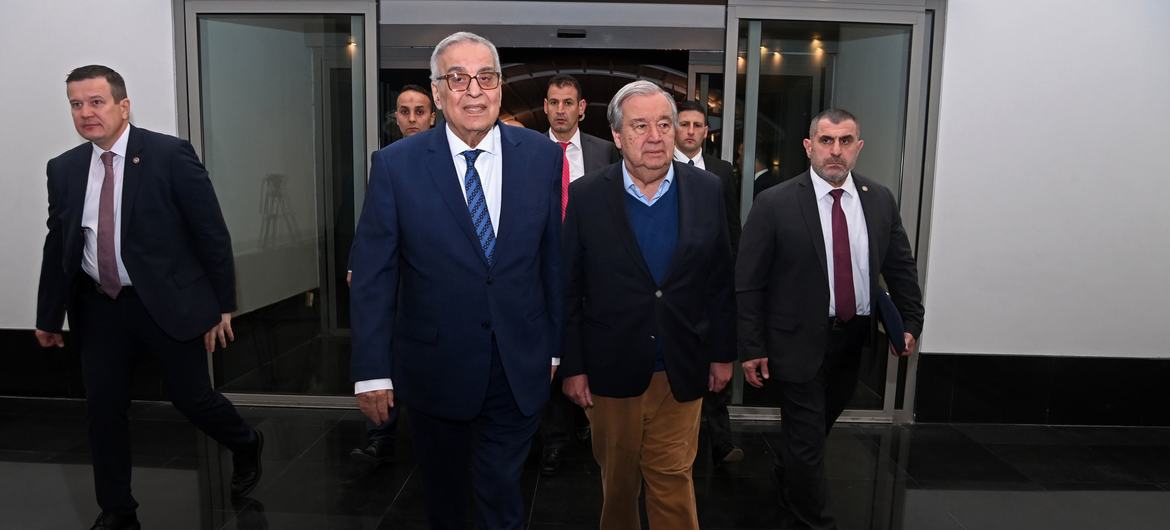 UNIFIL/Pasqual Gorriz UN Secretary-General António Guterres (right) is welcomed by Lebanese Foreign Minister Abdallah Bou Habib at Beirut airport.

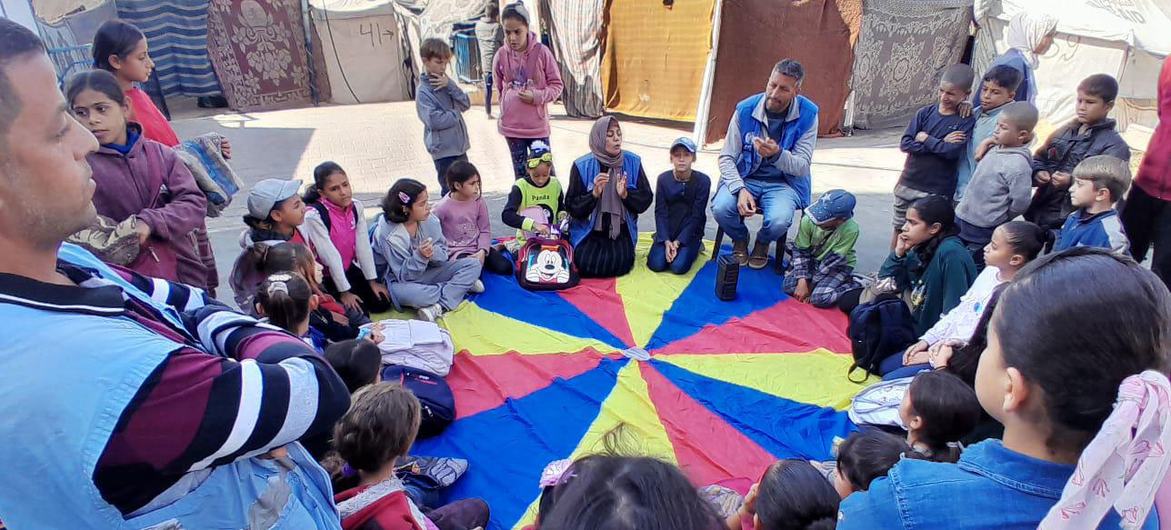 © UNRWA Children in Gaza receive support from UNRWA staff members. In his priorities speech the UN chief paid tribute to the agency as the backbone of the humanitarian response in Gaza.
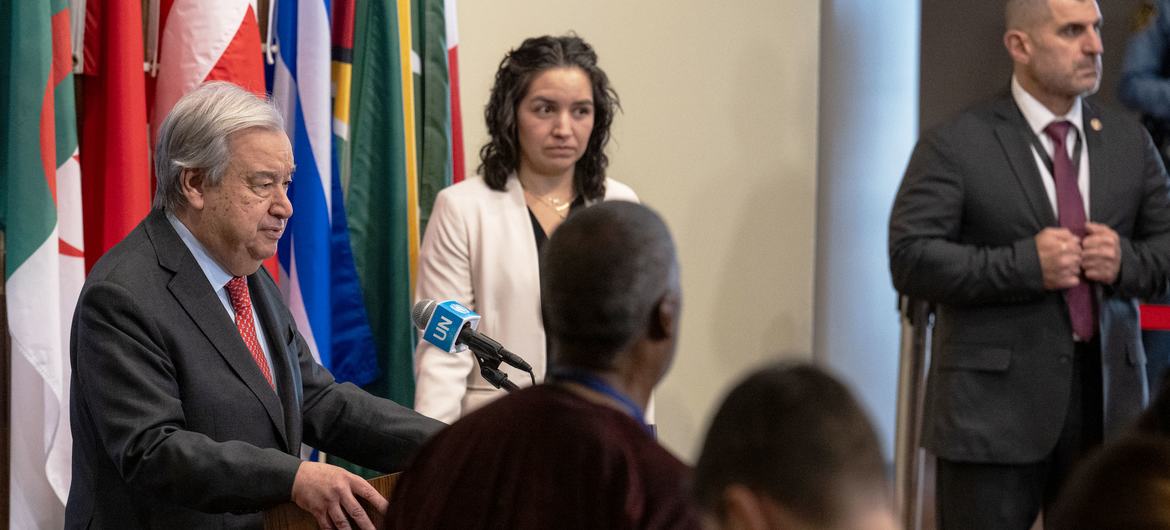 UN Photo/Manuel Elías UN Secretary-General António Guterres (left) addresses the media at UN Headquarters after a ceasefire is announced in Gaza.
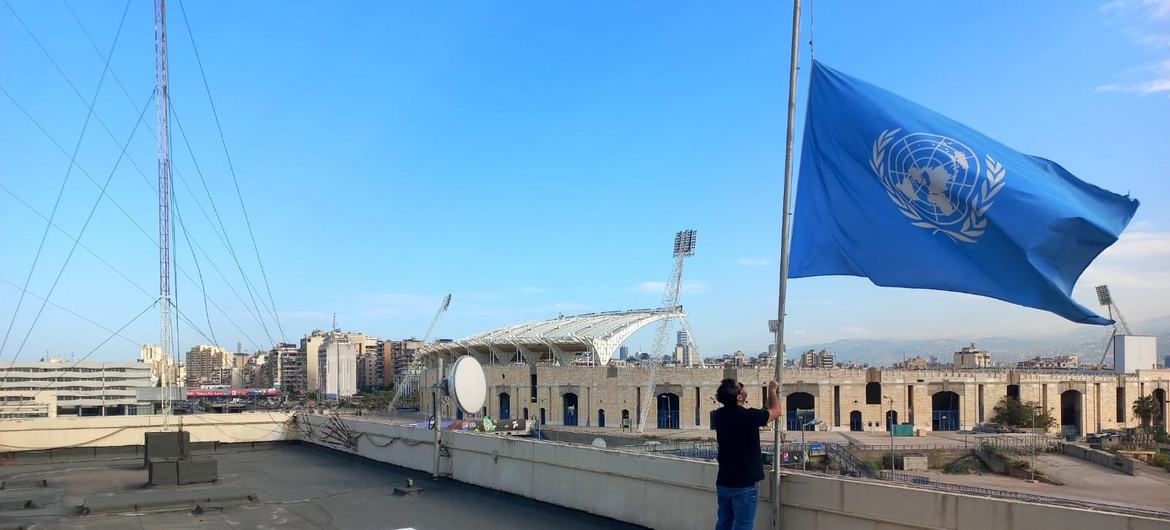 © UNRWA/Fadi El Tayyar UNRWA flag-lowering ceremony at the UNRWA Lebanon Field Office in Beirut.