YoutubeCelebrity.TV

Celebrity Media Alliance

Six UN Languages News.

منصة وسائل الإعلام المشاهير تبث الأخبار يوم الاثنين باللغة العربية

名人媒体平台星期二使用中文播报新闻

The celebrity media platform broadcasts news on Wednesday in English

La plateforme médiatique des célébrités diffuse les nouvelles le jeudi en français

Медийная платформа знаменитостей вещает новости в пятницу на русском языке

La plataforma de medios de celebridades transmite noticias el sábado en español

Strong UN Better World! 联合国强大 世界更美好!

>
 
Video cover
 
 
联合国秘书长在世界人工智能大会上的发言
Audio cover
News Summary of the Election for the Tenth Secretary-General of the UN

English Media

INTERVIEW: Visitors to Expo 2025 appreciate ‘positive vision’ of UN

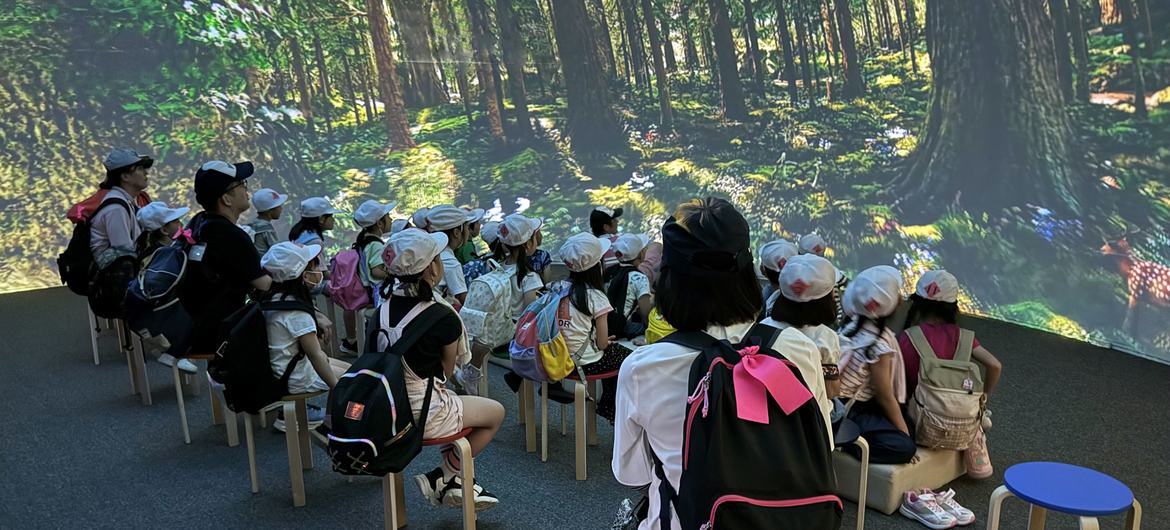
School children enjoy an immersive video at the UN Pavilion at Expo 2025.UN Pavilion School children enjoy an immersive video at the UN Pavilion at Expo 2025.

By Daniel Dickinson, Osaka, Japan

Visitors to Expo 2025, a world fair currently being held in Osaka, Japan, appreciate the “positive vison” of a shared global future promoted by the United Nations; that’s according to Naomi Ichikawa, Director of the UN Pavilion.

Visitors can explore the UN’s 80-year history of advancing peace, human rights, sustainable development and climate action and see how the work of the UN system impacts the lives of all people across the world.
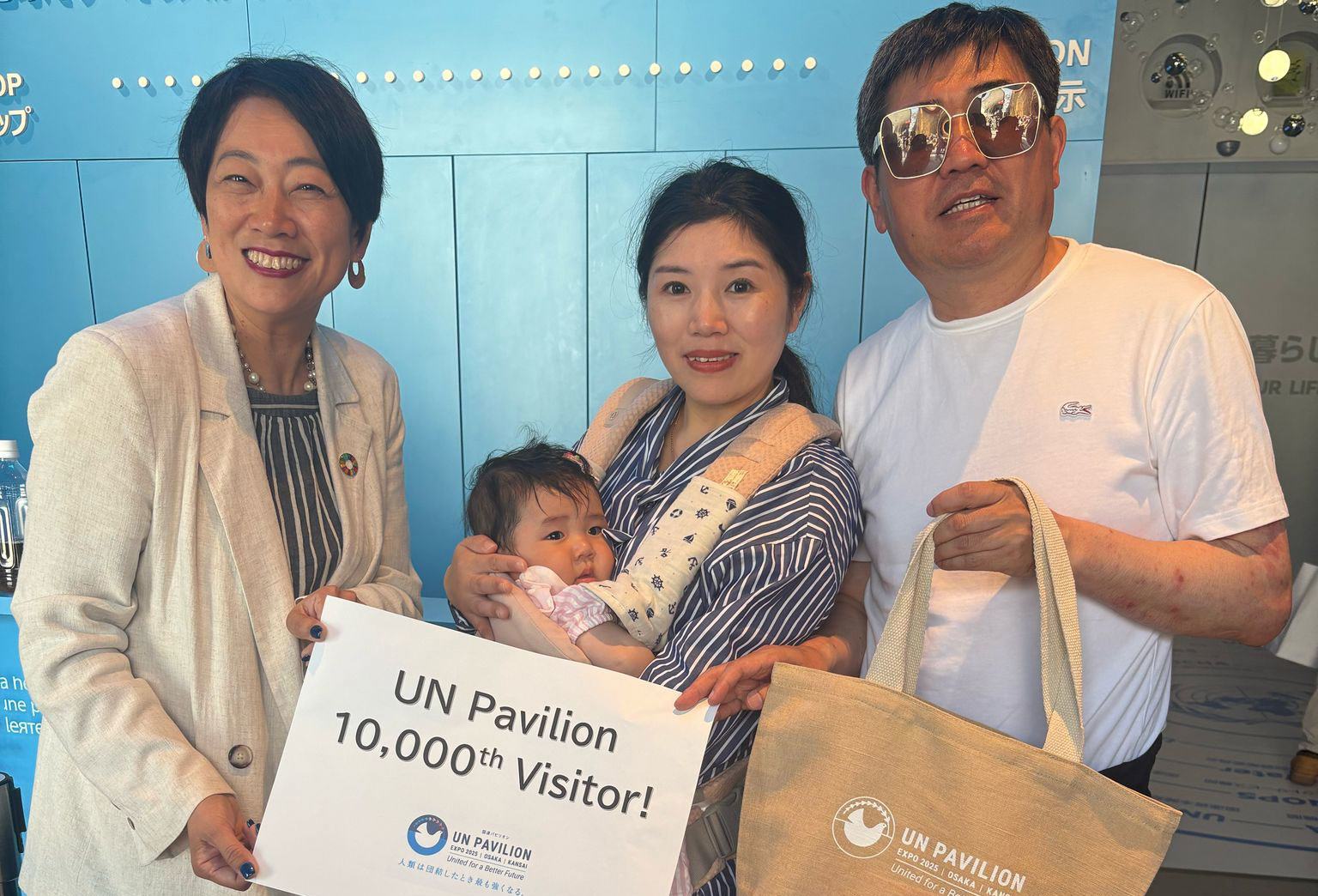
Naomi Ichikawa (left) welcomes the 10,000th visitor to the UN Pavilion in April, just five days after Expo 2025 opened.UN ExpoNaomi Ichikawa (left) welcomes the 10,000th visitor to the UN Pavilion in April, just five days after Expo 2025 opened.

What are the different sections of the pavilion and what they're trying to achieve?

We have four exhibit zones. The first zone portrays 80 years of UN history, highlighting key milestones from 1945 until today. It also shows the changing relationship between Japan and the UN.

In the 1940s following the devastation of the Second World War Japan was a recipient of UN assistance. But after Japan joined the UN (in 1956) it gradually started to take leadership in different areas, for example in climate change issues, disaster risk reduction and in the provision of Universal Health Coverage.

Zone two shows the work of diverse UN entities. Visitors will notice that there are many everyday objects on the wall; a toilet, helmet, car seat, post box but they may not realize that these items are actually closely related to the work of the UN.
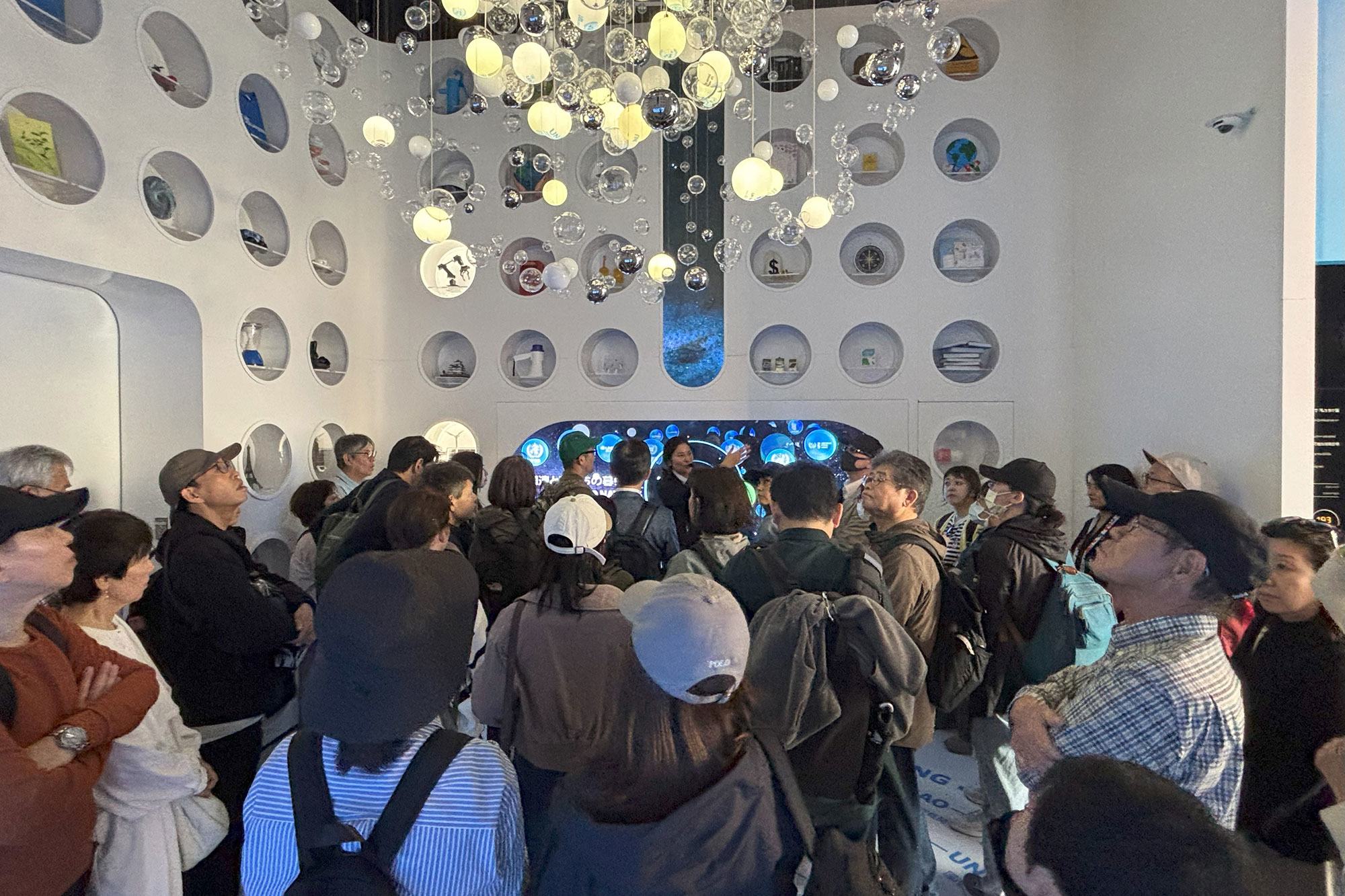
Visitors to the UN Pavilion explore the 'orb' room.UN Pavilion Visitors to the UN Pavilion explore the 'orb' room.

By tapping on the monitor, the items light up and an explanation is given about its relationship to the work of the UN.

One of the aims of this zone is to demonstrate that the UN is not just about conflict resolution. In Japan, when the UN is mentioned, many people think about the Security Council and ask why Japan isn’t a permanent member. 

We wanted to show in an interesting interactive way that the UN's work is so much more than that.

In zone three, which represents the future, we show through an immersive movie, a vision of the sustainable future that we can achieve if we work together. In the movie, the UN Secretary-General says that this future is not automatic, but it is one that we can achieve together.

The final part of the pavilion is the special exhibition zone that features the work of different UN entities each week. 

Why is it important that the UN is here at Expo? 

I would say that 90 per cent of Japanese people know about the Sustainable Development Goals (SDGs), but many do not know what they can do in their lives to contribute to the SDGs, or understand the positive role played by the UN in making the SDGs a reality in a global context. So, we felt that it was important to explain that work.

There are some 160 different countries participating in Expo and they are here to showcase their own cultures.

But it's the UN which can encourage countries to work together to achieve peace and a sustainable world. So, collaboration and multilateralism are key themes of the pavilion.

Why is that message important? 

The world is divided right now and you can sense the anxiety about that, even in Japan. That anxiety is not just focused on political issues but also on the environmental and other global challenges which go beyond the country level. At the UN Pavilion they can learn about these challenges but also the solutions.

I am so proud to be part of a team which explains how the UN is contributing to solving these global problems. It is rewarding to interact with visitors and to support their understanding of the UN.

Many are surprised by the range of work in which the organization is engaged, and everyone leaves inspired by our messages.

What is the most surprising reaction you've had from a visitor?

There has been great interest and engagement in the immersive video which envisions a hopeful future that all humanity can enjoy if we work together. It has a very simple message about collaboration which can be easily understood by people of all ages and backgrounds.

Many people have been deeply affected by its message and I have seen some moved to tears.
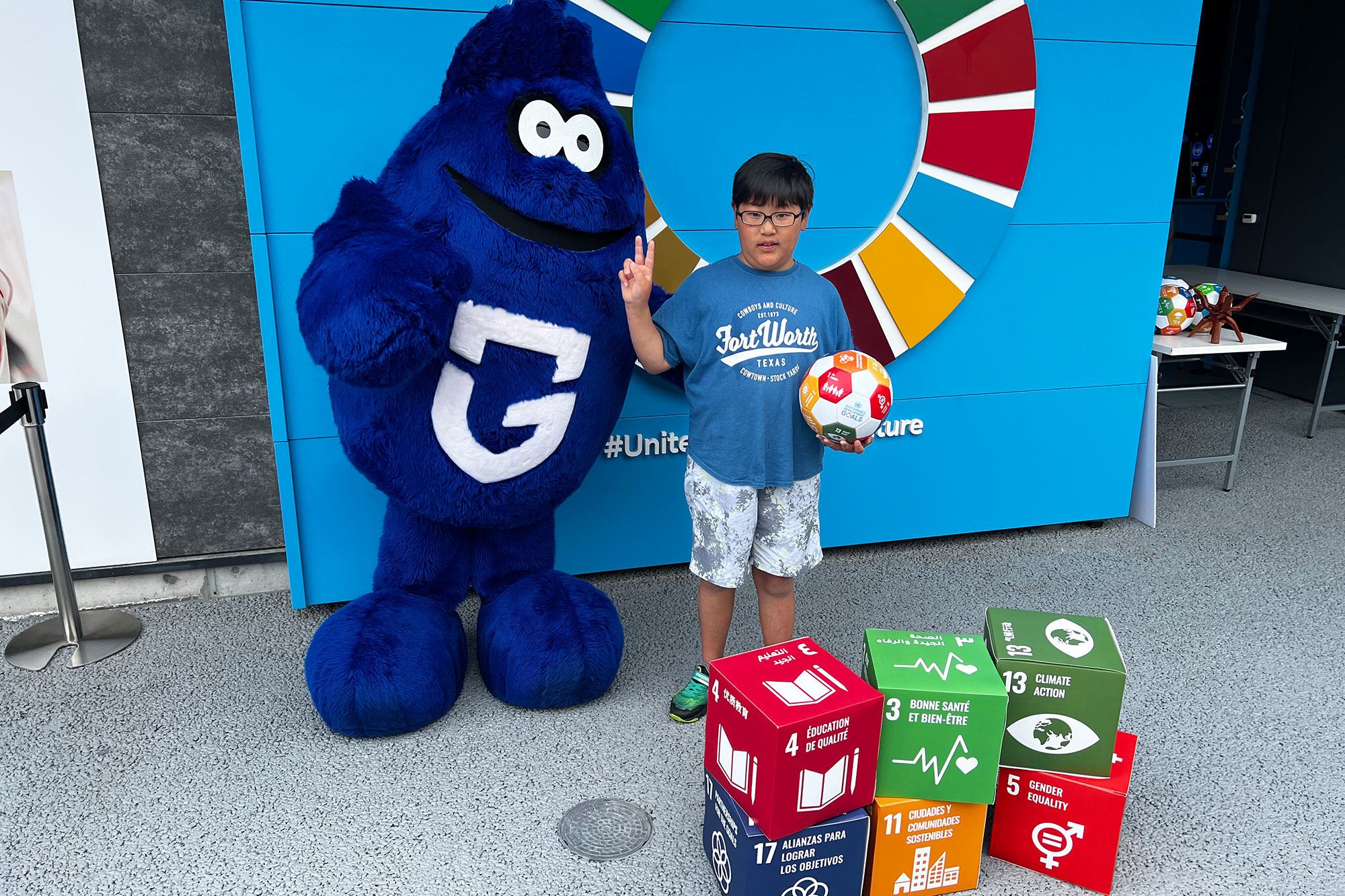
A boy participates in an event at the UN pavilion to promote the SDGs.UN News/Daniel Dickinson A boy participates in an event at the UN pavilion to promote the SDGs.

I believe visitors feel closer to the UN after experiencing the video and the rest of the pavilion. I am from Japan and I think many people are surprised to meet a Japanese national working for the UN. That also helps to bring them closer to the work of the UN.

How important and relevant is an Expo in today’s world?

There really isn't any other place like this, where you can meet people from Uzbekistan, and then next door people from Malta. I think this is such a rare opportunity, especially in this era of the Internet, to be able to discover the culture and values of so many different nations.

Initially, the Japanese people were somewhat sceptical and critical of the cost of putting on Expo, because they said they could find all the information on the Internet.

However, when they visit, they realize that they can actually see, feel and learn about different cultures in person. It's very different from reading something on the Internet or watching YouTube.

This venue is so special and people come here with an open and enquiring mind.

I think the timing of this Expo is important as there is so much uncertainty and conflict in the world. At the UN, we are here to promote a better world for all people built on equality, dignity and peace, living in harmony with nature and sustaining our Planet. We hope to share this positive vision with as many visitors as possible until the closing of the Expo in mid-October.
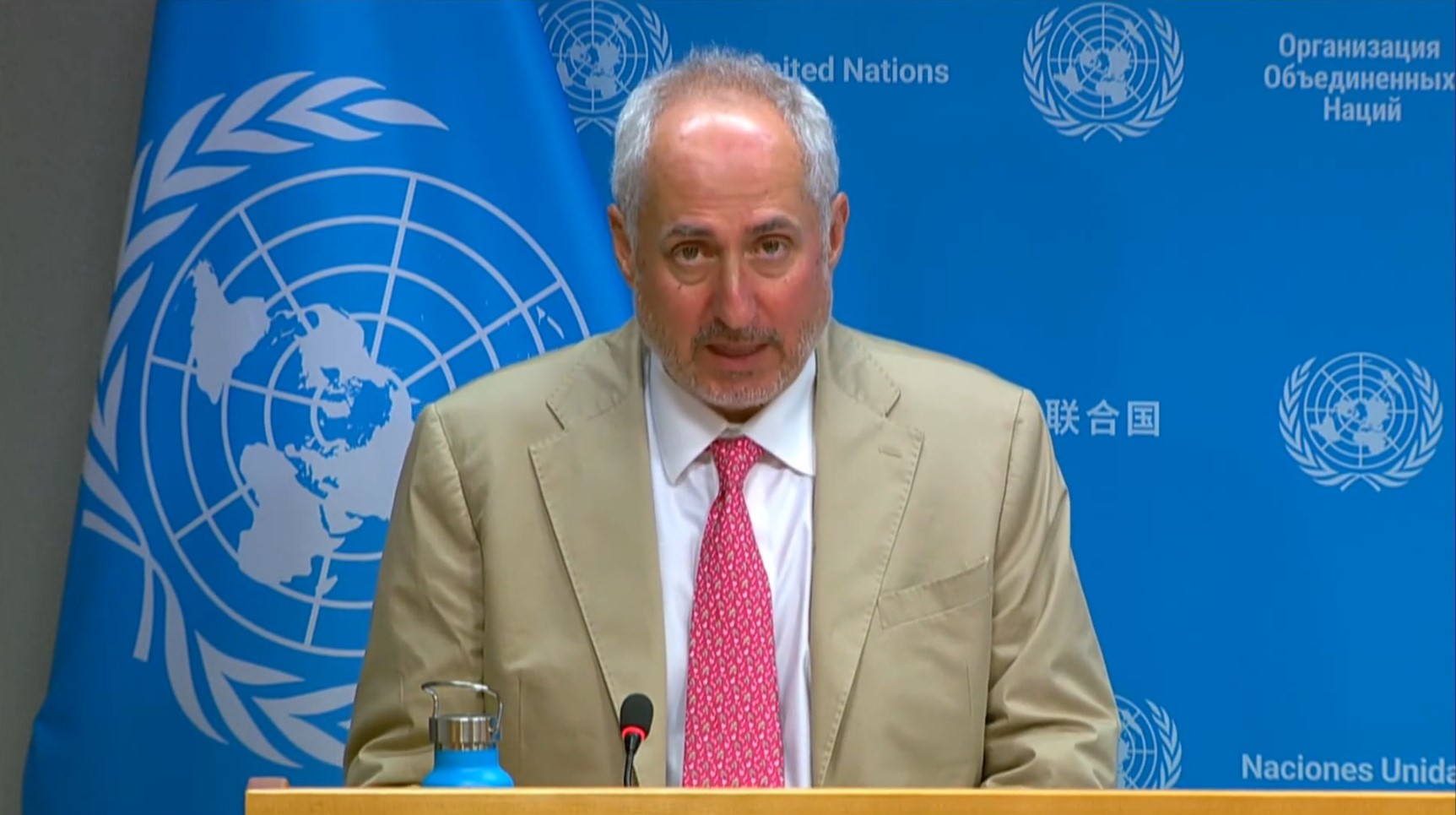
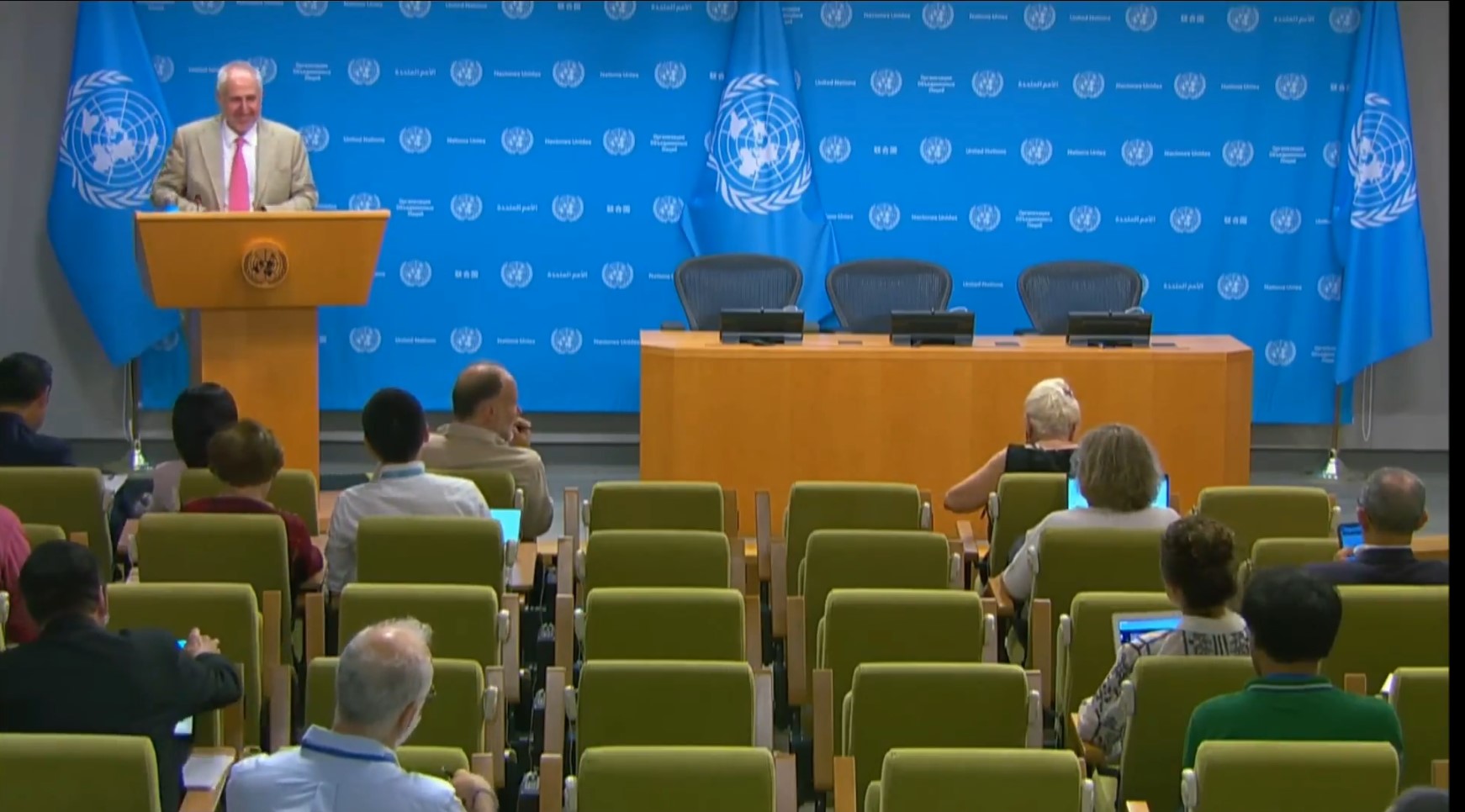
The Spokesperson for the Secretary-General, Stéphane Dujarric, delivered a comprehensive press briefing, drawing media attention with updates on the situation in the Middle East.

播放器加载中....

اقدّم المتحدث باسم الأمين العام، ستيفان دوجاريك، إيجازًا صحفيًا غنيًا بالمعلومات، جذب اهتمام وسائل الإعلام بتحديثات حول الوضع في الشرق الأوسط..

播放器加载中....
秘书长发言人斯特凡·杜加里克新闻简报会内容丰富,通报中东局势媒体关注。
The Spokesperson for the Secretary-General, Stéphane Dujarric, delivered a comprehensive press briefing, drawing media attention with updates on the situation in the Middle East.
播放器加载中....
Le porte-parole du Secrétaire général, Stéphane Dujarric, a tenu un point de presse riche en contenu, attirant l’attention des médias avec des informations sur la situation au Moyen-Orient.
播放器加载中....
Пресс-брифинг представителя Генерального секретаря Стефана Дюжаррика был содержательным и привлёк внимание СМИ благодаря информации о ситуации на Ближнем Востоке.
播放器加载中....
El portavoz del Secretario General, Stéphane Dujarric, ofreció una rueda de prensa informativa y completa, atrayendo la atención de los medios con actualizaciones sobre la situación en Oriente Medio.

Ambassador Maurizio Massari, Permanent Representative of Italy to the United Nations: The Meaning and Future of the United Nations and Multilateralism

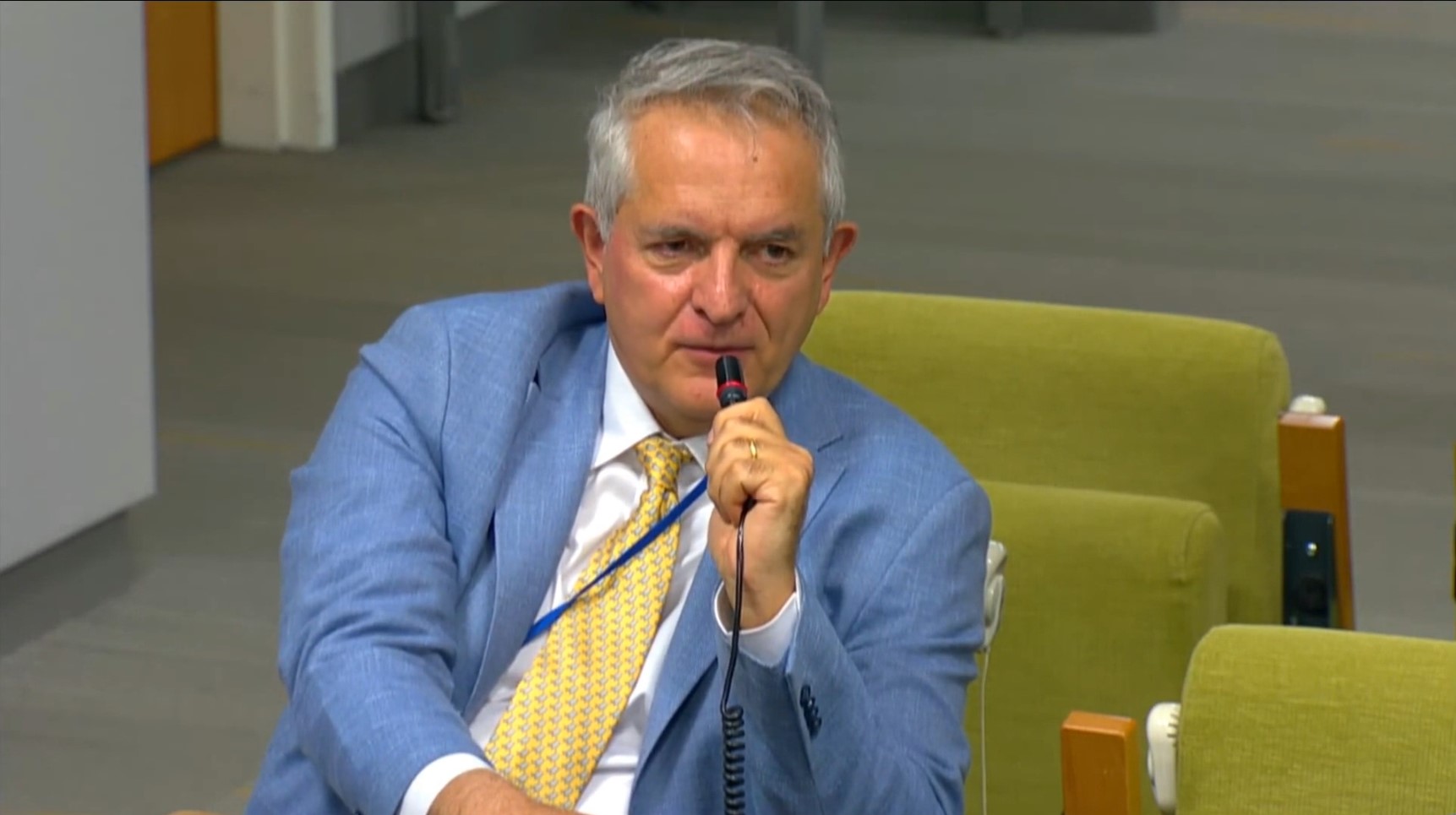
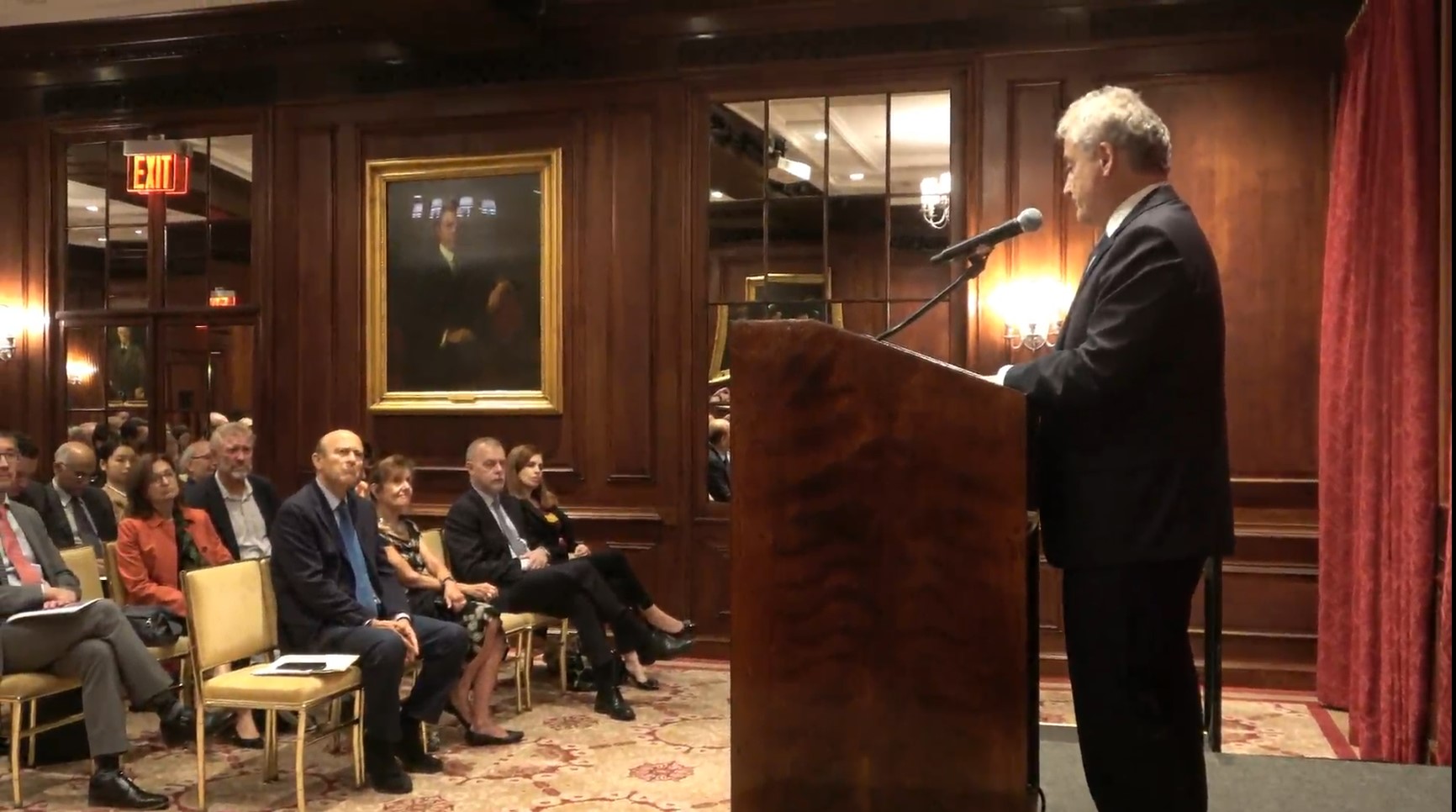
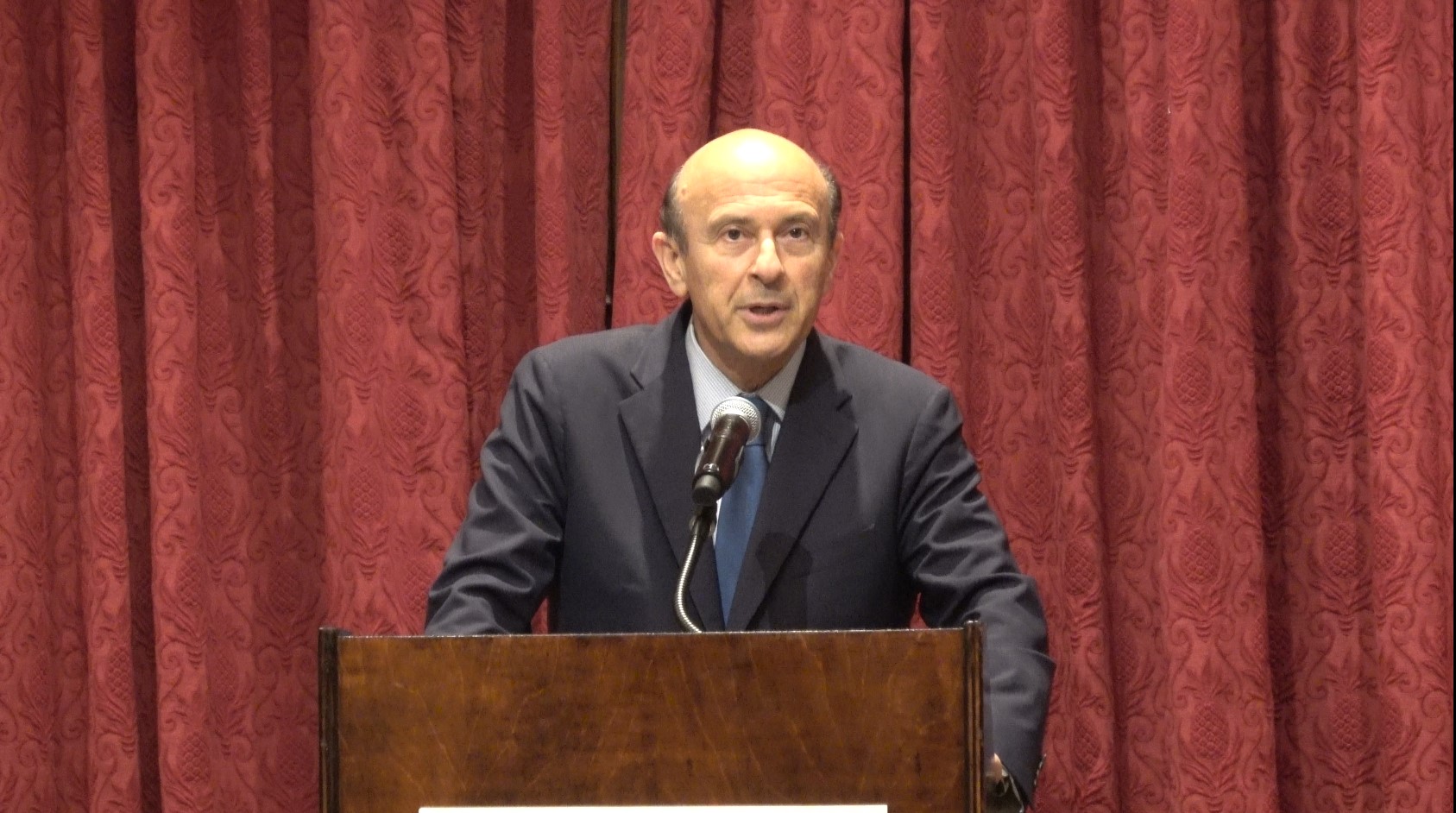
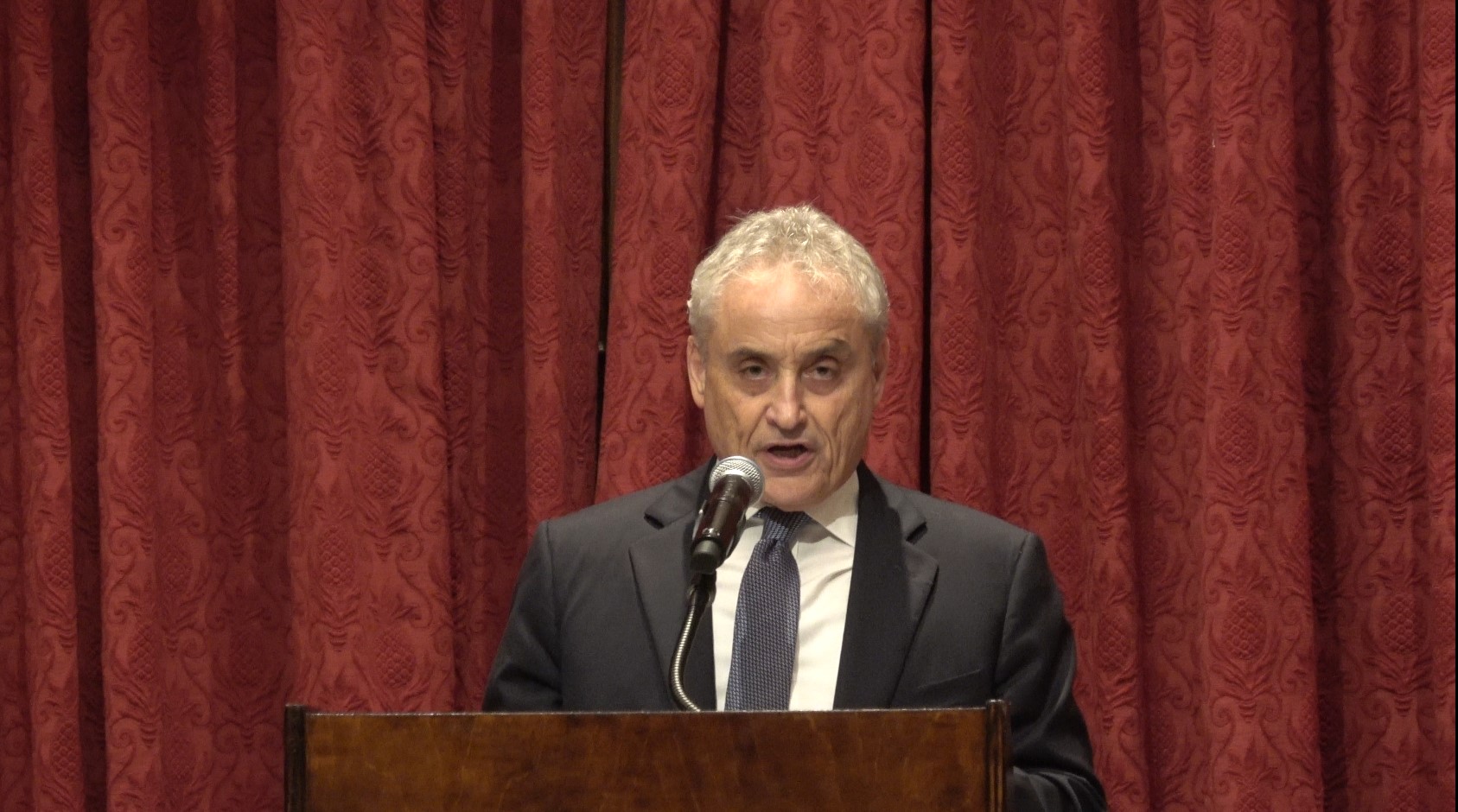
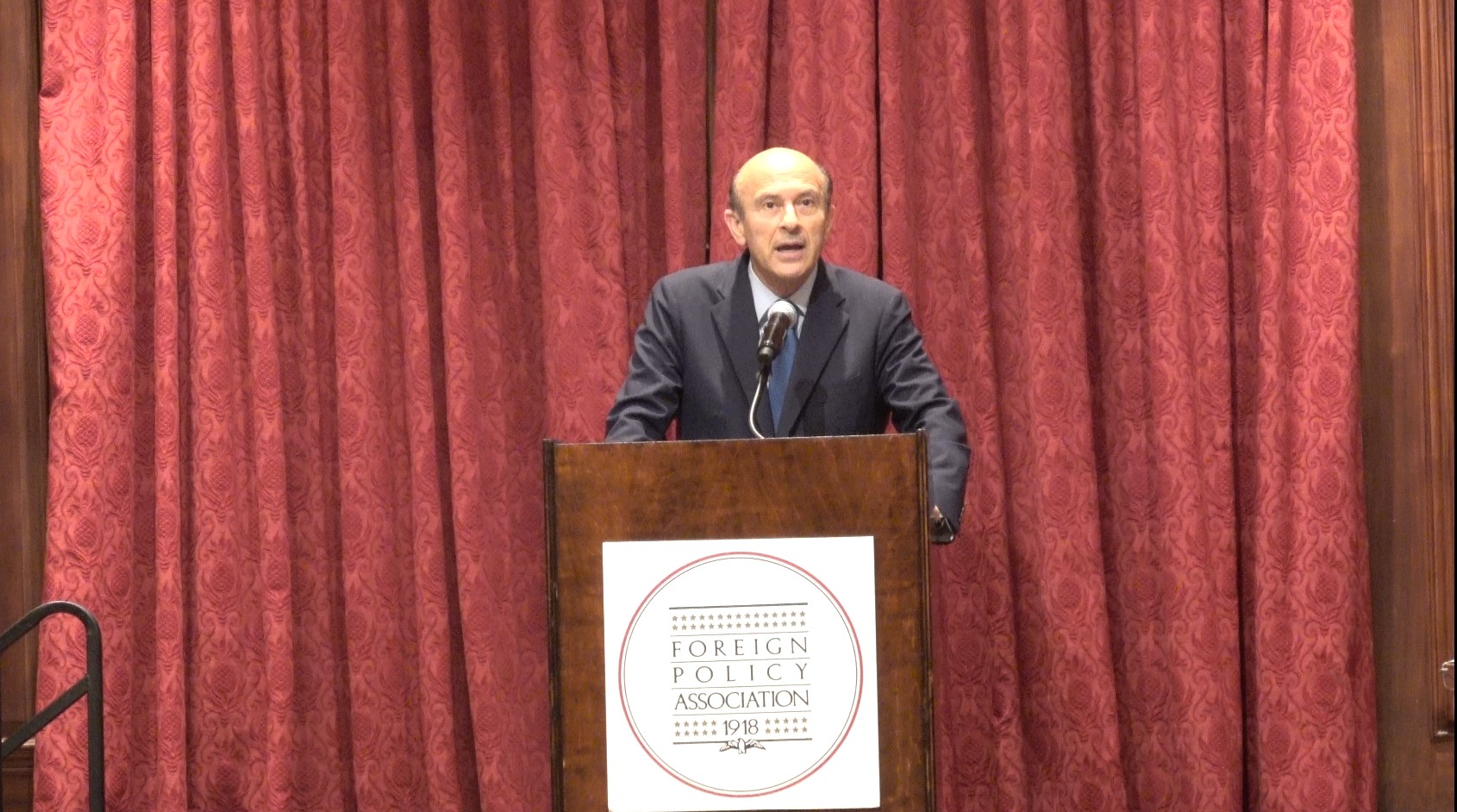
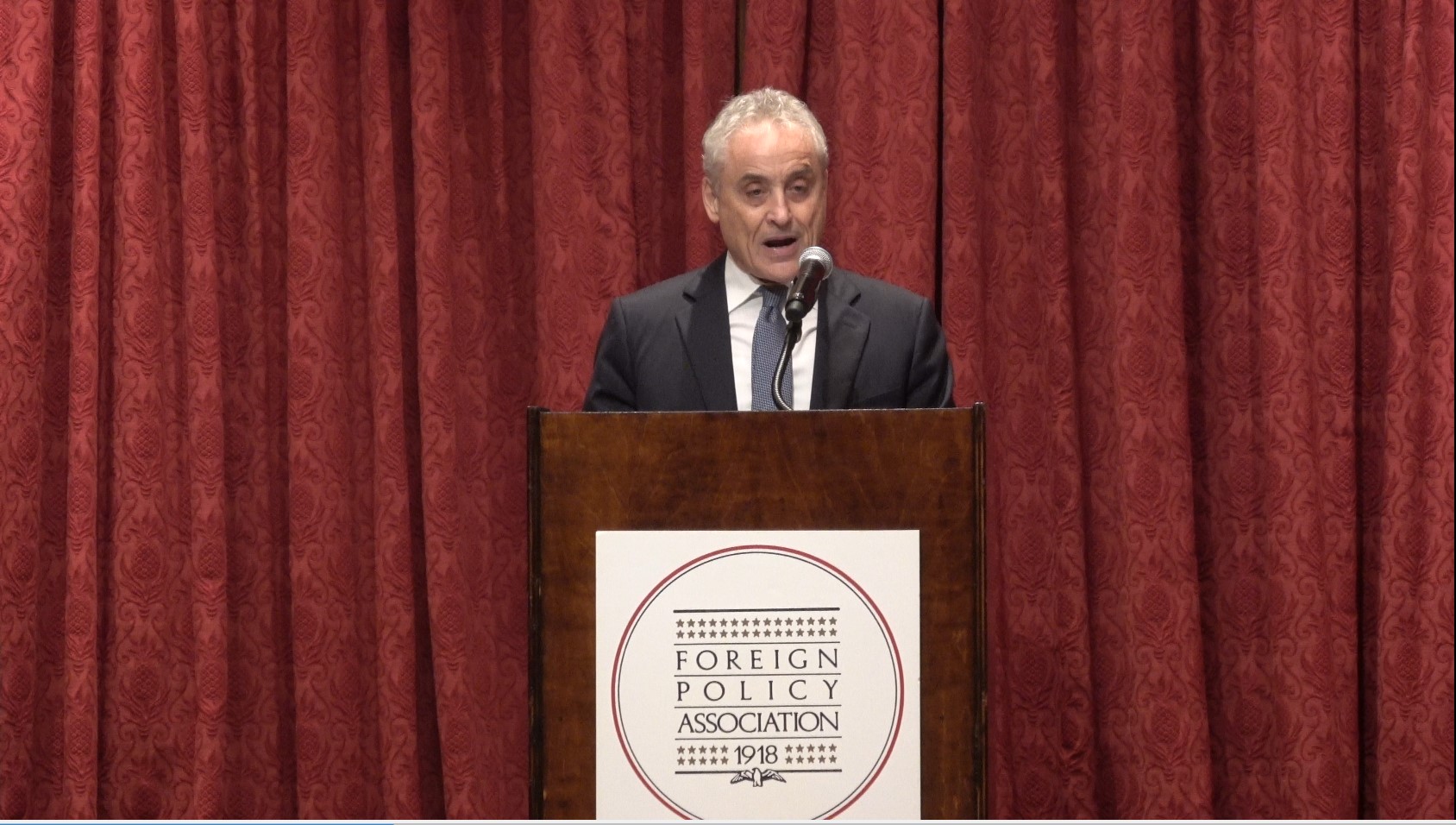
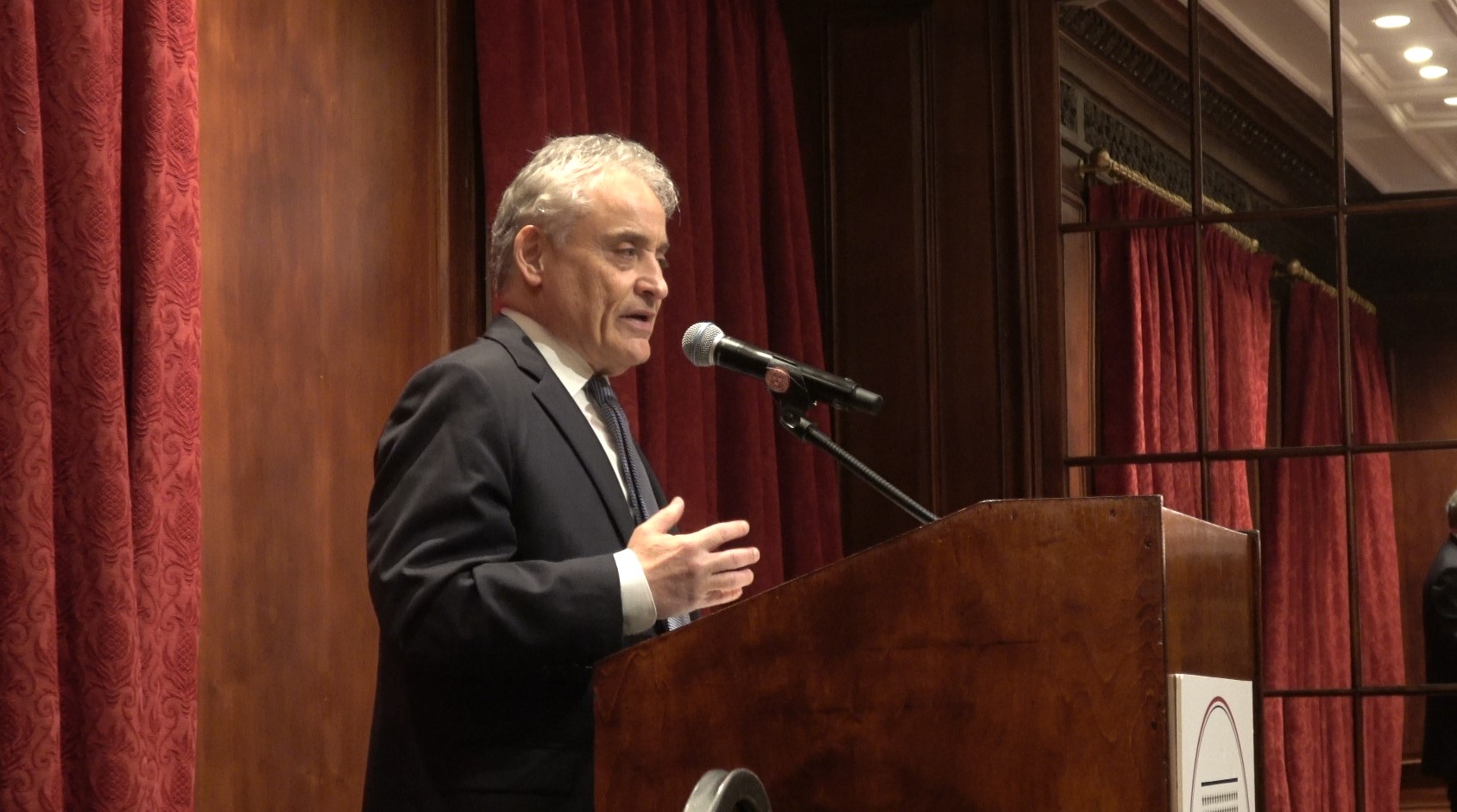
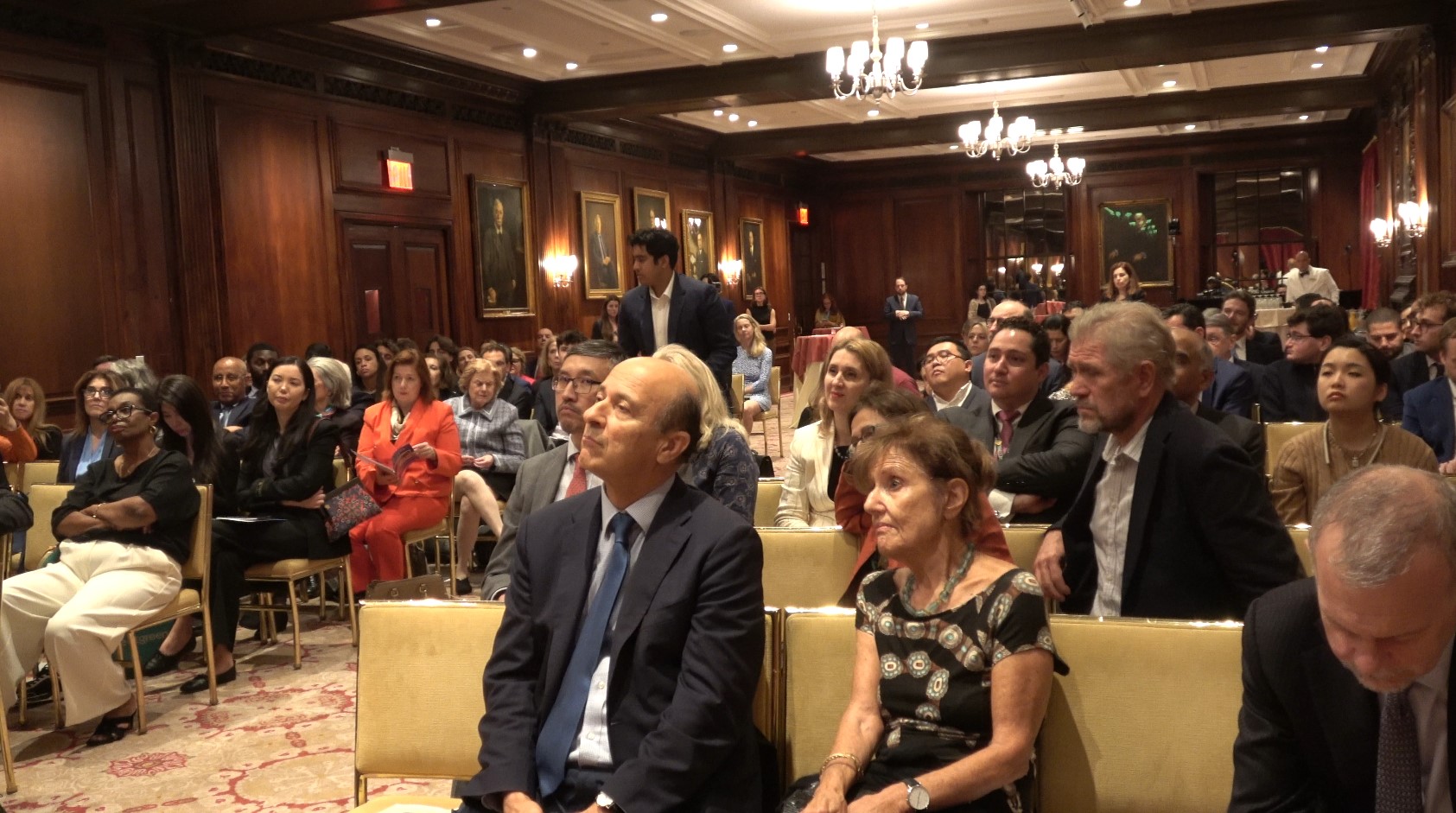
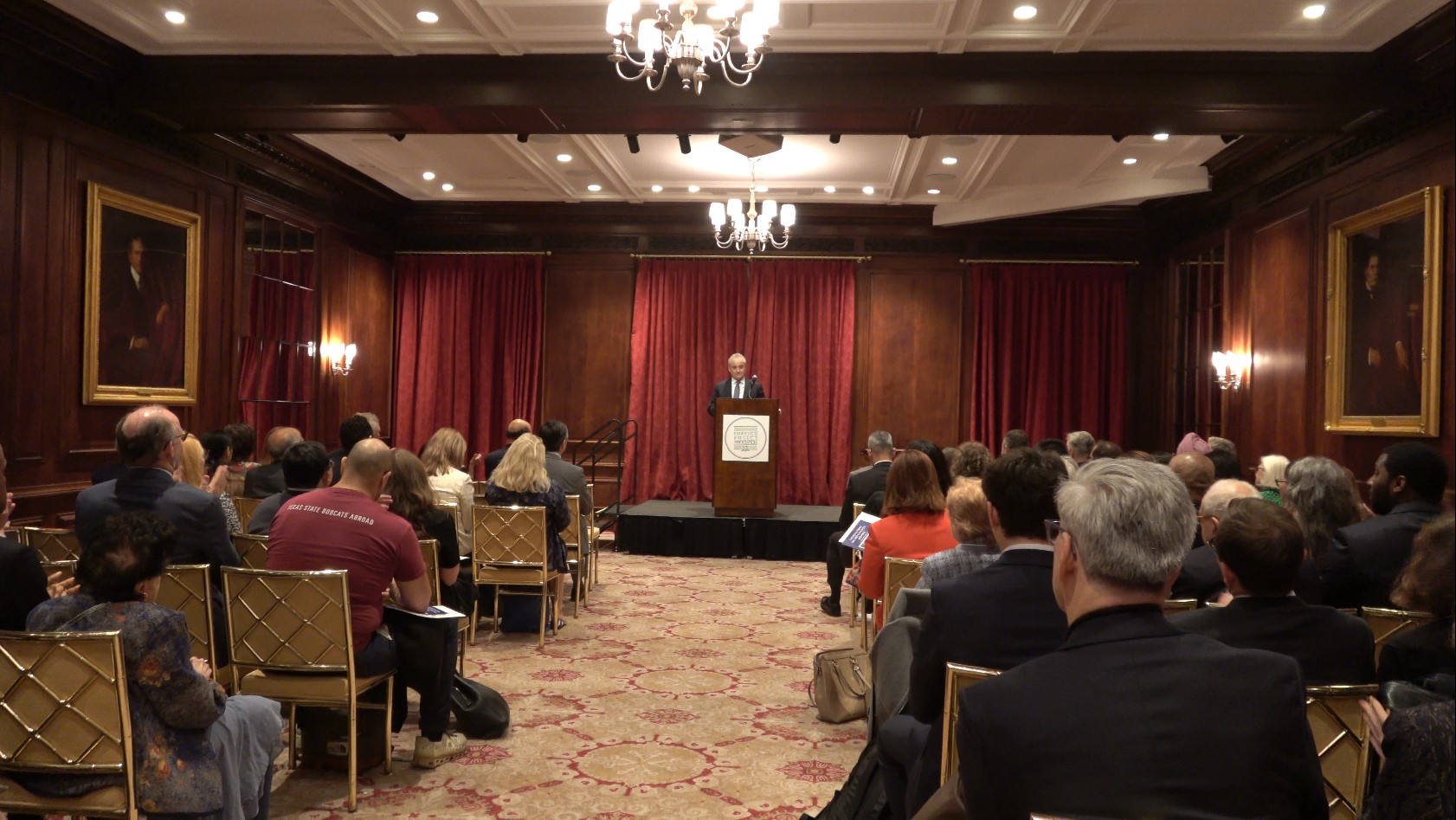
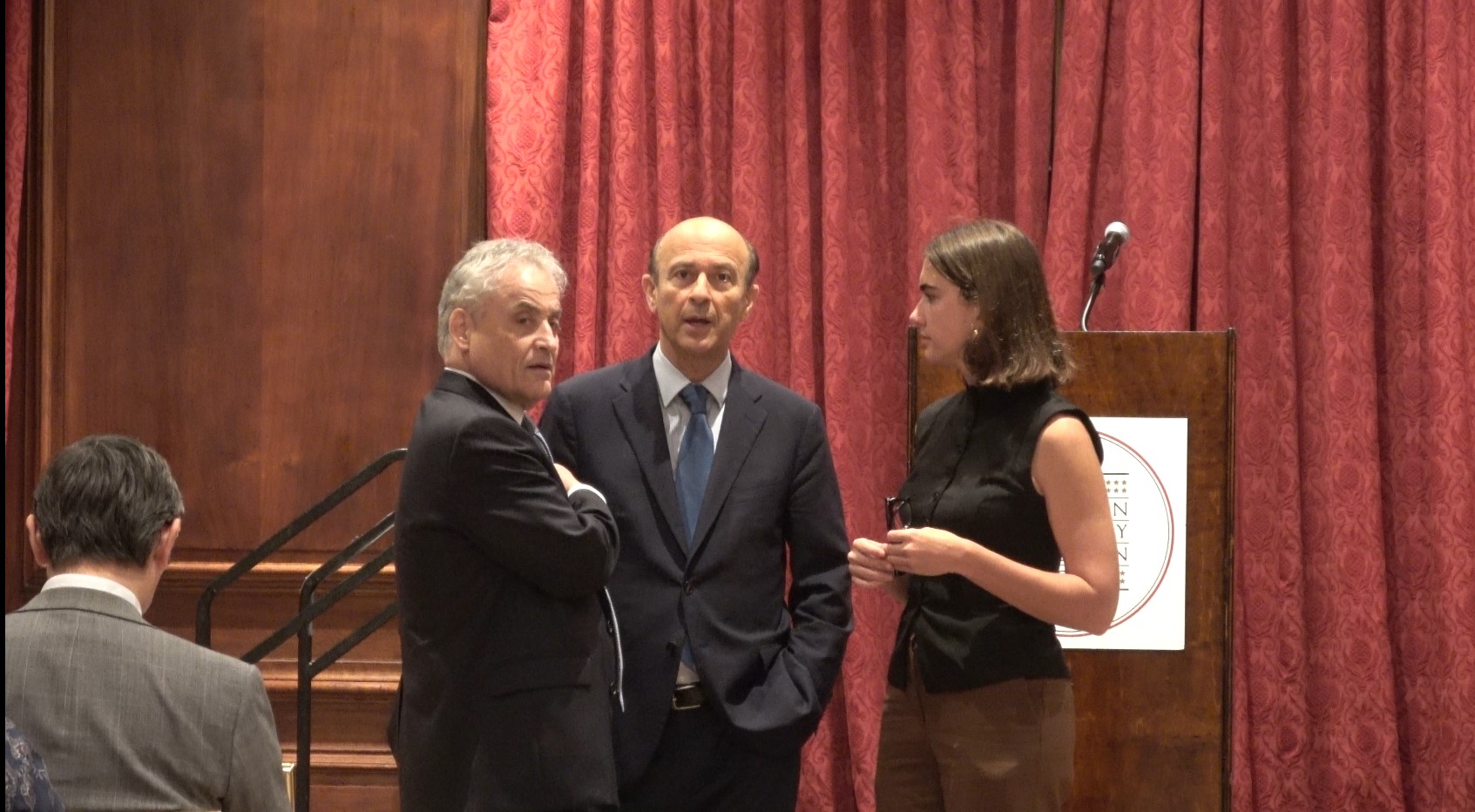
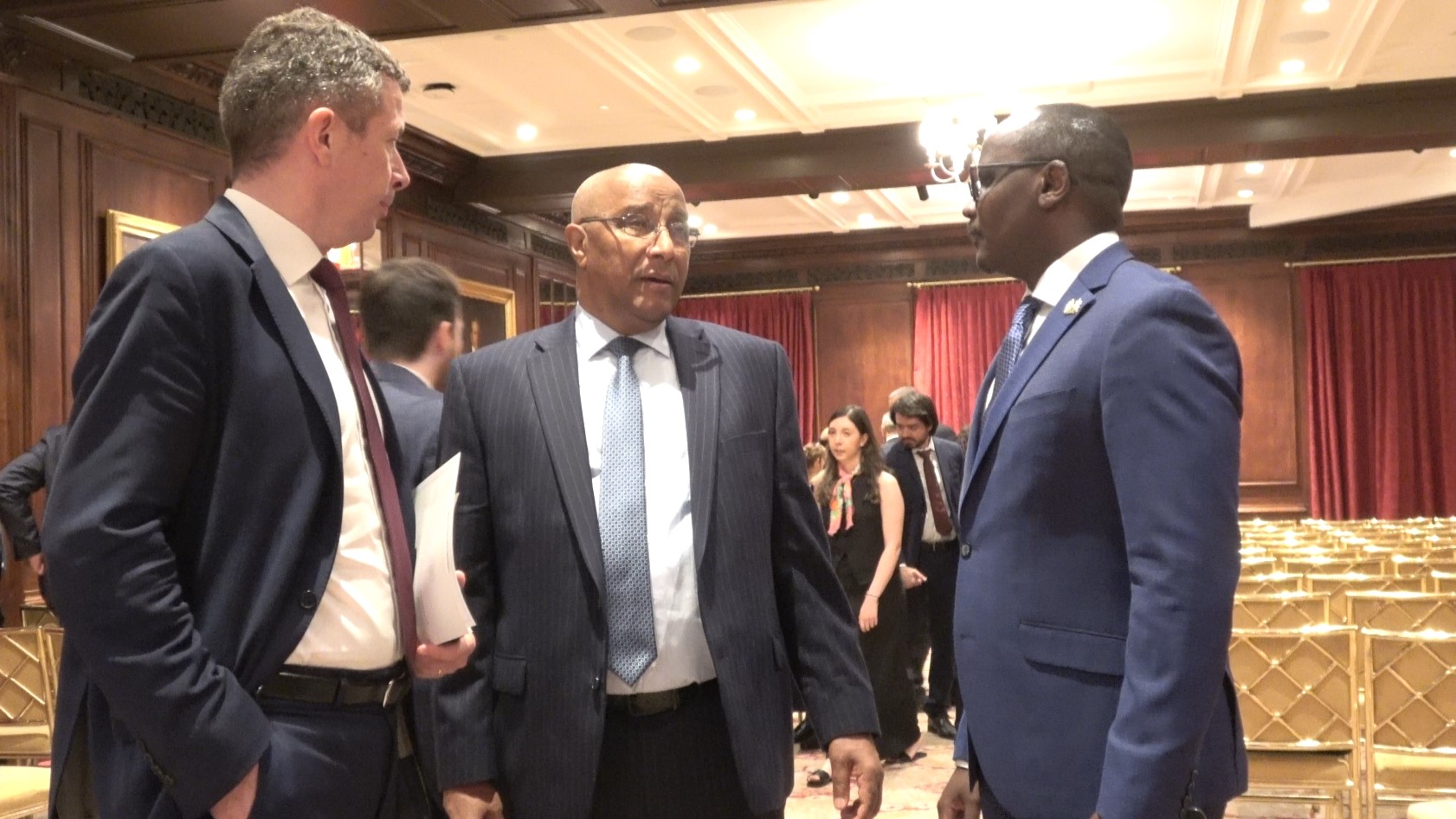
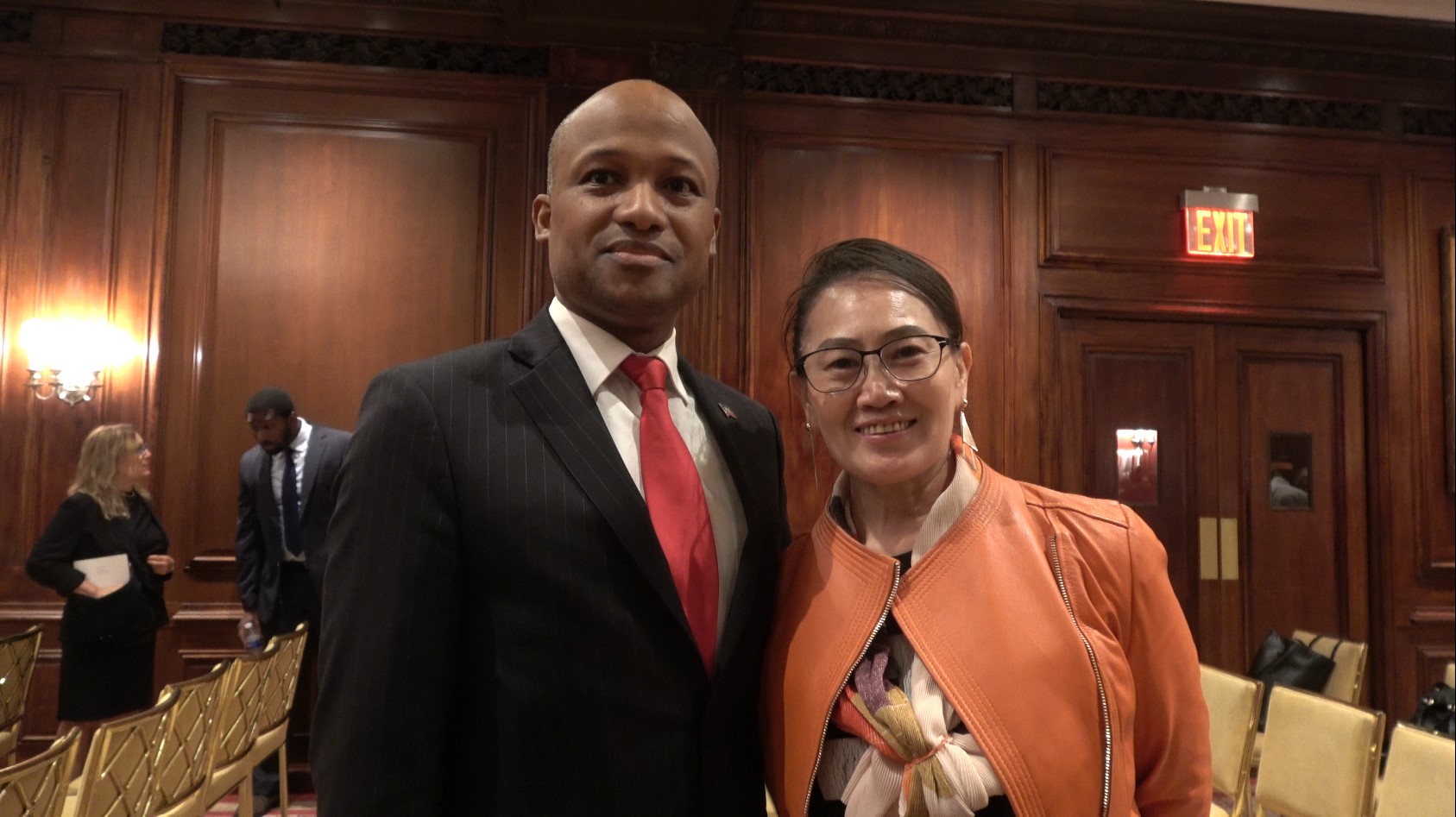
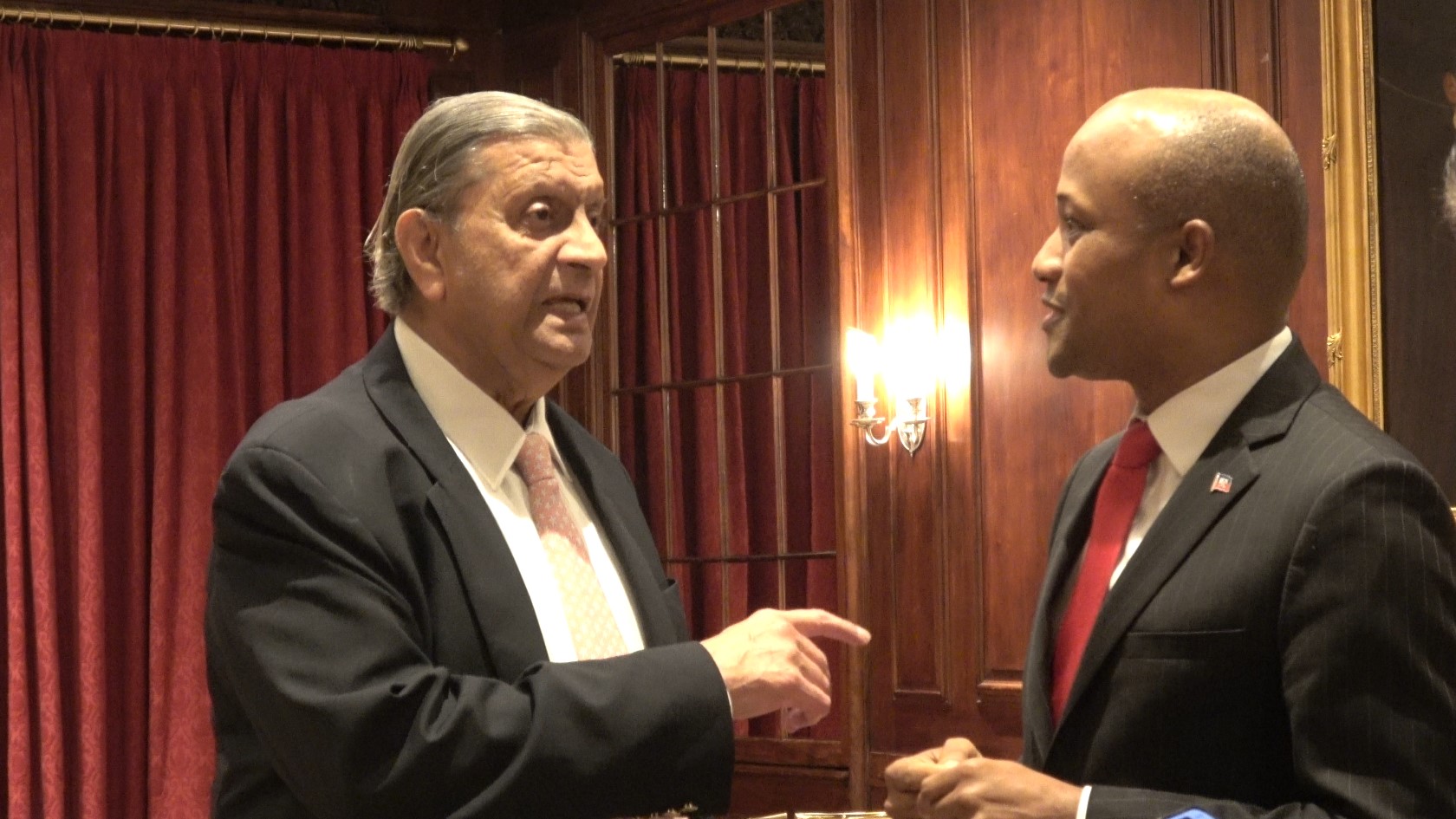
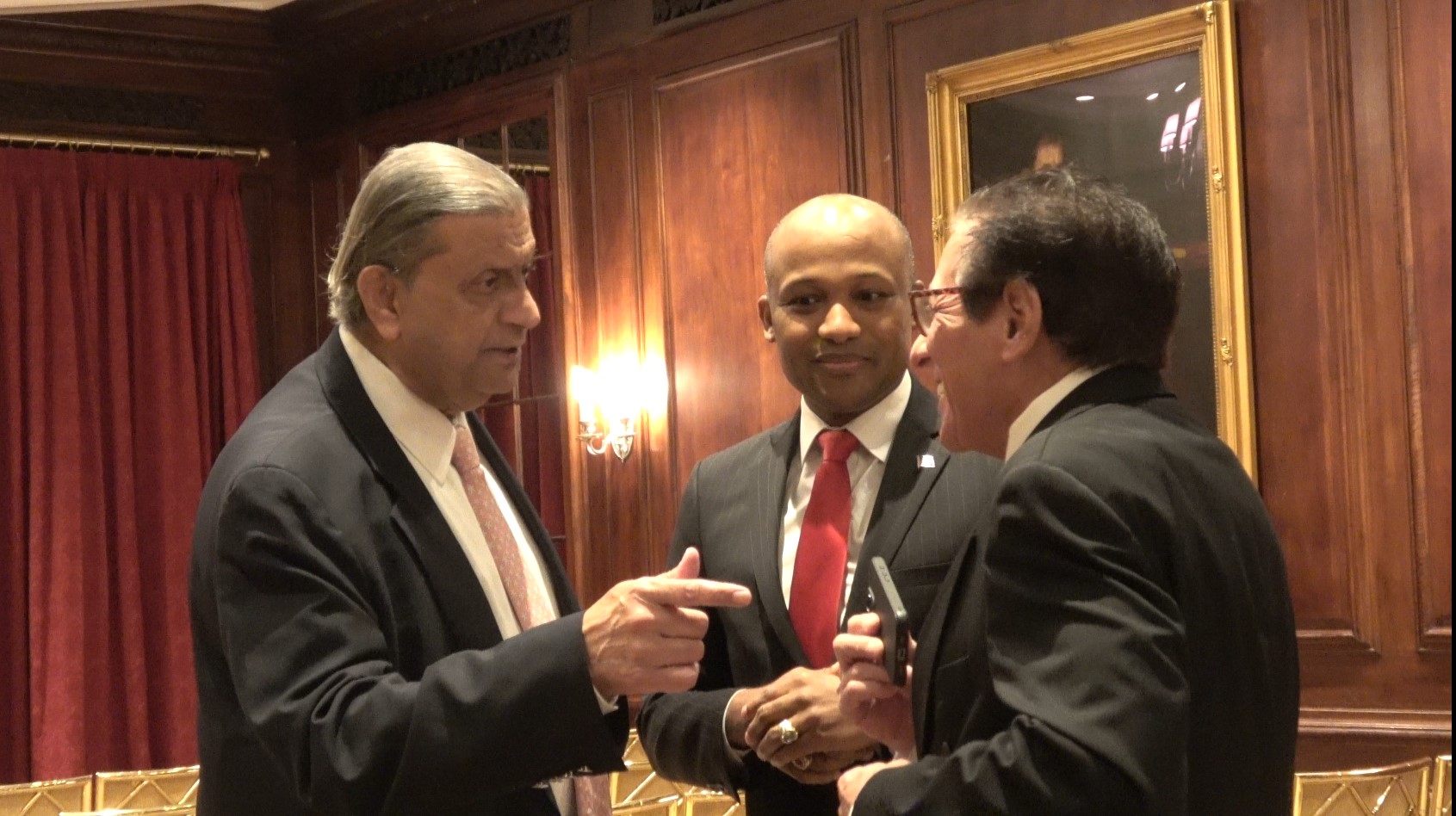
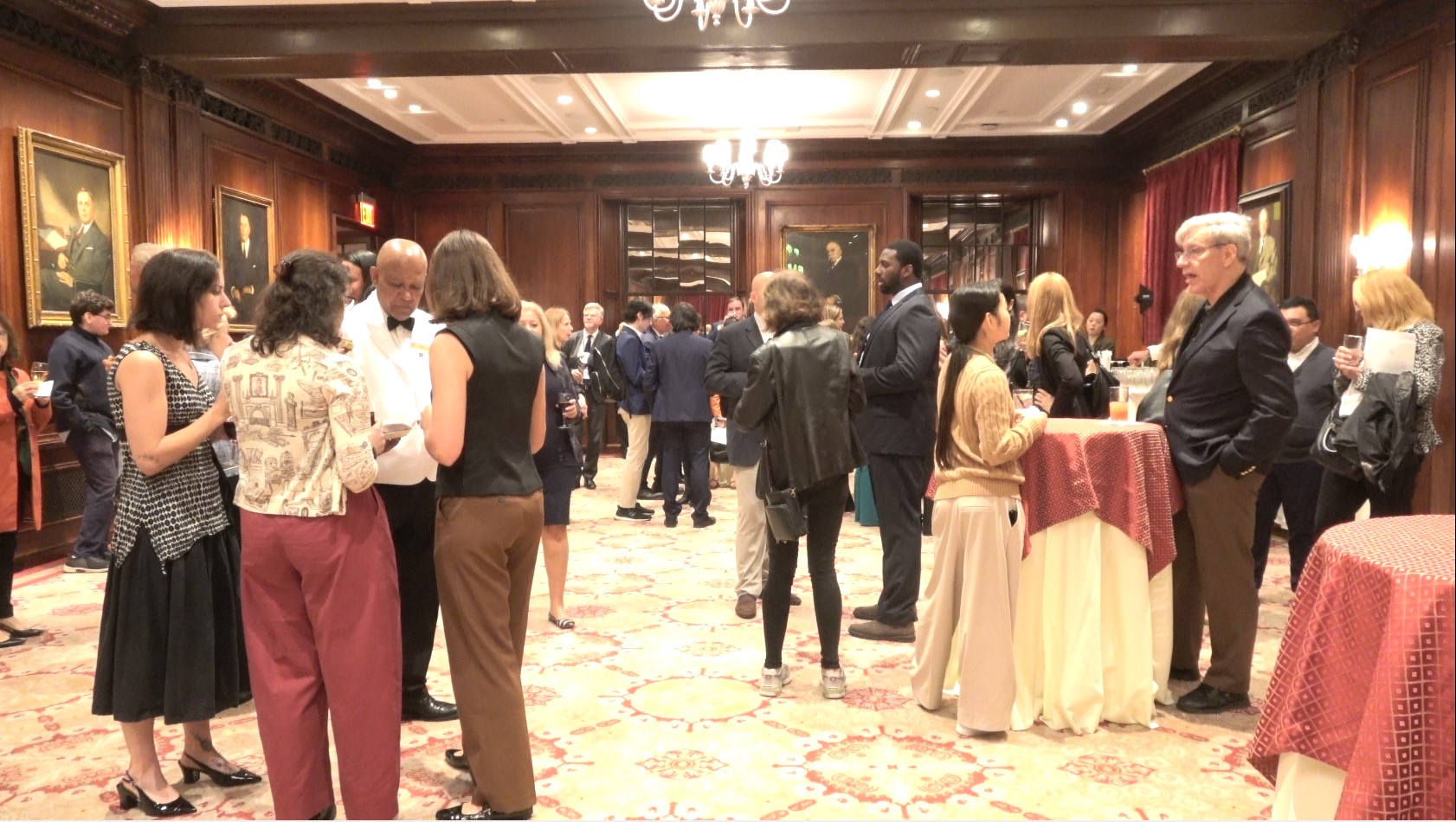
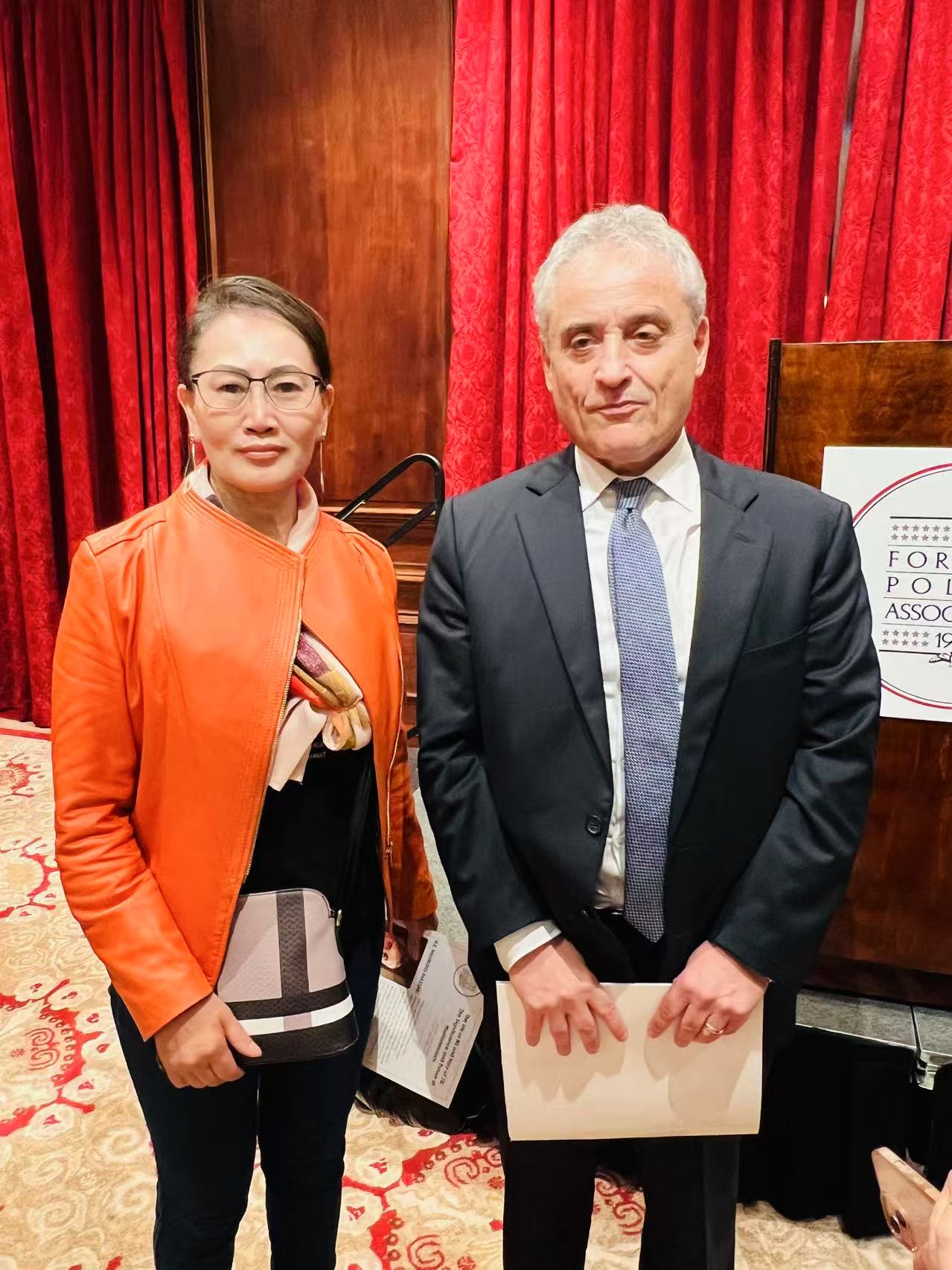
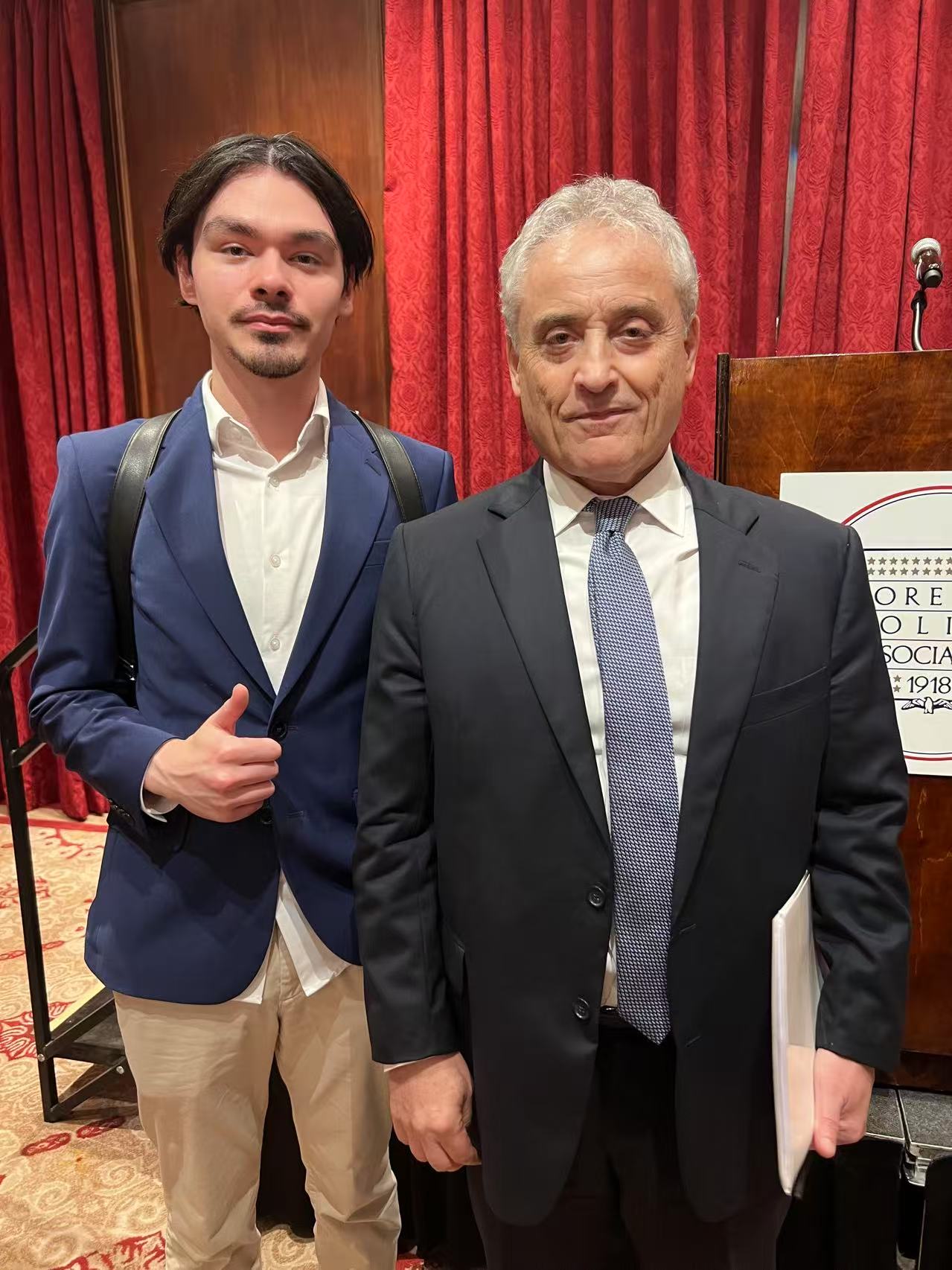
Celebrity Media Commentator: In 2025, the United Nations marks its 80th anniversary. At this critical moment, Ambassador Maurizio Massari, Italy's Permanent Representative to the UN, delivered a profoundly insightful speech at the Harvard Club in New York, themed on "The Meaning and Future of the UN and Multilateralism." His address was not only a conceptual exposition but also a strategic manifesto, responding to the international community's renewed reflection on the UN’s role.

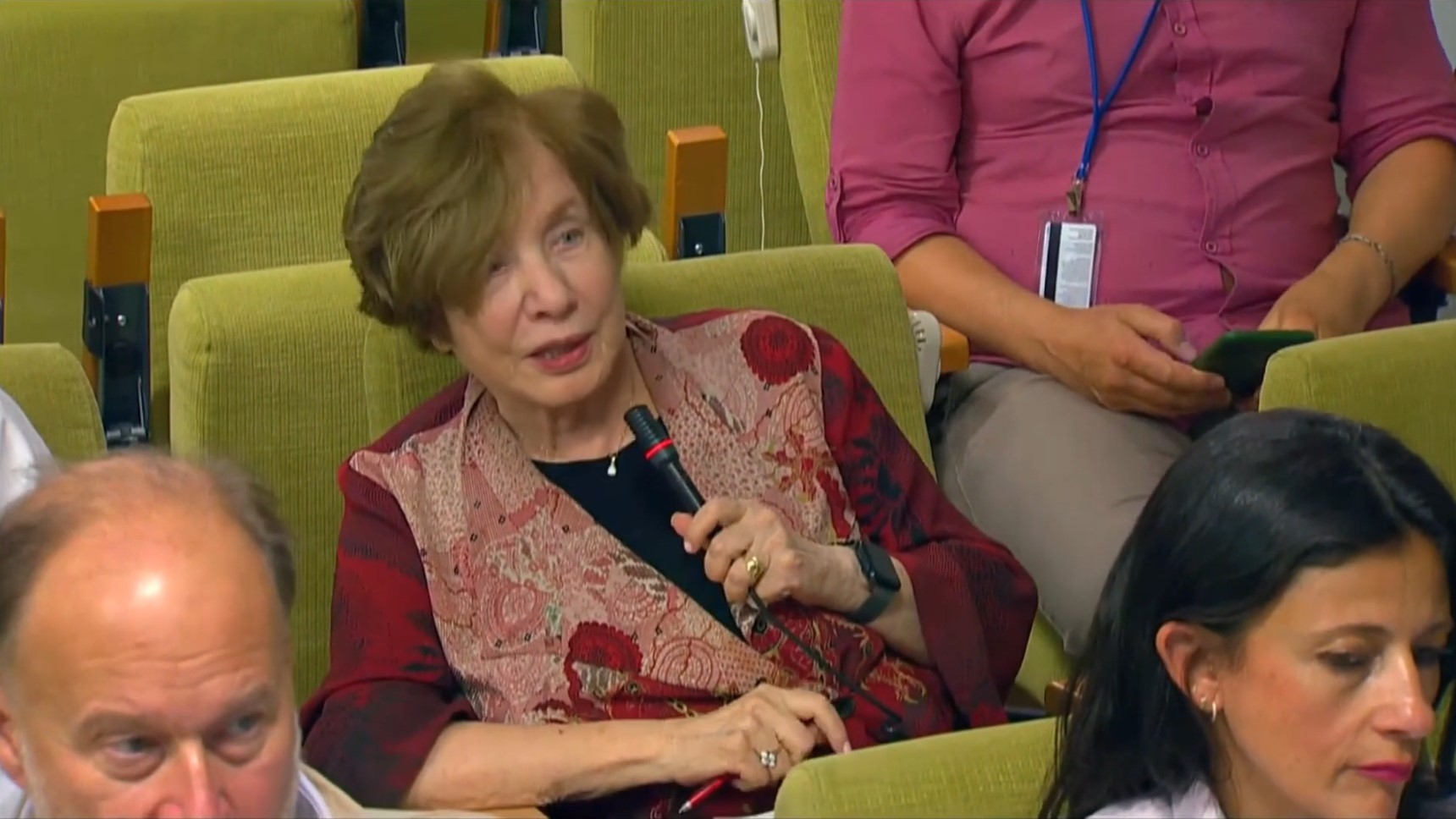
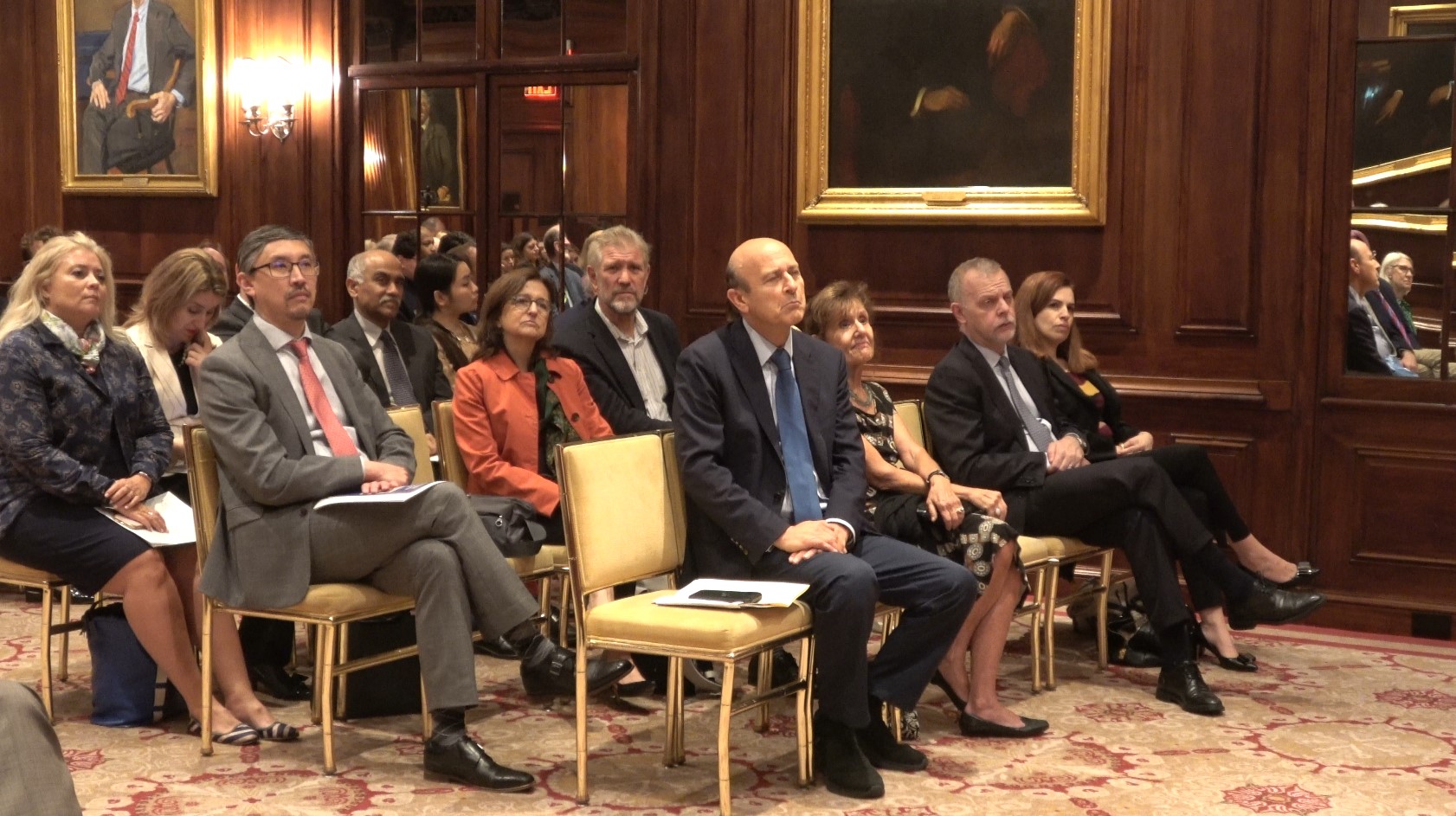
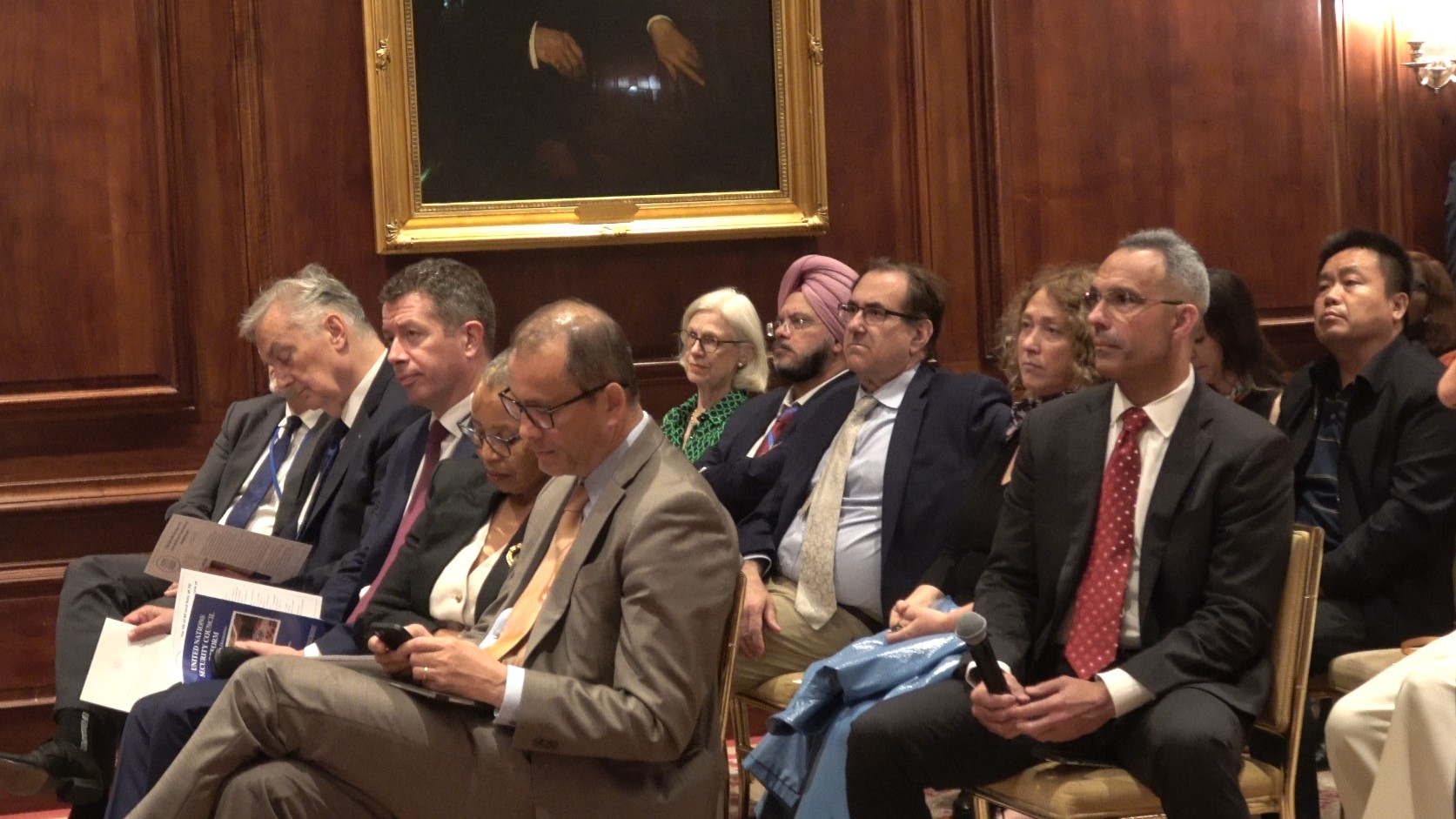
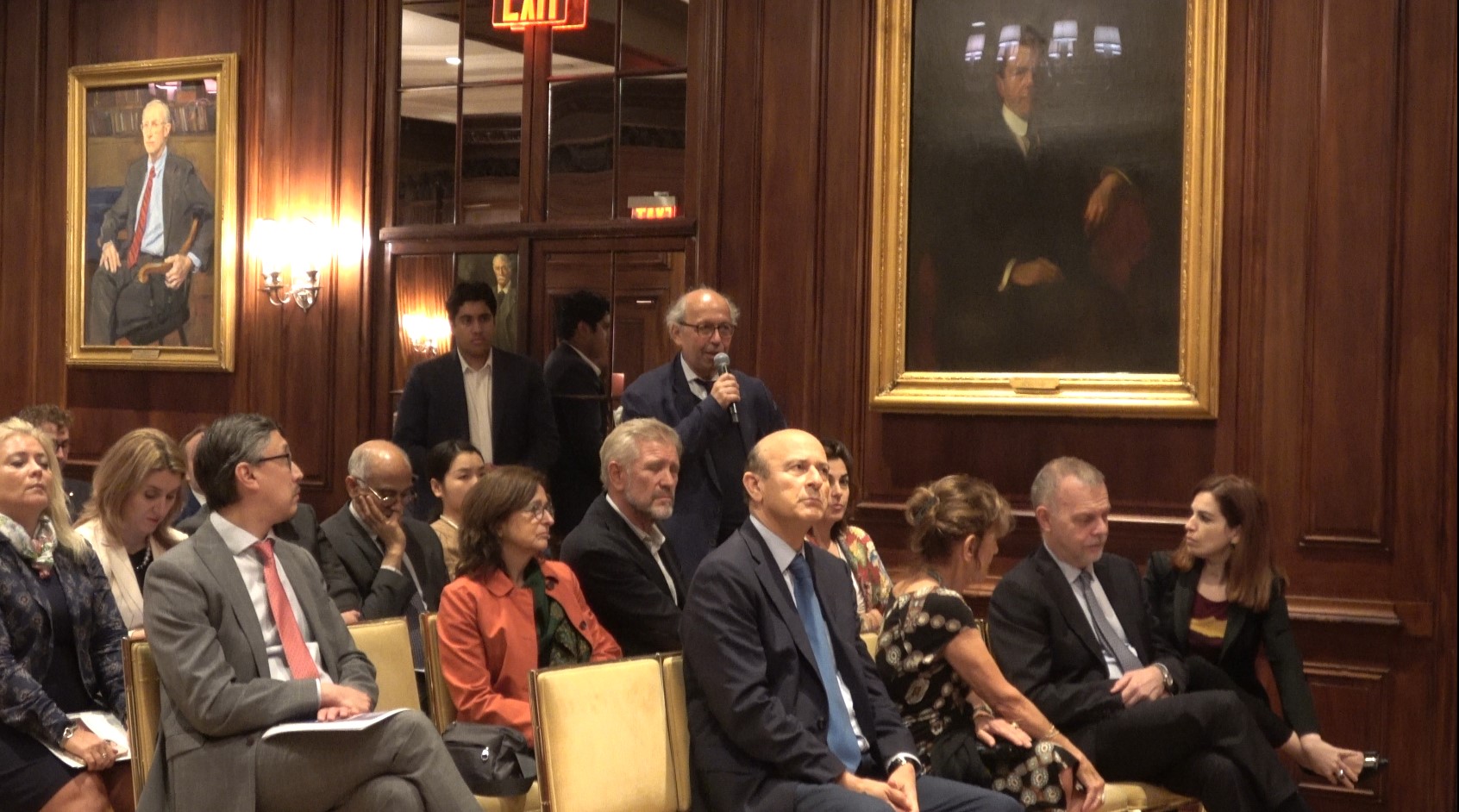
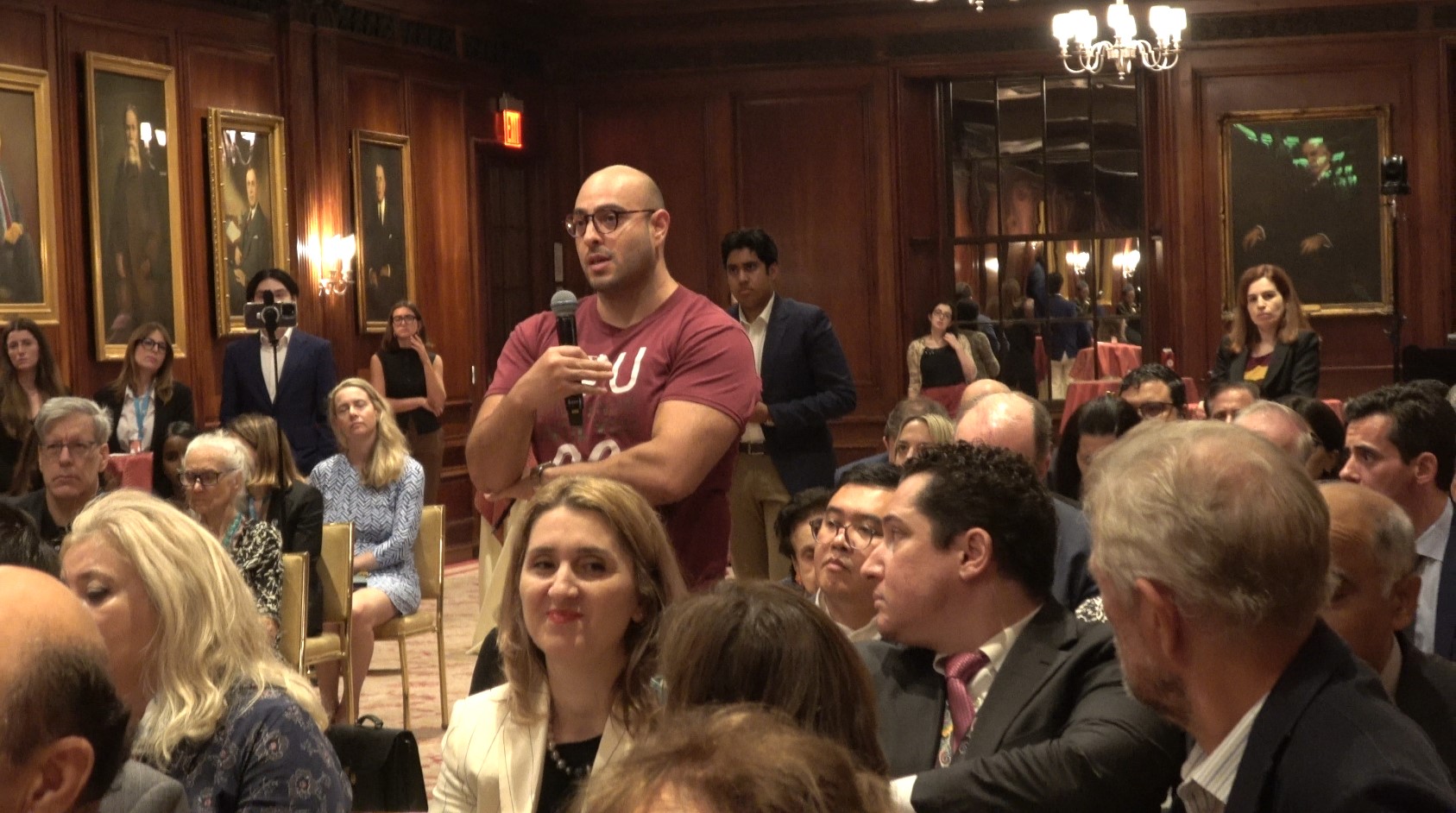
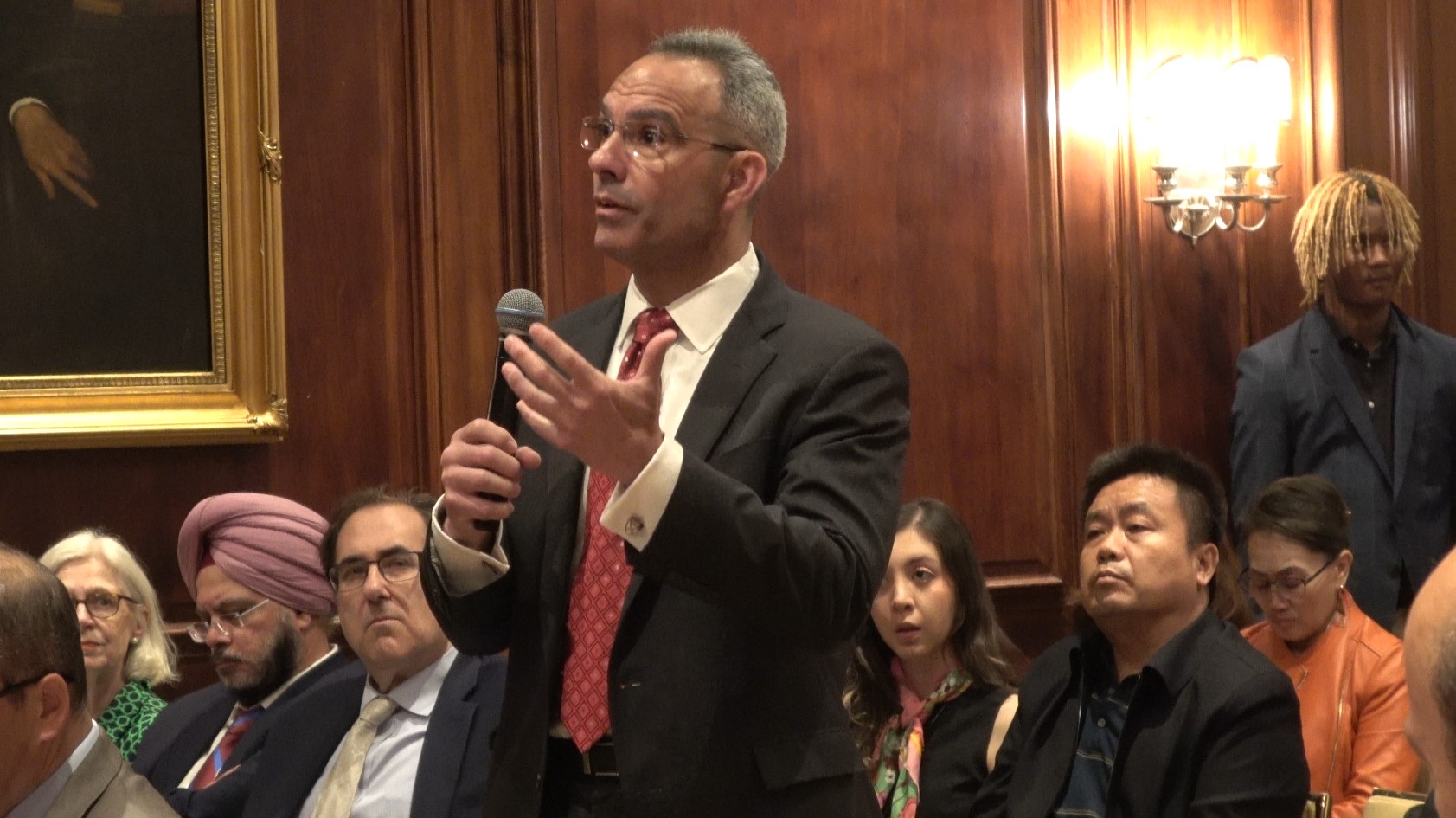
This extraordinary event was organized by the renowned American Foreign Policy Association. Several attendees enthusiastically raised differing views on site, all of which the ambassador addressed with satisfactory responses.

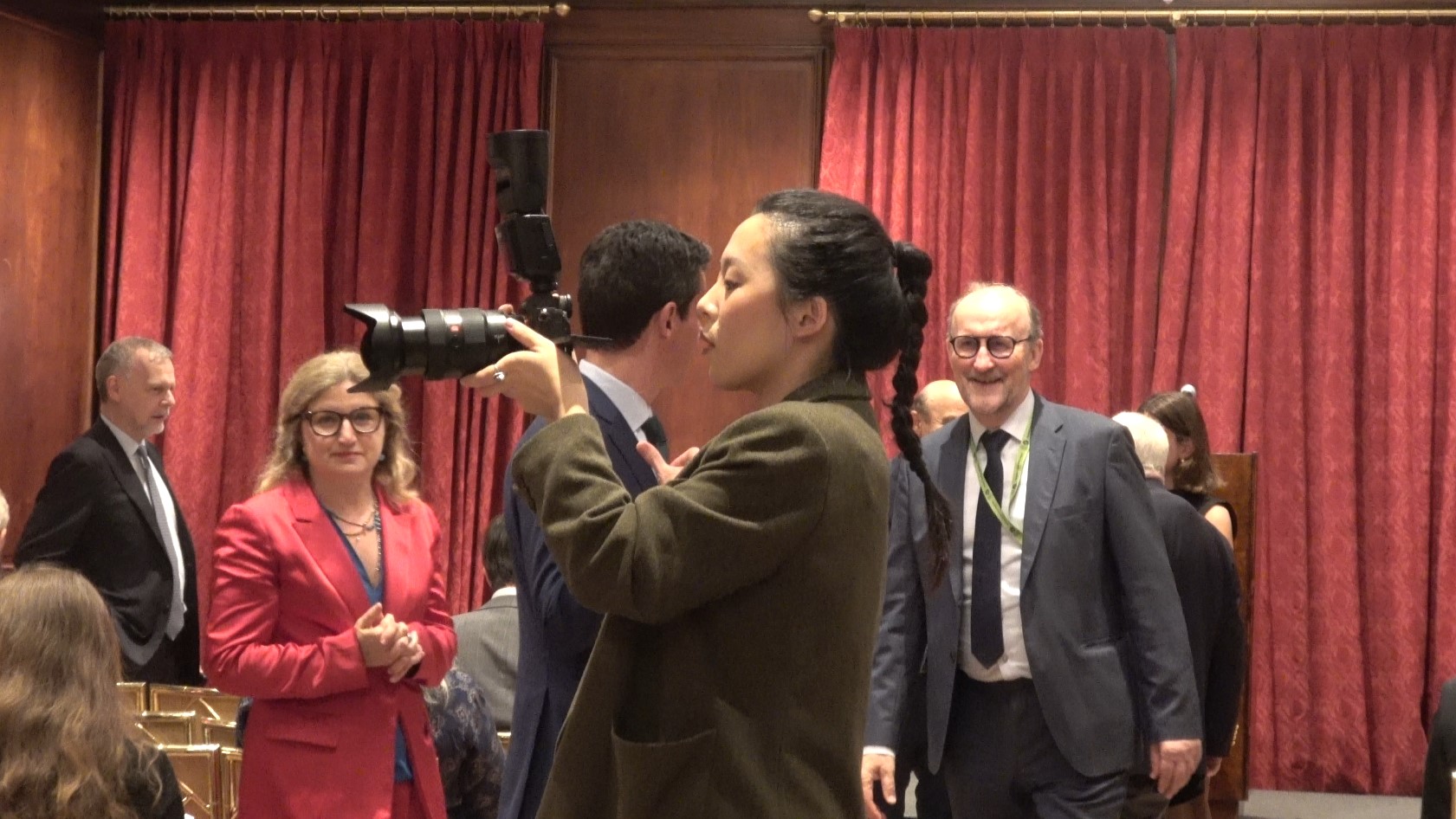
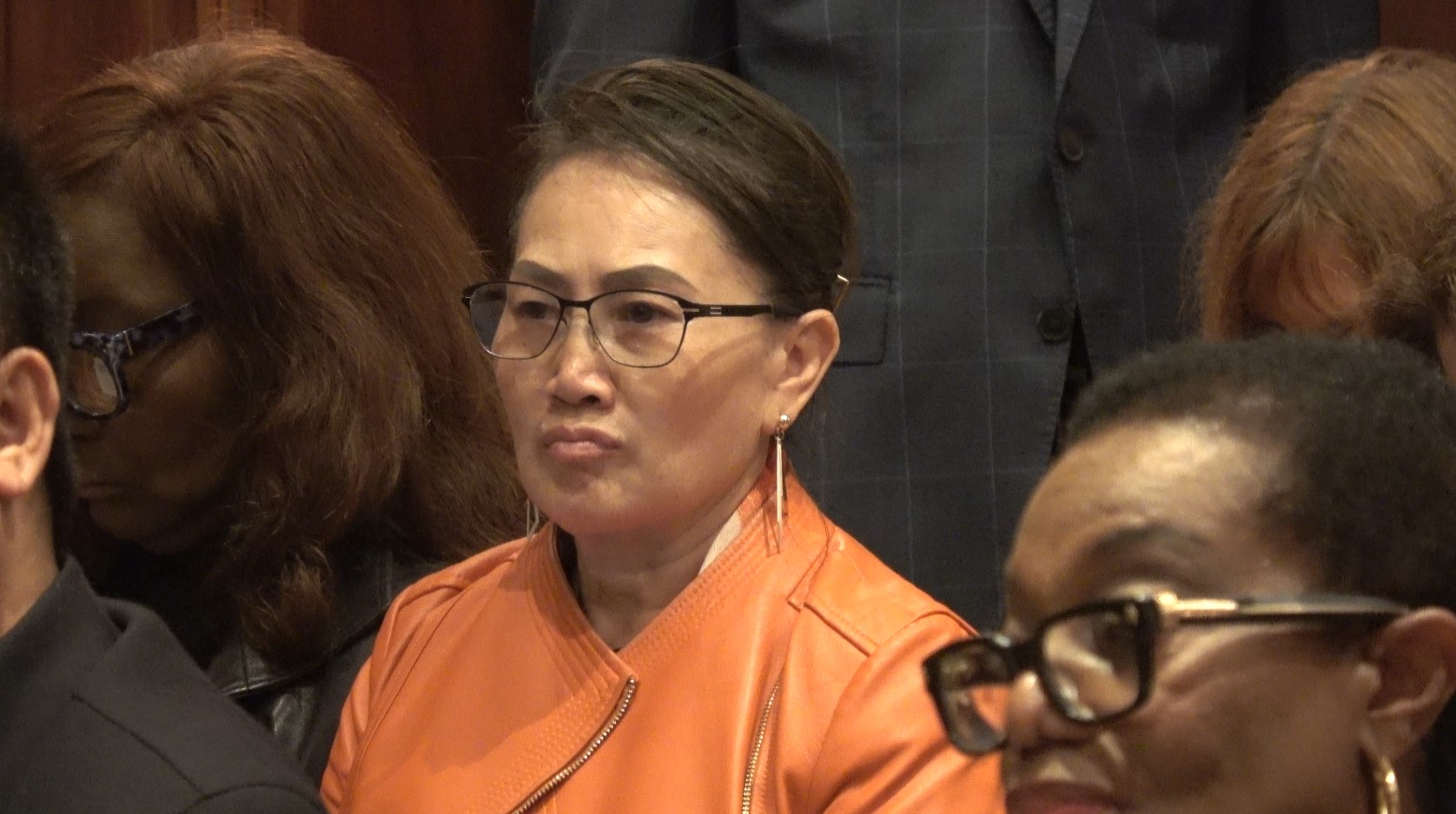
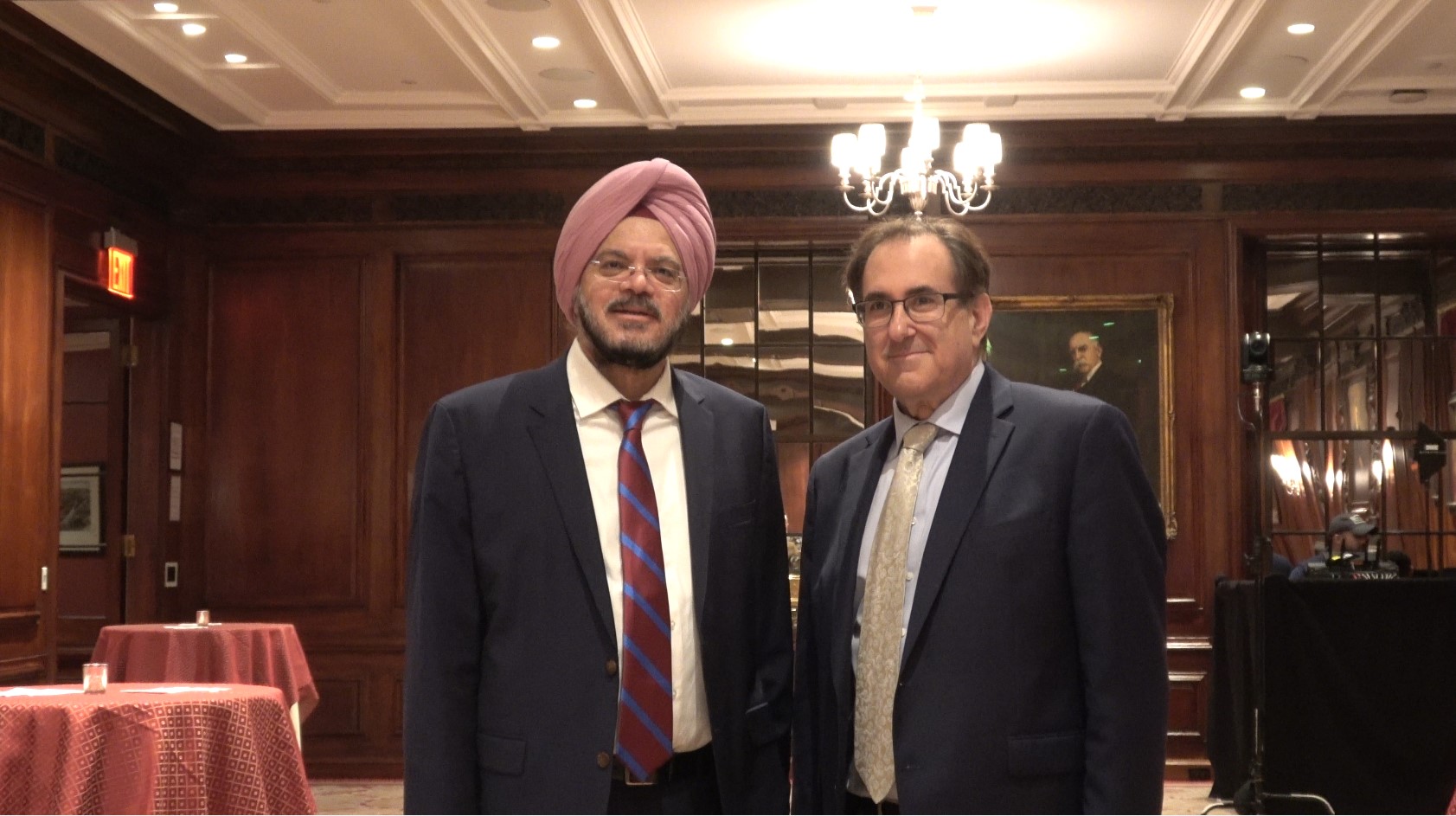
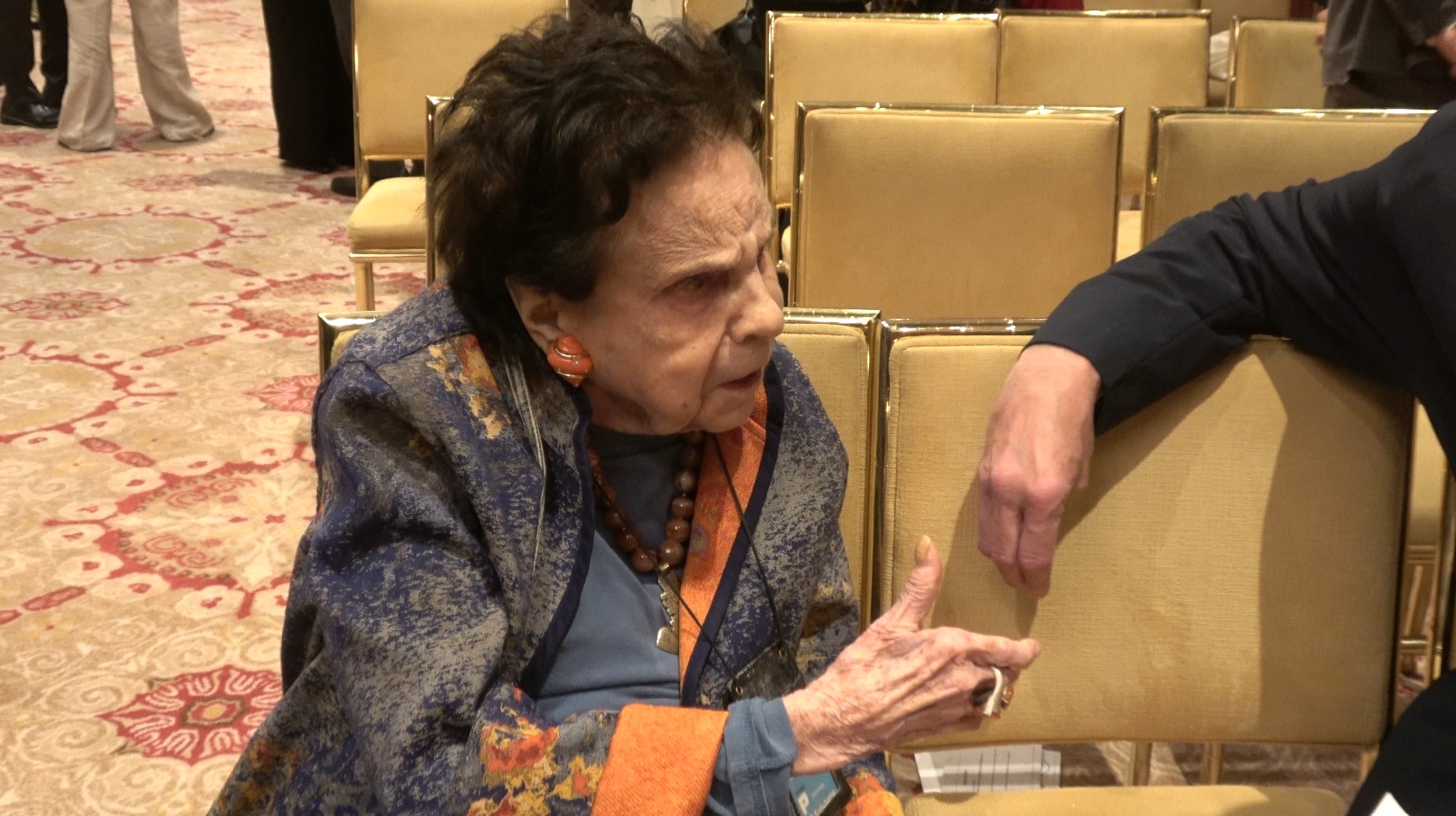
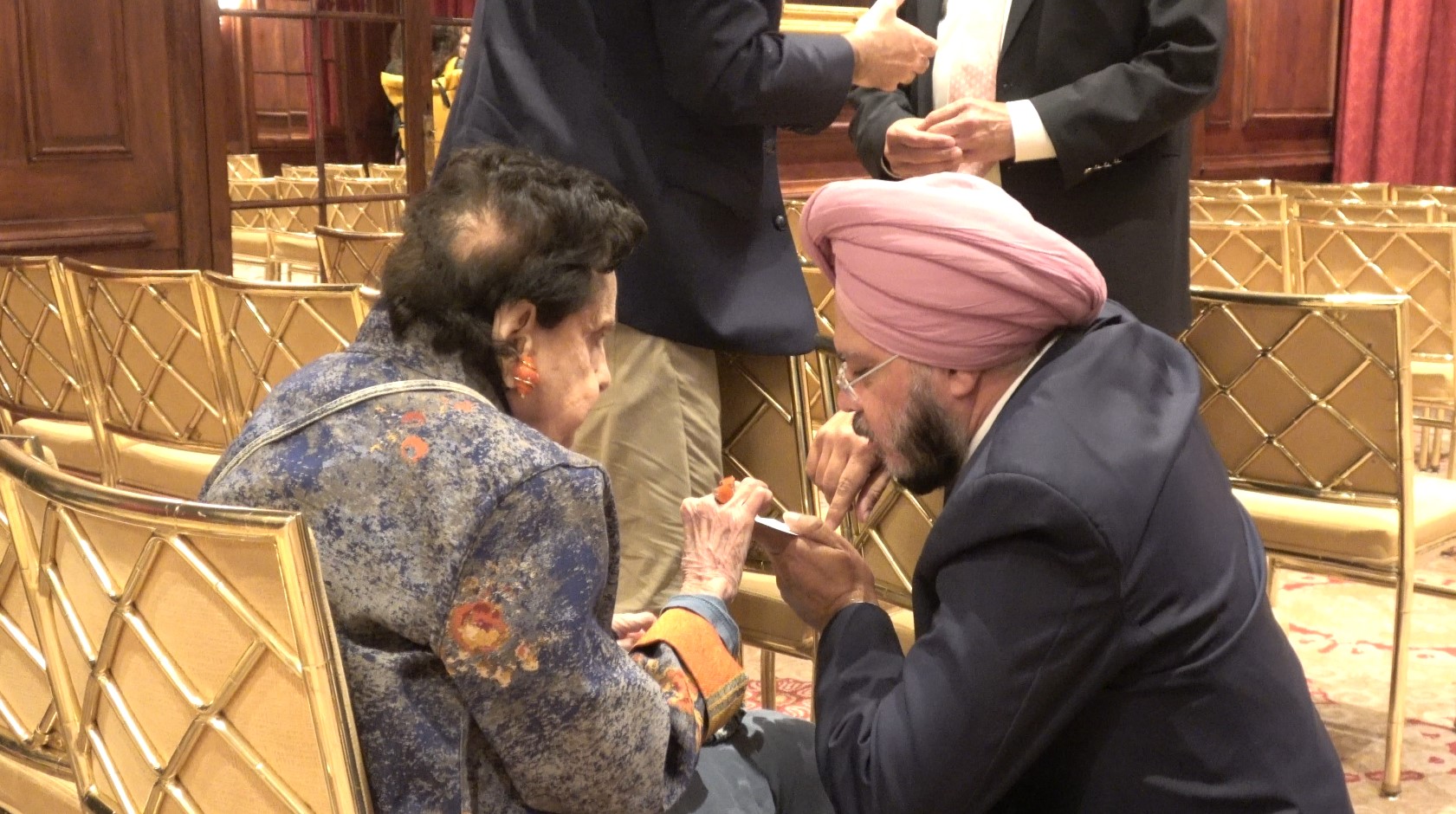
Gloria, the nearly 100-year-old editor-in-chief of a social and diplomatic magazine, attended the event in a wheelchair. Celebrity Media CEO Chen Miao and his assistant also joined this inspiring and thought-provoking meeting.

Choose horizontal or vertical to see different effects

 I. Why Does Multilateralism Still Matter?

In his speech  Ambassador Massari emphasized: “The UN is imperfect, but irreplaceable.” This statement is thought-provoking. In the face of a new wave of geopolitical tensions, climate crises, governance of emerging technologies, and development disparities, the UN remains the only platform capable of bringing together most of the world's nations to jointly seek solutions.

He warned that if faith in multilateralism is eroded, the world will regress to the jungle rule of "might makes right." He therefore called on nations to “reclaim the value of multilateralism” and restore trust in collective action (see video at 48:02).

II. Italy's Practice of the Multilateral Path

Ambassador Massari’s views are not merely personal but also reflect Italy's national diplomatic strategy. In his speech, he mentioned that Italy has actively participated in reforming and building multilateral mechanisms in recent years:

  • As Vice President of the UN Economic and Social Council (ECOSOC), he promoted issues of food security and sustainable development 
  • Supported the building of the “Friends of Food Security” group, advocating for food issues to be elevated to a strategic security topic 
  • Advocated expanding non-permanent seats in the Security Council to enhance regional representation, opposing more permanent seats to avoid new imbalances (at 52:15);
  • Promoted transparency in the use of veto power, calling on major powers to exercise their veto “responsibly” 

Italy’s approach demonstrates a path of “moderate realism”: not overturning the existing order but focusing on mechanism optimization to inject sustainable reform into the UN.

III. Key Words for Future UN Reform

Massari proposed three key points for UN reform:

  1. Representativeness
    The Security Council must reflect the "world of today" rather than the "structure of 1945."
  2. Transparency
    The use of veto power must be explained and subject to public opinion and international moral oversight.
  3. Rebuilding Trust
    If the public and member states lose faith in the UN's procedures and platforms, multilateralism will be a shell without substance.

These proposals address both current global challenges and align with the UN’s 80th-anniversary vision for reform, pointing to a more open, inclusive, and trusting international order.

IV. Lessons for China from Italy’s Experience

Although Massari's speech used Italy as an example, its insights are also of great value to China:

  • Make good use of “Friends Groups” mechanisms to influence agenda-setting in areas like climate, development, and AI governance;
  • Promote UN reform that balances representativeness with efficiency to avoid polarization and new forms of hegemony;
  • Enhance public communication to rebuild global trust in multilateralism.

As a permanent member of the Security Council and a global development advocate, China is well positioned to pursue “reform with stability in multilateralism,” and can form complementary partnerships with middle and small powers, including Italy.

In short, persistence in coordination amid global complexity is the key.

In today’s fragmented and polarized global environment, the UN and multilateralism face numerous doubts. Yet as Massari emphasized: without trust, multilateralism loses its meaning.

Rebuilding trust requires institutional optimization, firm principles, and practical commitment. This is the ambassador’s profound message to the world: the UN remains the cornerstone of international coordination, and multilateralism is still the best path toward a shared human destiny.

Shaping a better world at Expo 2025 in Japan

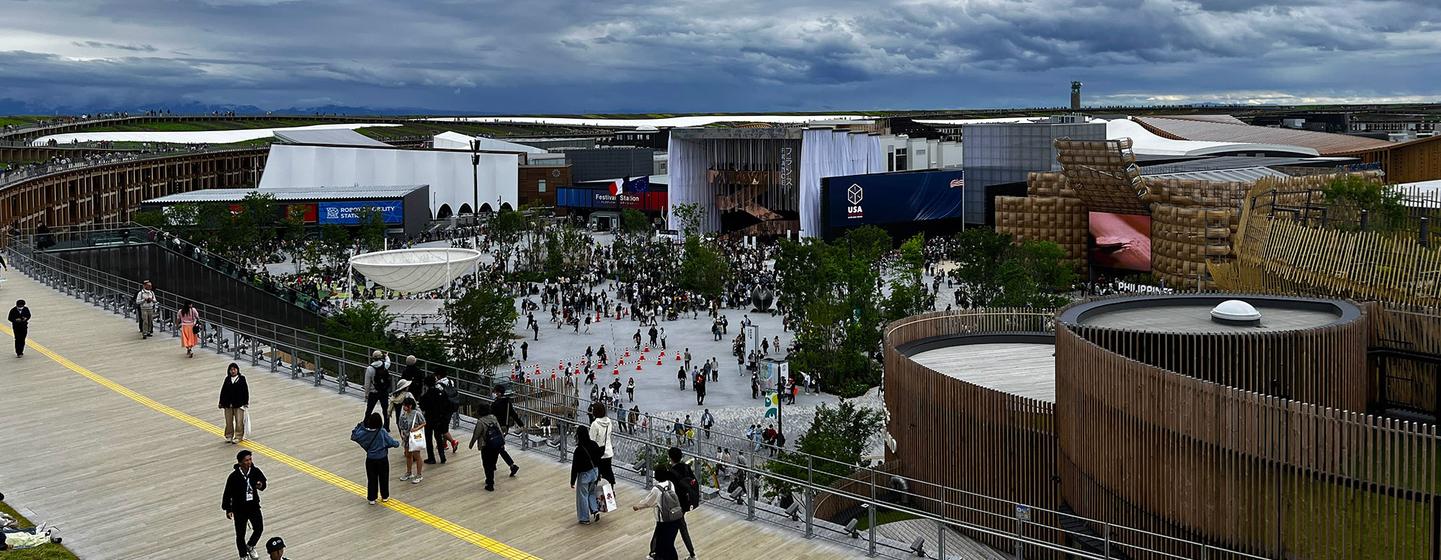
Visitors to Expo 2025 in Osaka, Japan, walk around the grand ring which circles the event space.

UN News/Daniel Dickinson Visitors to Expo 2025 in Osaka, Japan, walk around the grand ring which circles the event space.

By Daniel Dickinson, Osaka, Japan

How can we build a fairer, more peaceful world while safeguarding the planet? That’s the powerful question at the heart of the United Nations Pavilion at Expo 2025 in Osaka, Japan.

The UN is taking part alongside more than 150 countries and organizations at the global gathering, which carries the forward-looking theme: Designing Future Society for Our Lives.

The UN Pavilion is divided into four areas; a timeline in the first area explains the history of the UN and its agencies, whilst the second – the so-called orb room – outlines the organization’s diverse range of work through a series of everyday objects displayed on the walls.

An immersive video in the third area offers a glimpse into what a future world could look like if development takes place in a sustainable way, while the fourth is a rotating exhibition which highlights specific agencies.

Here’s what some visitors to the UN Pavilion thought about their experience.

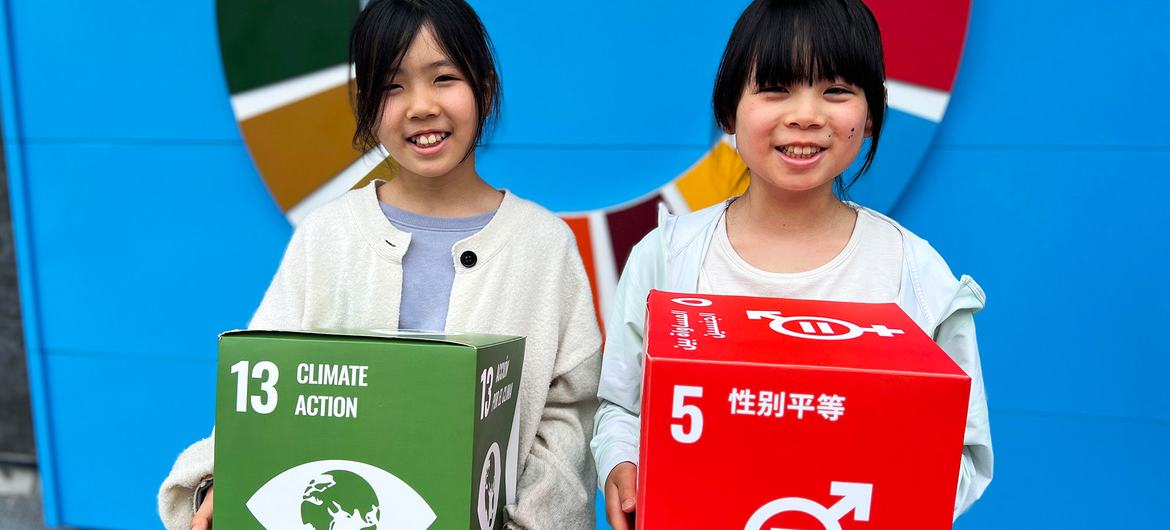
Kaneko Sayaka (left) and her sister hold up displays promoting the SDGs.UN News/Daniel Dickinson

Kaneko Sayaka (left) and her sister hold up displays promoting the SDGs.

Kaneko Sayaka: I liked the video as I felt I was in a forest surrounded by trees and animals. It showed me that protecting the environment is very important.

Mikako Takeuchi: I was sucked into the immersive experience of the video presentation. It was really engaging and, although it explained the problems the world faces, it also presented the solutions and provided hope.

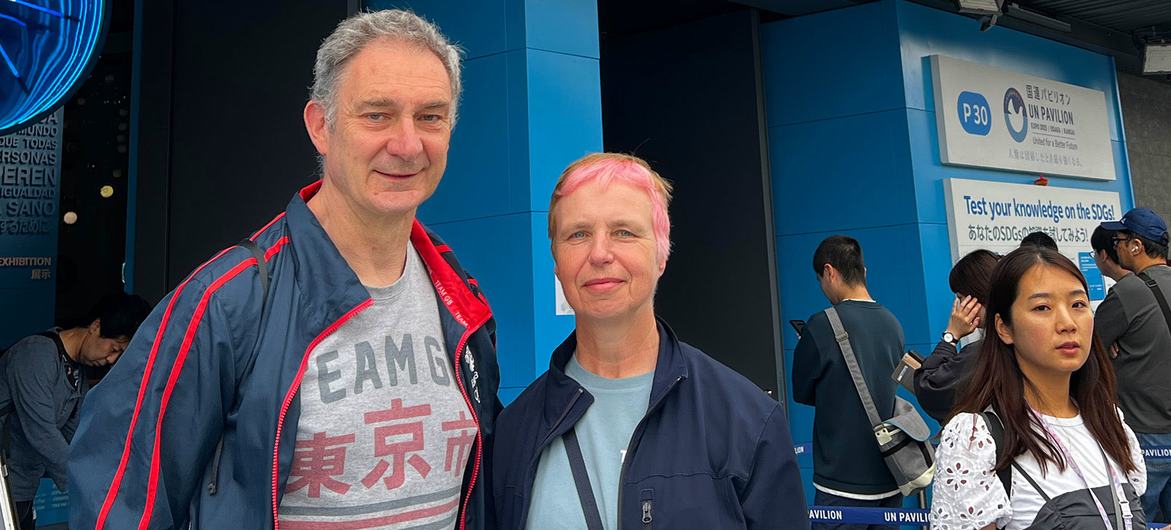
Phil Malone (left) and his companion visit the UN Pavilion.UN News/Daniel Dickinson

Phil Malone (left) and his companion visit the UN Pavilion.

Phil Malone: The message of the immersive video about sustainability and people’s rights and responsibilities towards the environment was clear and easily understandable by both young and older audiences.

It is difficult to explain the Sustainable Development Goals (SDGs) in a short video, although I think a Japanese audience is generally knowledgeable about the goals. The SDGs are highlighted by institutions across Japan, and I have only ever seen this level of promotion in certain African countries where I have worked for an agriculture-focused development organization.

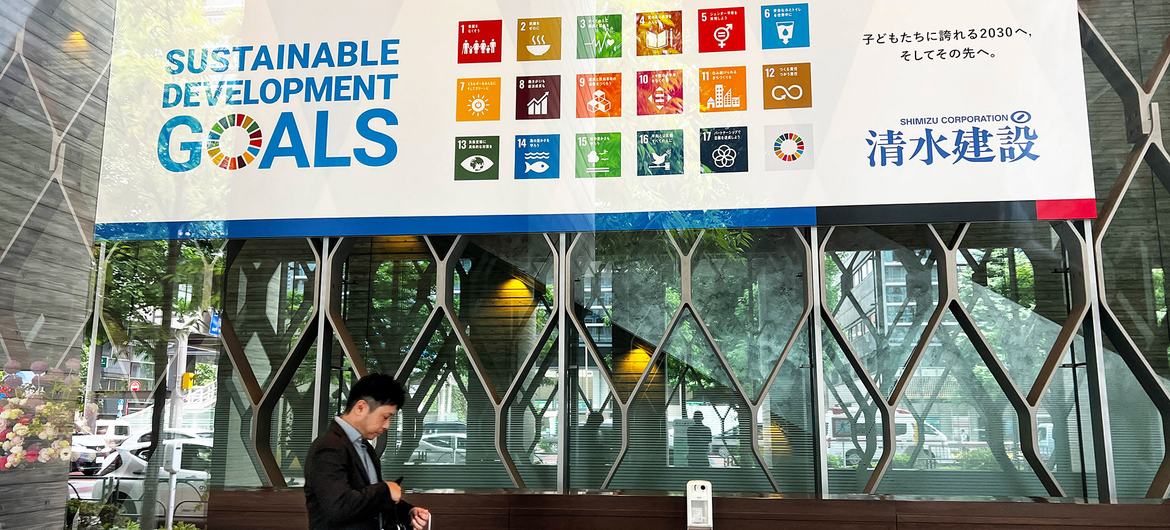
The SDGs are frequently promoted by the private sector in Japan, in this case in Tokyo. the capital city.UN News/Daniel Dickinson The SDGs are frequently promoted by the private sector in Japan, in this case in Tokyo. the capital city.
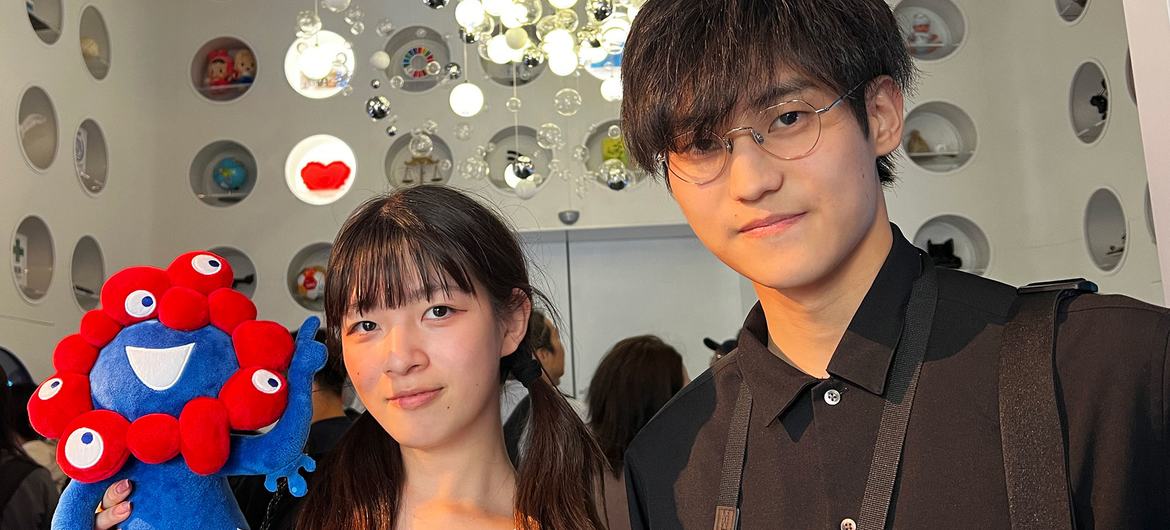
Tomoyuki Kadokura: I learnt a lot about the SDGs from the interactive quiz while I was queuing to get into the pavilion. In Japan, we concentrate more on the goals which focus on the environment and sustainable consumption, so I was keen to learn more about the other goals, for example poverty and human rights, which do not get a lot of attention here.

I was also surprised by the number of UN agencies that are working on the SDGs.

Agaka Sato (left) and Takato Ishida explore the orb room in the UN Pavilion.UN News/Daniel Dickinson Agaka Sato (left) and Takato Ishida explore the orb room in the UN Pavilion.

Takato Ishida: At school we learn about the SDGs, so many Japanese people are interested in the goals, but I didn’t realize that progress towards them was so slow in many parts of the world.

I enjoyed the special projects section which highlighted the role that UN volunteers are playing across the world in supporting sustainable development.

Agaka Sato: I did not know there were so many different UN agencies and learnt a lot about them through the interactive display of objects in the orb room.

The touch screen which explains the role of these agencies is linked to the objects lining the wall of the room. I think it is fun for young children to make the link between objects like telephones, guns and health kits and the work of the UN.

Masako Yukita: The UN Pavilion made me consider what changes people need to make to contribute to the SDGs and world peace. When I get home, I will think about what more I can do as an individual.